How to track lifting progress without a spreadsheet
Sets, reps and load tell you how much you lifted. Form quality tells you whether it counted. A simple way to log both and read progress week to week.
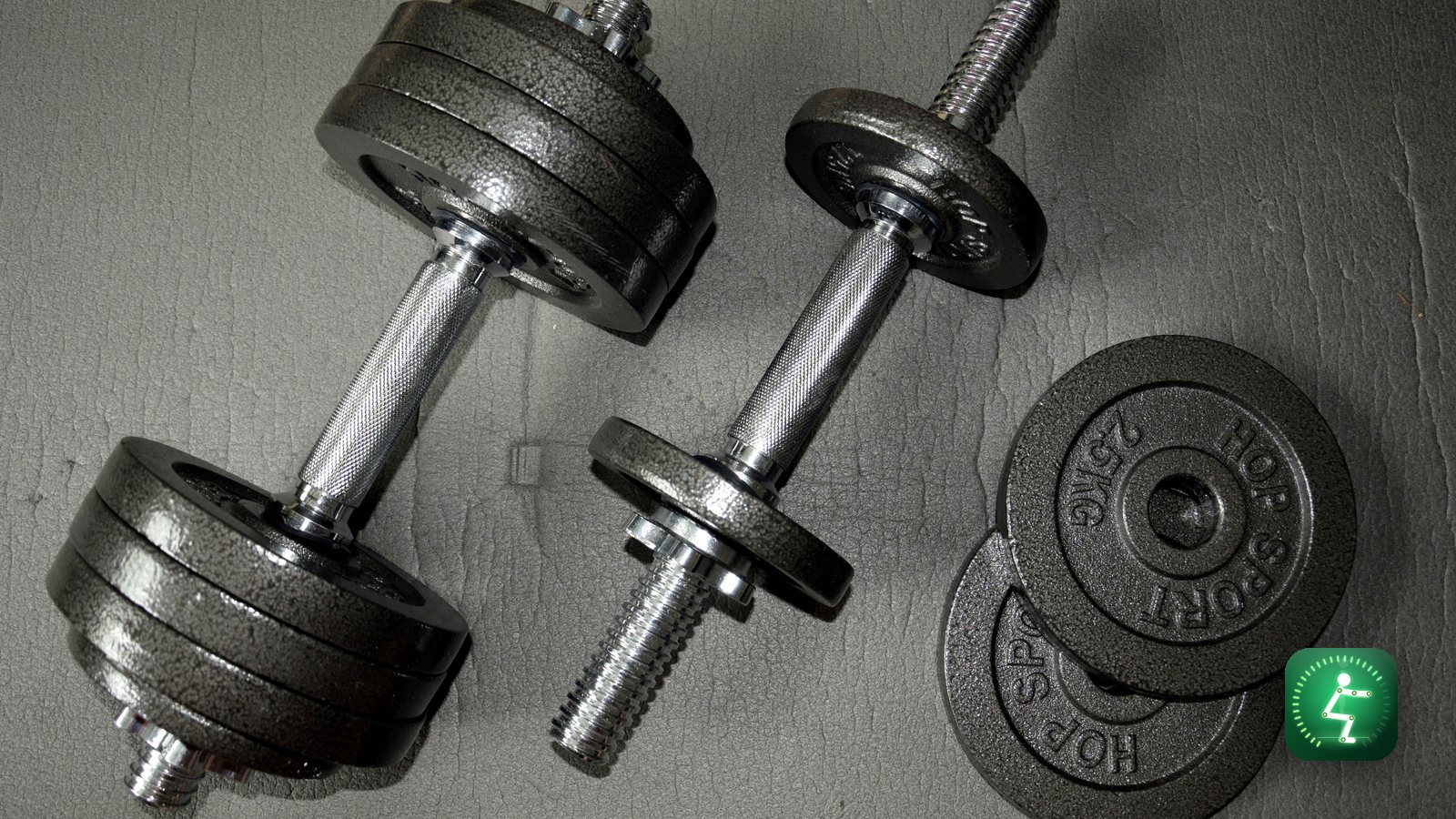
Plenty of lifting spreadsheets start ambitious: tabs for every muscle group, formulas for estimated maxes, conditional formatting in three colors. By week six the sheet is abandoned, because typing into cells between sets is miserable and the numbers never quite answer the question you have, which is simply "am I getting stronger?"
You don't need a spreadsheet to answer that. You need to log a few things consistently and look at them at the right distance.
Track four things, and only four
For each exercise, record:
- Sets. How many working sets you did.
- Reps. How many in each set.
- Load. The weight, or for bodyweight moves the variation, like knee push-ups versus full ones.
- Form quality. Were those reps clean, or did the last few fall apart?
The first three are standard. The fourth is the one most logs leave out, and it's the one that keeps the other three honest. Ten squats with a full range of motion and ten half-squats are not the same number, even though they look identical in a spreadsheet.
Skip the rest. Rest times, tempo and RPE all have their place, but if tracking them makes you stop tracking entirely, you've lost more than you gained.
Progressive overload, in plain terms
Getting stronger means asking your body for slightly more than last time, then letting it adapt. That "more" can come from several directions:
- one more rep at the same weight,
- a little more weight for the same reps,
- one more set,
- or the same work done with cleaner form.
That last one counts. If last month your push-ups sagged at the hips by rep eight and now they stay straight to rep twelve, that's progress, even if no number in a spreadsheet moved.
A rep only counts as progress if it was a real rep. Put quality in the log and the log stops flattering you.
Compare weeks, not days
Daily numbers are noisy. Sleep, stress, food and a late meeting all move them. If you judge progress session by session, you'll see yourself getting weaker every third day and give up.
Instead, once a week, compare this week's best sets with last week's and with a month ago. The trend is the signal. A flat week is normal. Three flat weeks in a row is information.
Deloads fit here too. Many lifters plan a lighter week every four to eight weeks, cutting sets or reps while keeping the same training days, to shed accumulated fatigue. Research on whether deloads boost gains is mixed, but they're common among experienced lifters for managing fatigue. If your weekly numbers stall and everything feels heavy, a planned easy week is often a better answer than pushing harder. This isn't medical advice; if something hurts in a sharp or lasting way, stop and get it checked.
Let the camera keep the quality score
Logging form quality honestly is hard, because you can't see yourself mid-set. That's where a phone helps. Form Coach uses your phone's camera to track your joints, count reps and give every rep a form score, from the front, the side or behind. Session summaries, history and stats then show whether your form is climbing over time, and its 4-week plan adapts to how you're moving, stepping up when you're crushing it and easing off when you need it. It's free, needs no account, and video never leaves your phone. If you want to start with one lift, the guide on checking your squat form with your phone is a good first step.
Log fewer things, look at them weekly, and let clean reps be the number you're proudest of.
Recent posts
-
How-to
How to make an ins and outs list you'll actually stick to
Oct 13, 2026
-
How-to
How to capture what a master tradesperson knows before they retire
Oct 12, 2026
-
How-to
How to set up a phone for an aging parent
Oct 12, 2026
-
AI & Trends
Measuring an app without tracking people
Oct 11, 2026
-
How-to
How to run a pickleball round robin for a group of friends
Oct 10, 2026
-
How-to
How to journal your day in sixty seconds
Oct 09, 2026
0 comments
No comments yet — be the first.
Leave a reply
Sign in with Google to join the conversation. We require a quick sign-in to keep comments spam-free.
Sign in with Google to comment