How to run a pickleball round robin for a group of friends
Rotating partners for 8, 12 or 16 players on two or three courts, with fair byes, short games and an individual leaderboard that settles itself.
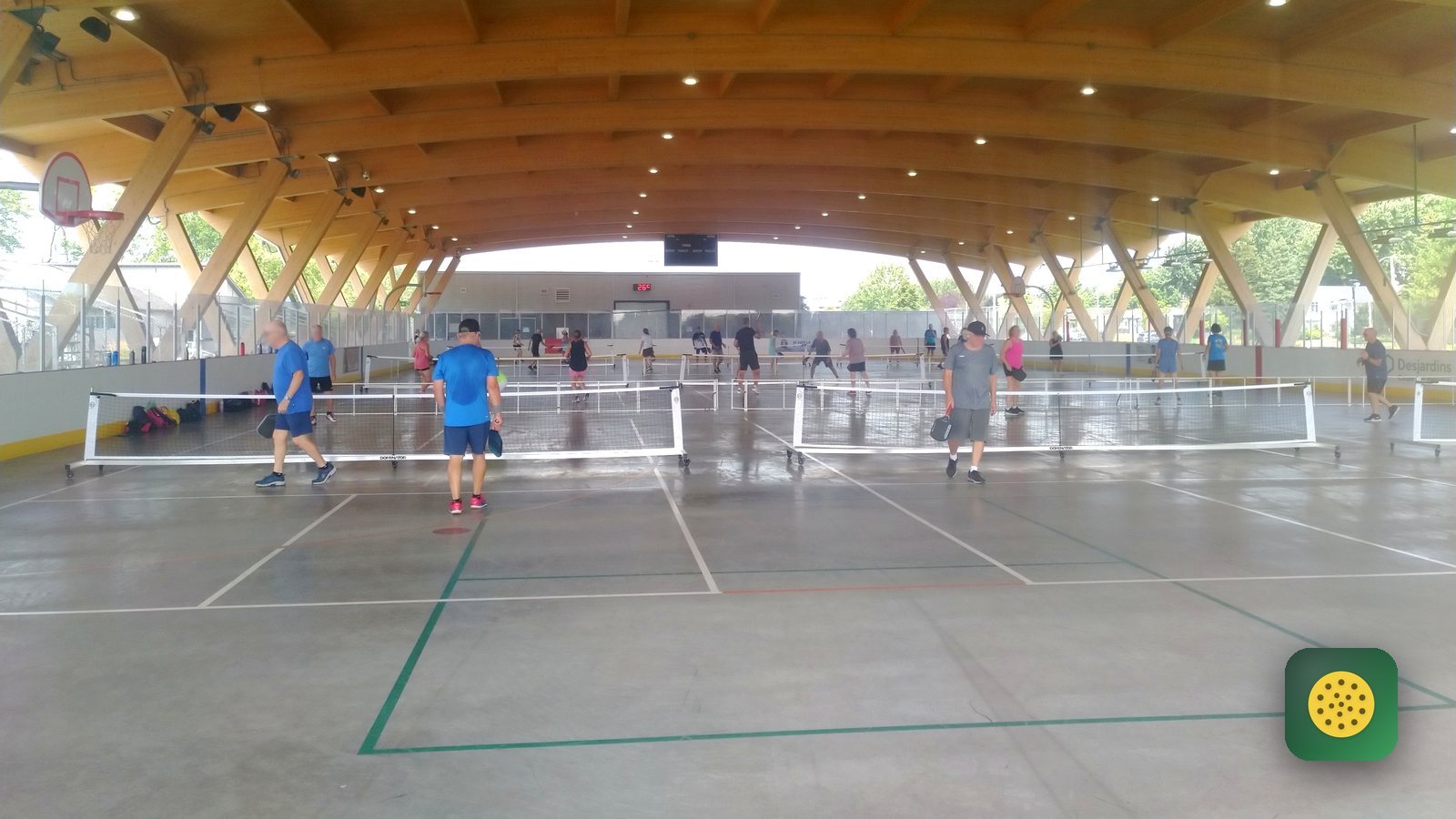
Twelve friends, two courts, two hours. The usual approach is "winners stay, losers rotate," and within forty minutes the same four strong players own one court while everyone else waits. A proper round robin fixes that. Everyone plays with everyone, everyone sits roughly the same amount, and there's a real winner at the end.
Start with the math: players, courts, byes
Each doubles court holds four people, so your numbers decide the shape of the night.
- 8 players, 2 courts. The ideal setup. Everyone plays every round, nobody sits. Over 7 rounds, a standard 8-player rotation lets each person partner every other player exactly once.
- 12 players, 2 courts. Eight play, four sit each round. Rotate the byes so no one sits twice before everyone has sat once. With 12 players that's a clean three-round cycle.
- 12 players, 3 courts. Everyone plays every round. Aim for everyone partnering as many different people as possible. Perfection matters less than never repeating a partner back to back.
- 16 players, 3 courts. Twelve play, four sit. Same bye rule: nobody sits a second time until all sixteen have sat once.
Write the schedule before anyone arrives. Number the players 1 to 12 (or 8, or 16), then build a simple grid with a column per round listing who plays on each court and who sits. Printed on paper or in a shared note, it ends every "who am I with?" conversation before it starts.
A round robin lives or dies on the gap between games, not on the games themselves.
Keep games short and even
Standard games go to 11, win by 2, and a close one can run for twenty minutes while the other court sits idle. For a social round robin, pick one of these and announce it up front:
- Rally scoring to 11, win by 1. Every rally scores, and the game ends the moment someone reaches 11. Predictable and quick.
- Timed games. Twelve to fifteen minutes on a phone timer, then finish the point in progress. Every court ends at the same moment, which makes rotation much smoother.
- Traditional side-out scoring to 11. Keep it if your group loves it, but expect uneven finish times.
Whichever you choose, use the same format all night. Changing mid-event makes the scores impossible to compare.
Score the individual, not the team
Since partners change every round, the leaderboard tracks each player. After every game, both players on a team get their team's points.
- Total points scored rewards steady play and is easy to add up.
- Point differential (points for minus points against) rewards winning margins and breaks ties well.
- Wins, then differential is the most familiar to players who compete.
Byes need a rule too. The simplest fair fix is to give a sitting player their own average points per game so far, so the schedule doesn't decide the winner. Settle this before the first serve, not at the end when someone is one point short.
Keep it moving
A few habits keep a two-hour session from sliding into three:
- Post the next round before the current one ends, so players walk straight onto court.
- Assign one person per court to report the final score, and one person to write it on the sheet.
- Warm up once, together, at the start. Not before every game.
- Save the last round for fun: a mixed round, a "worst to first" court, or a final for the top four.
If you want the scoring rules themselves refreshed first, our guide to keeping pickleball score without arguments covers side-out and rally scoring.
Put one phone on the fence of each court with Kitchen open. Players tap the big button on their team's side to score, the serve and side-out logic runs itself, and a shake undoes a mistap. Pick rally or traditional side-out scoring and a race to 11, 15 or 21 to match the night's format, and each completed match logs its final score, duration and date on the phone for whoever keeps the leaderboard. It's free, with no subscription and no account.
Run it once and the group will ask for it next week. By the third round robin, someone else will volunteer to write the schedule.
Recent posts
-
How-to
How to journal your day in sixty seconds
Oct 09, 2026
-
How-to
Is the America the Beautiful pass worth it? Do the math first
Oct 08, 2026
-
How-to
How to do a proper push-up (and the easier versions that still count)
Oct 07, 2026
-
How-to
How to read a company's earnings report in ten minutes
Oct 06, 2026
-
How-to
How to share caring for a parent between siblings without resentment
Oct 06, 2026
-
AI & Trends
What to do when an app you rely on shuts down
Oct 05, 2026
0 comments
No comments yet — be the first.
Leave a reply
Sign in with Google to join the conversation. We require a quick sign-in to keep comments spam-free.
Sign in with Google to comment