How to teach a new hire a hands-on job
Show-do-review, chunking a task into teachable steps, recording the expert's voice on the job, simple checklists and a first-30-days plan.

Your best tech has done the job 3,000 times. The new hire has done it zero. You put them together for a week, the new hire nods a lot, and on day eight they make the exact mistake the expert warned about on day two. The problem isn't the new hire. It's that "watch me" isn't a training plan.
Break the job into chunks
Experts do a task as one smooth motion. A beginner needs it in pieces.
- Write the task as 5 to 9 steps. "Replace a water heater" becomes: shut off and drain, disconnect, remove, set the new unit, connect, fill and bleed, test, clean up. More than nine and the steps are too small. Fewer than five and they hide decisions.
- Mark the critical step. Every job has one or two moments where a mistake is expensive or dangerous. Name them out loud and on paper.
- Teach the chunks in order of risk, not order of work. Let the new hire own the safe steps first, like setup and cleanup, while the expert keeps the critical ones.
Use show, do, review
This is the simplest training loop there is, and it works for almost any hands-on job.
- Show. The expert does the chunk at normal speed, then again slowly while explaining why each move matters. The why is what transfers to the next job, which is never identical.
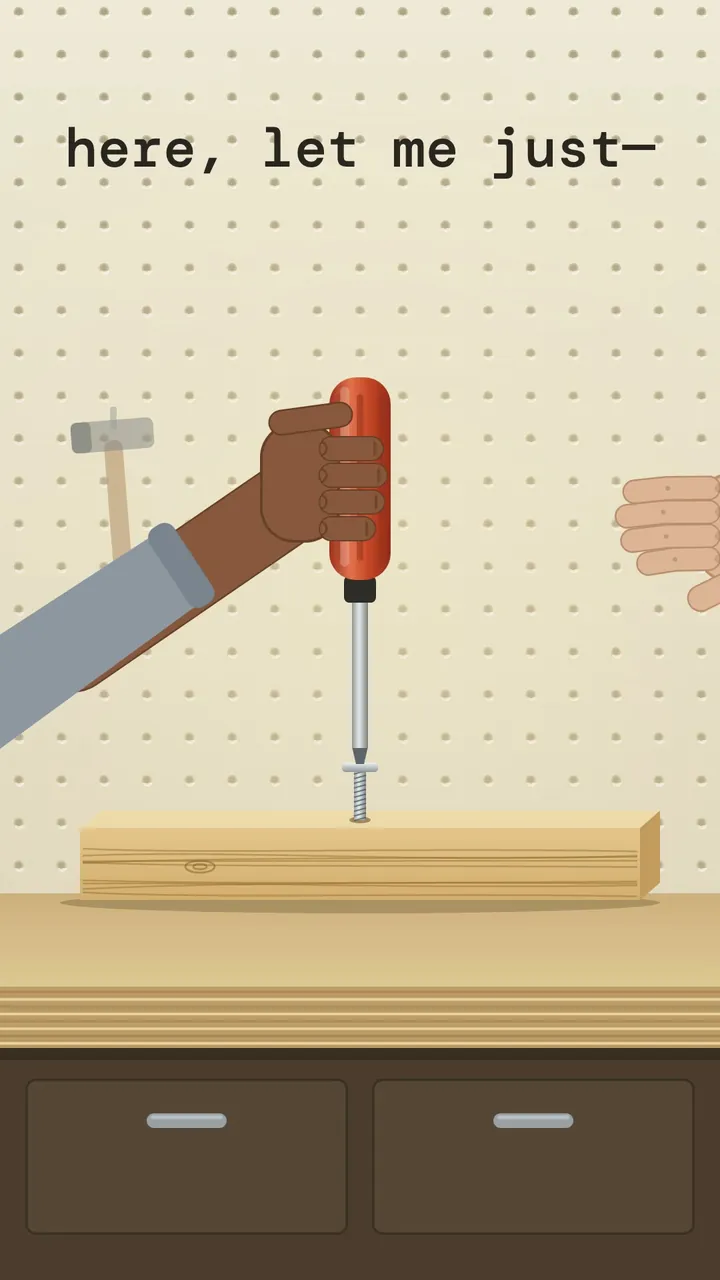
- Do. The new hire does the same chunk while the expert watches with hands off. Hard rule: the expert only steps in for safety.
- Review. Right after, two minutes. What went well, what to change, one thing to try next time. Not at the end of the week.
Repeat until the new hire can do the chunk and explain why. Then move to the next one.
If the new hire can explain why, they can handle the job that doesn't go by the book.
Capture the expert's voice
The best explanations happen in the moment, under a sink or next to a panel, and they evaporate by lunch. Record them.
- Ask the expert to narrate one real job a week: what they're looking at, what they're checking, what would make them stop.
- Keep recordings short. One technique per clip, a minute or two. Long recordings never get replayed.
- Tag them by task and tool so the new hire can find the right one in six months.
Our guide on capturing what a master tradesperson knows has questions that draw out the reasoning experienced people skip over.
Checklists and a first-30-days plan
A short checklist beats a thick manual. Keep each one to a single page, with the critical steps in bold.
A simple 30-day plan:
- Week 1: Safety, tools, shadowing. The new hire owns setup and cleanup.
- Week 2: Show-do-review on the two most common tasks.
- Week 3: The new hire leads common tasks; the expert watches the critical steps.
- Week 4: Solo on common tasks with a check at the end. Review what's next.
Schedule a 15-minute check-in every Friday, and write down what was learned and what still feels shaky.
Apprent works well for the recording part. The new hire records the expert explaining a technique, the phone transcribes it on the device, and each recording becomes a technique card with the mentor, trade, tool and category, searchable later by any word in the transcript. It's free, no subscription, and needs no account.
Train one person this way and you'll have a playbook ready for the next hire.
Videos
Watch this post as a reel
Related posts
-
How-to
How to capture what a master tradesperson knows before they retire
Oct 12, 2026
-
Product
How Apprent turns a mentor's voice into a searchable trade note
Sep 22, 2026
-
How-to
How to learn a trade as an adult (electrician, plumber, HVAC, welding)
Oct 20, 2026
Recent posts
-
Product
Snug is out. Can you get past level 10?
Nov 05, 2026
-
How-to
How to back up family photos for good
Nov 04, 2026
-
How-to
How to keep score in Spades (bids, nil, bags and the 10-bag penalty)
Nov 03, 2026
-
AI & Trends
What AI agents can actually do for you now
Nov 02, 2026
-
How-to
How to photograph Diwali lights at night with your phone
Nov 01, 2026
-
How-to
How to host a Diwali party at home
Oct 31, 2026
0 comments
No comments yet — be the first.
Leave a reply
Sign in with Google to join the conversation. We require a quick sign-in to keep comments spam-free.
Sign in with Google to comment