How to hit a third shot drop in pickleball
Why the third shot drop matters, the grip, stance and swing path that land it in the kitchen, two drills for two players, and when to drive instead.
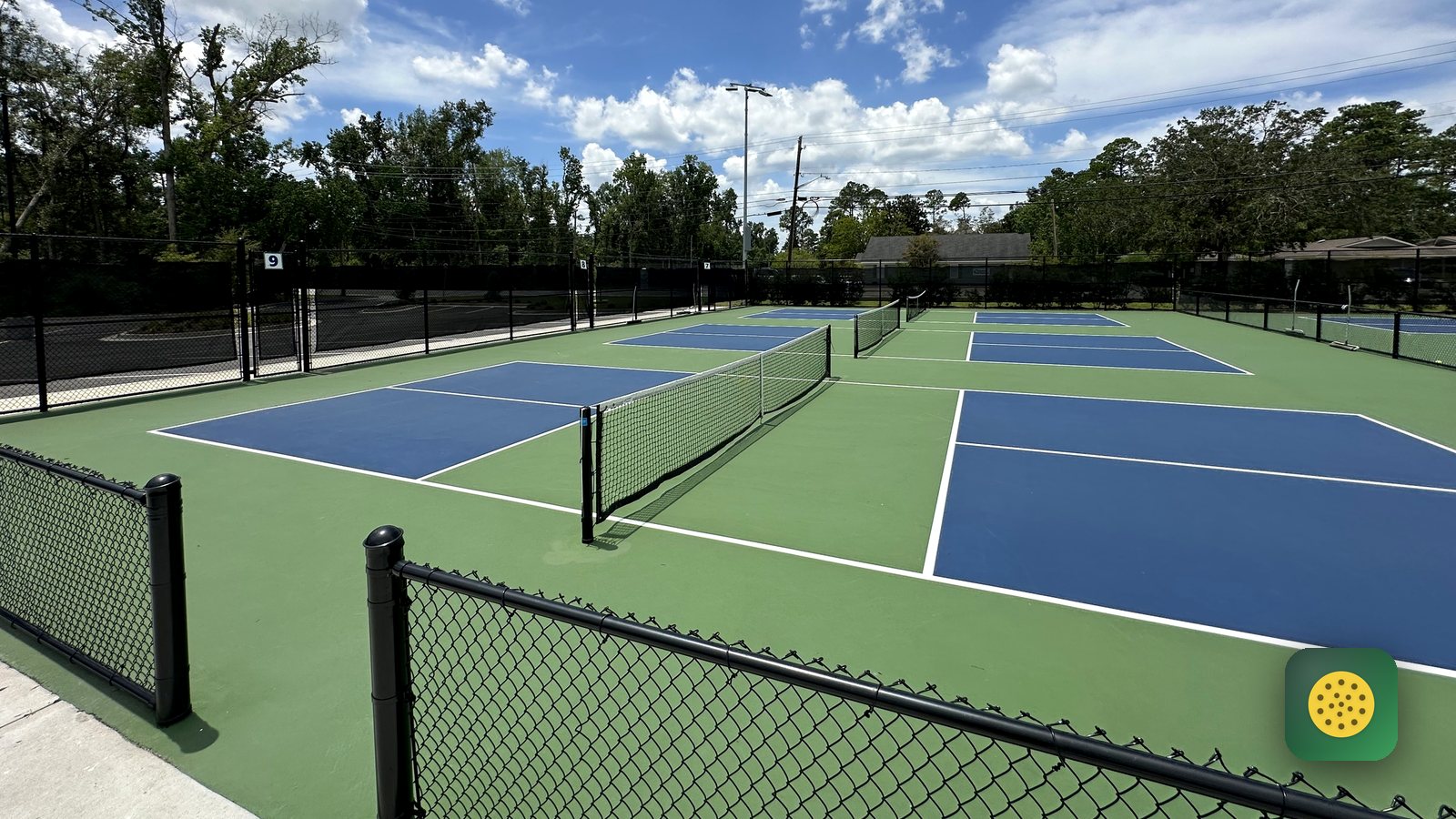
You serve, they return deep, and by the time you're ready to hit again both opponents are standing at the kitchen line, waiting. Hit it hard and they volley it back at your feet. That moment, the third shot of the rally, is where most recreational doubles points are decided. The third shot drop is how you get out of it.
Why the drop exists
The two-bounce rule creates the problem. The serve must bounce before the return, and the return must bounce before the serving team hits again. So the receiving team can run straight to the net after their return, while the serving team is stuck at the baseline for the third shot.
The drop is a soft, arcing shot that lands in or near the opponents' kitchen, the non-volley zone that runs 7 feet from the net on each side. Because it bounces low and close to their feet, they can't attack it. They have to hit up, gently. That buys you time to move forward and join them at the line, and the rally becomes even.
The drop isn't about winning the point; it's about earning the right to play it at the net.
Grip, stance and swing path
Grip. Use a continental grip, like holding a hammer, with a relaxed hand. On a scale of 1 to 10, squeeze at about a 3. A tight grip turns a drop into a pop-up.
Stance. Get set before you swing. Feet about shoulder-width apart, knees bent, paddle out in front of your body. Most bad drops come from hitting on the run.
Swing path. Think low to high, with your shoulder doing the work instead of your wrist.
- Start low. Paddle face slightly open, below the ball.
- Lift, don't hit. Swing up and through the ball like a gentle underhand toss.
- Aim for the peak. The ball should reach its highest point on your side of the net, then fall into the kitchen.
- Finish high and hold. Paddle ends around chest height, pointing at your target.
Target. Aim for the middle of the kitchen, a couple of feet past the net. Landing short into the net loses the point; landing a little deep is usually still playable.
Two drills for two people
Drill 1: Kitchen-to-kitchen dinking, then step back. Start with both players at the kitchen line, dinking softly for 20 balls. Then one player steps back to midcourt and keeps hitting drops into the kitchen while the partner dinks back. After 20 balls, step back again to the baseline. Swap roles.
Drill 2: Drop and move. One player feeds a deep ball from the kitchen line. The other hits a drop from the baseline, then takes two or three steps forward and hits the next ball from wherever they land. Count how many drops in a row land in the kitchen. Ten is a good session goal.
When to drive instead
The drop isn't the only answer. Drive the third shot when:
- The return is short or high, and you can hit down on it from inside the baseline.
- An opponent is still running forward and hasn't settled at the line.
- You're facing a weak volleyer. A hard drive at their body forces errors.
A common pattern is to drive first, then drop the fifth shot when the opponents block it back softly. Mixing both keeps the other team guessing.
If you're still learning the basics, start with our pickleball rules for your first game.
When you take the drill into a real game, prop a phone on the fence with Kitchen open. A big tap scores the point, serve and side-out logic run themselves, and a shake undoes a mistap. It works without an account and is free with no subscription.
Practice the drop for two weeks and you'll notice something: the net starts to feel like home.
Related posts
-
How-to
How to run a pickleball round robin for a group of friends
Oct 10, 2026
-
How-to
Pickleball rules you actually need for your first game
Sep 27, 2026
-
How-to
How to keep pickleball score without the mid-game arguments
Sep 07, 2026
Recent posts
-
How-to
How to pick a health insurance plan during open enrollment
Oct 28, 2026
-
How-to
How to free up storage on your phone in 15 minutes
Oct 27, 2026
-
How-to
How to reset your sleep when the clocks fall back
Oct 26, 2026
-
How-to
How to read a dividend yield without getting fooled
Oct 25, 2026
-
How-to
How to host a Halloween game night for adults
Oct 24, 2026
-
How-to
How to cut truck detention time at your dock
Oct 23, 2026
0 comments
No comments yet — be the first.
Leave a reply
Sign in with Google to join the conversation. We require a quick sign-in to keep comments spam-free.
Sign in with Google to comment