How to keep pickleball score without the mid-game arguments
Side-out scoring versus rally scoring, explained clearly, plus how a phone on the fence ends the argument about whose serve it was two points ago.
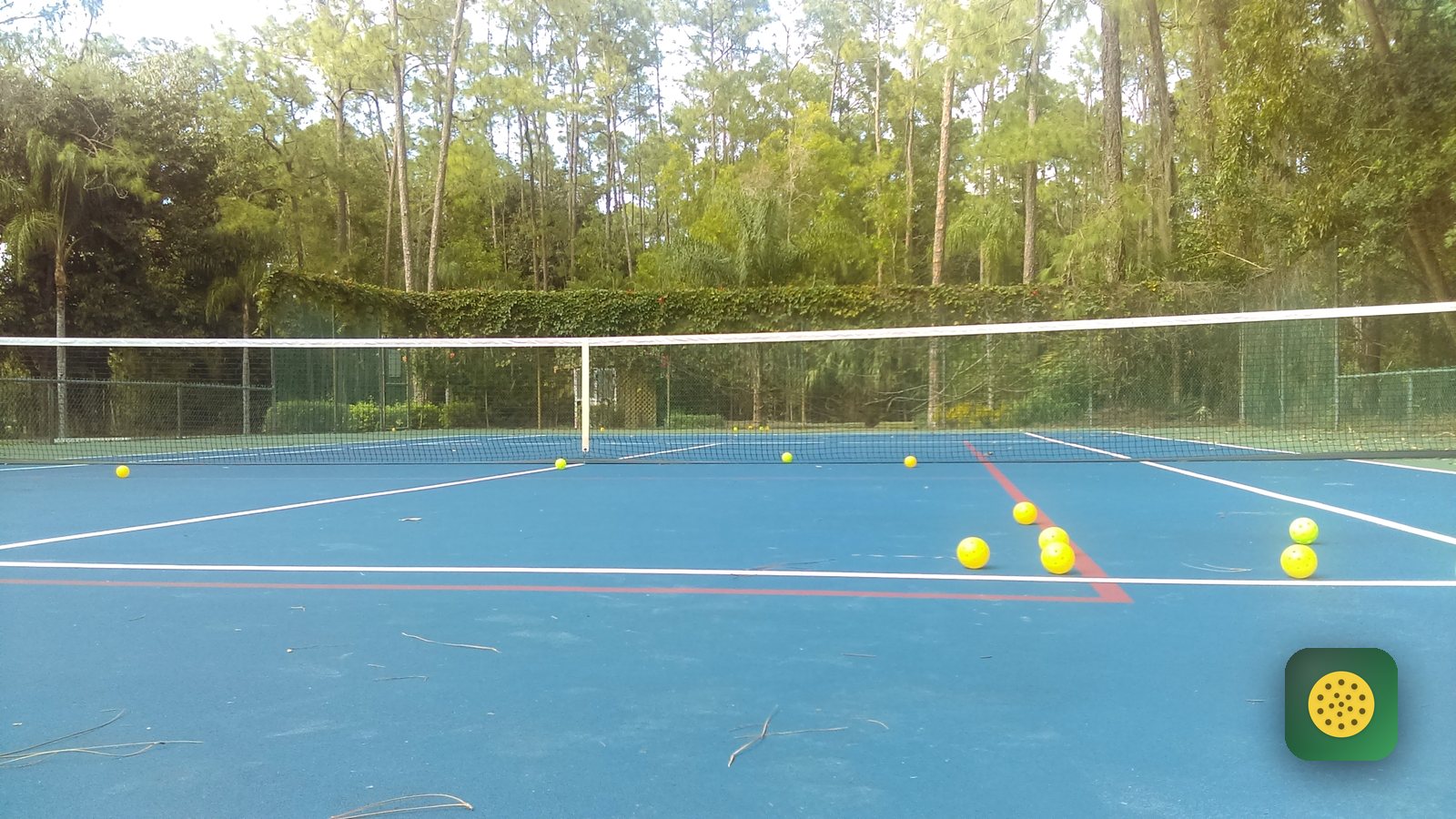
Pickleball is easy to play and weirdly hard to score. Four people who agree on every line call will still stop dead in the middle of a game because nobody is sure whether it is 6-4-2 or 6-5-1. The rules are not complicated so much as stateful: the score depends on things that happened several rallies ago, and human memory is not built for that.
Side-out scoring, in plain terms
Traditional pickleball uses side-out scoring. Only the serving team can score. If the receiving team wins the rally, they get the serve rather than a point.
In doubles you call three numbers: your score, their score, and whether you are the first or second server on your team. Both partners serve before the ball goes over to the other side, with one exception. At the very start of the game, the first serving team only gets one server, which is why it opens at 0-0-2.
The serving team also switches sides after each point it wins, so where you stand encodes part of the score. Games usually go to 11, and you have to win by two.
That is four pieces of state to track at once: score, serve number, which side each player is on, and who serves next. Lose any one of them and the whole thing has to be reconstructed by committee.
Rally scoring, and why people like it
Rally scoring awards a point on every rally regardless of who served. Two numbers instead of three, no second-server tracking, and games end on a predictable schedule, which matters when four other people are waiting for the court.
It changes the game slightly. A weak serving team can no longer stall out, and every rally carries the same weight. Plenty of leagues and casual groups have moved to it for exactly that reason.
The argument is almost never about the rules, it is about which of four people remembered the state correctly two points ago.
Let the phone hold the state
That is the job Kitchen does. Two enormous buttons, one tap to award the point, and the app handles serve number, server side, and side-out logic on its own. The serve indicator is built in, so nobody has to remember who is up.
The score display uses oversized typography tuned to be readable from about thirty feet, so the phone can sit on a fence or a bench and still be legible from the baseline. Mistapped? Shake the phone once to revert the last point, with a visual confirmation.
You choose singles or doubles at the start of the match. Doubles tracks both servers and the side-out rule, singles handles the odd and even side switches automatically. You can pick rally or traditional side-out scoring, and race to 11, 15, or 21.
Completed matches log the final score, scoring style, duration, and date, and that history stays on your phone. No sign-in, no tracking, no ads. It is free with no subscriptions, ever.
Set the phone down before the first serve and you will get through a full session without a single reconstruction argument. If you keep score for other games too, the rest of our apps take the same approach: hold the state so the people can play.
Related posts
-
How-to
Pickleball rules you actually need for your first game
Sep 27, 2026
-
Product
Kitchen Gets Scoring Right, So Nobody Argues Mid-Match
Aug 31, 2026
-
How-to
How to run a pickleball round robin for a group of friends
Oct 10, 2026
Recent posts
-
How-to
How to read a dividend yield without getting fooled
Oct 25, 2026
-
How-to
How to host a Halloween game night for adults
Oct 24, 2026
-
How-to
How to cut truck detention time at your dock
Oct 23, 2026
-
How-to
How to save money on prescriptions
Oct 22, 2026
-
How-to
How to cook a week of dinners from one grocery run
Oct 21, 2026
-
AI & Trends
How to tell when an AI answer is wrong
Oct 21, 2026
0 comments
No comments yet — be the first.
Leave a reply
Sign in with Google to join the conversation. We require a quick sign-in to keep comments spam-free.
Sign in with Google to comment