How penalty shootouts actually work
Five kicks each, alternating, then sudden death. Here are the real rules on who can shoot, where the keeper must stand, and the kick order that was trialled and dropped.
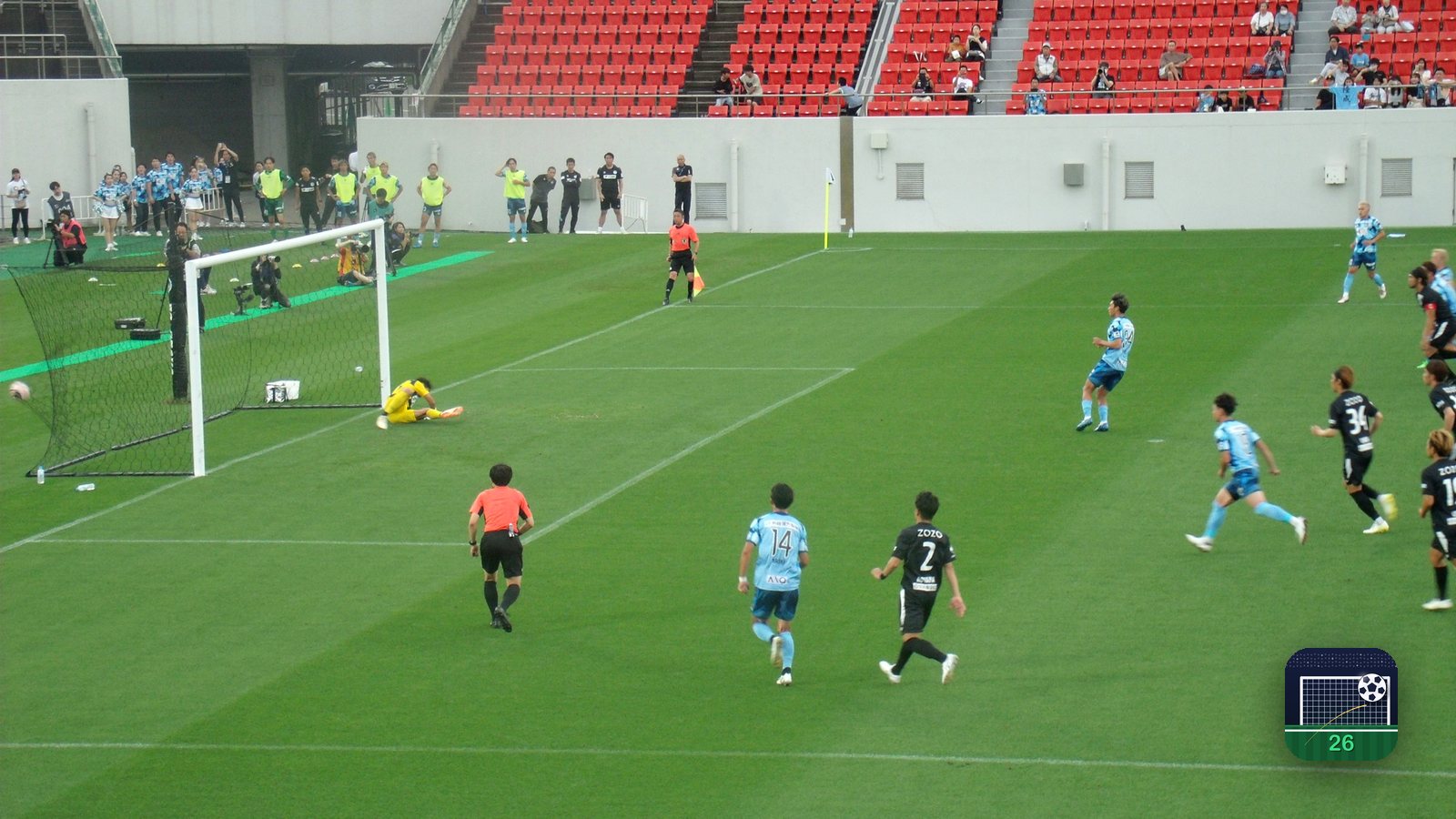
A knockout match ends level after extra time, and suddenly a tournament comes down to twelve yards and a coin toss. Shootouts look simple from the sofa, but the rules behind them are more precise than most fans realize. In the Laws of the Game they aren't even called a shootout: the official name is "kicks from the penalty mark," and they sit in Law 10, which covers how a match is decided.
Before the first kick
The referee tosses a coin to choose which goal the kicks will be taken at. Then there's a second toss, and the team that wins it decides whether to kick first or second.
Only players who were on the field at the end of the match are eligible, including anyone temporarily off for an injury or an equipment fix. Substitutes who never came on can't take part, with one narrow exception: a goalkeeper who is injured and can't continue may be replaced by a named substitute.
If one team finishes with more players than the other, say because of a red card, it must reduce its numbers to match its opponent and tell the referee who is dropping out. So a shootout always starts even.
Five kicks, then sudden death
The order is ABAB: the teams take turns, one kick each. Each kick is taken by a different player, and every eligible player has to kick once before anyone is allowed a second go. That includes the goalkeepers.
Both teams take five kicks unless the result is settled early. If one side has scored more than the other could possibly reach with its remaining kicks, the shootout ends there. A 3-0 lead after three kicks each, for example, is over.
If it's still level after five each, it goes to sudden death: kicks continue in pairs until one team has scored more than the other from the same number of attempts.
While all this happens, the other players wait in the centre circle. Each kick is still a penalty kick, so the ordinary penalty rules apply every time.
What the goalkeeper can and can't do
This is where most arguments start. Under Law 14, the keeper must stay on the goal line, facing the kicker, between the posts, until the ball is kicked, and can't touch the posts, crossbar or net or unfairly distract the kicker. At the moment of the kick, the keeper needs at least part of one foot touching, in line with, or behind the goal line.
If the keeper comes off the line early and the kick goes in anyway, the goal stands. If the keeper's early move stops a goal, the kick is retaken. The keeper gets a warning for a first offence in the game and a caution for any after that.
In a shootout the keeper's feet are the most closely watched thing on the pitch, which is why "at least part of one foot on or level with the line" matters.
The ABBA experiment
Kicking second in a shootout was long thought to be a disadvantage, since you are so often shooting to stay alive. In 2017 the IFAB, the body that writes the Laws, trialled an ABBA order borrowed from the tennis tie-break: A kicks, then B twice, then A twice, and so on. The first trial came in a UEFA women's under-17 semi-final in May 2017.
It didn't last. At its business meeting in November 2018 the IFAB agreed to stop using the ABBA option, mainly because of a lack of strong support and because it was too complicated to follow. ABAB remains the rule.
If you want to follow it or feel the pressure yourself, Golazo 26 covers the summer 2026 tournament match by match, with live scores that refresh every minute, kickoff times in your own timezone and the stadium for every game. When no match is on, it has its own penalty shootout game: pick one of 16 nations, take the kicks and make the saves in a best-of-five, and go to sudden death if it's tied. It's free, with no account and no ads.
Next time a match goes to penalties, you'll know exactly why the referee is watching the keeper's feet.
Recent posts
-
How-to
How to cut food waste at home without trying harder
Oct 04, 2026
-
How-to
How to make a photo-a-day timelapse of your kid growing up
Oct 03, 2026
-
How-to
How to appeal a denied health insurance claim
Oct 02, 2026
-
How-to
How to settle up money after a poker or card night, fairly and fast
Oct 01, 2026
-
How-to
How to plan a national park road trip that isn't all driving
Oct 01, 2026
-
How-to
How to start strength training at home with no equipment
Sep 30, 2026
0 comments
No comments yet — be the first.
Leave a reply
Sign in with Google to join the conversation. We require a quick sign-in to keep comments spam-free.
Sign in with Google to comment