How to make a holiday gift budget you actually keep
Set one total first, split it by person, fund it weekly, track every purchase, and plan for the shipping, wrapping and hosting costs that quietly blow budgets.

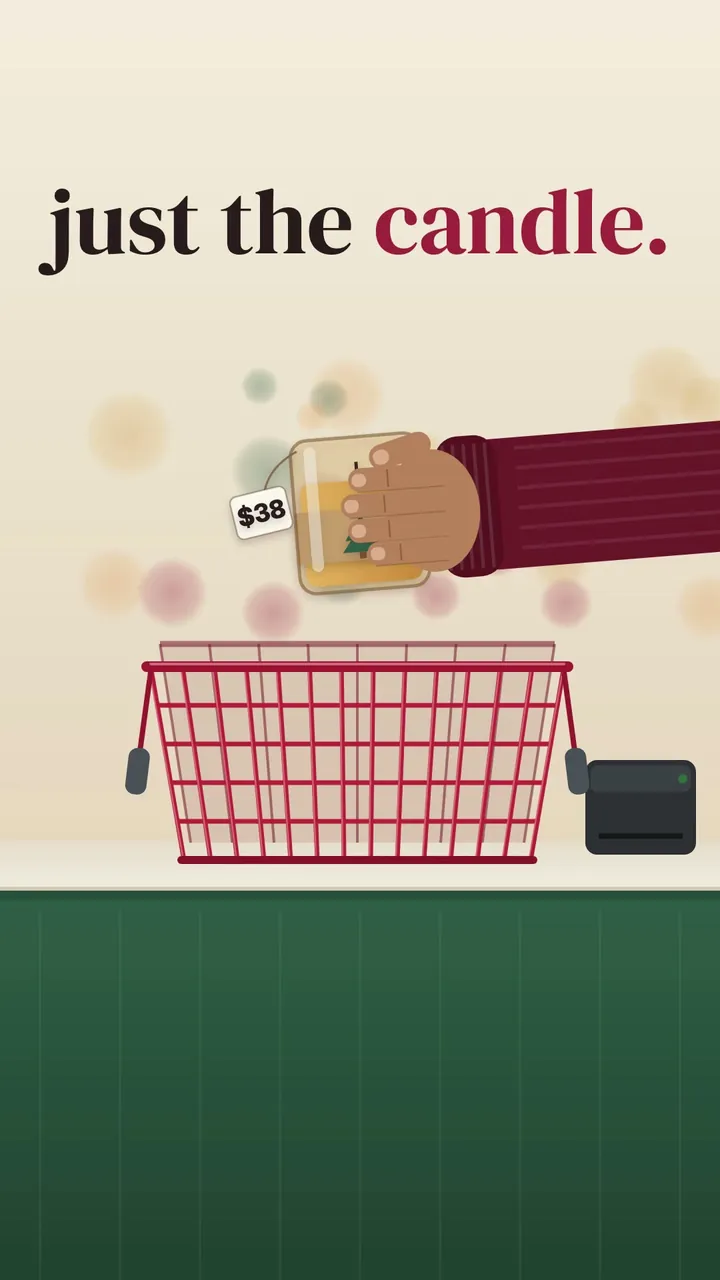
It's December 19 and you're standing in a checkout line with a $38 candle for a coworker you hadn't planned on. The card statement in January will be full of moments like this: not one big splurge, but forty small "while I'm here" buys. Last year, the National Retail Federation forecast that the average shopper would spend about $890 on the holidays, with roughly $628 of that on gifts. A budget that survives December starts with one number.
Pick the total first, then split it
Most budgets fail because they're built bottom-up: a gift for each person, added together, and the sum is whatever it turns out to be. Flip it.
- Choose the total you can pay in cash by January. Look at what you can set aside without touching rent, bills or savings. That number is the budget, full stop.
- Hold back 15 to 20% for "everything else." Shipping, wrapping, cards, hosting and the surprise gift. More on that below.
- Split the rest by person. Group people into tiers: partner and kids, close family, friends, and "small thanks" for teachers, neighbors and coworkers. Give each tier a per-person amount.
With a $900 total, holding back $150 leaves $750. That might be $200 each for two kids, $60 each for four close relatives, $15 each for four friends and $10 each for five small thanks.
Decide the total in October so December can't decide it for you.
Make the list and fund it before you shop
- Write the list now. Name, tier amount, gift idea, and a column for what you actually paid. A note on your phone is enough.
- Start a sinking fund. Divide the total by the weeks until you shop. From mid-October to mid-December is about nine weeks, so a $900 budget means $100 a week moved into a separate savings account or envelope.
- Agree on limits with family. A gift exchange or a per-gift cap among the adults is easier to propose in October than on December 23.
Track as you buy, not after
- Log each purchase the same day, including tax.
- Subtract it from that person's line. Overspending on one person means taking it from another line or from the buffer. Not from the card.
- Watch for duplicate gifts and forgotten returns. Note return windows on anything bought early.
- Check the free trials. Holiday streaming and shipping trials often renew into paid plans in January; our guide on finding and canceling forgotten subscriptions helps catch them.
Budget for the costs nobody lists
These belong in the buffer you held back:
- Shipping to out-of-town family, especially rushed shipping after the carriers' holiday cutoffs.
- Wrapping, tape, gift bags and cards, which can add $40 to $80 for a big family.
- Hosting: the extra grocery run, the drinks, the folding chairs.
- Travel: gas, a rental car, a pet sitter.
- Last-minute gifts: the host present, the office swap, the neighbor who brings cookies.
If the buffer is still there on December 26, move it straight into next year's fund. Start this year's list tonight, and next December will feel a lot lighter.
Videos
Watch this post as a reel
Related posts
-
How-to
How to keep a medication list for an aging parent that doctors actually use
Sep 28, 2026
-
How-to
How to make an ins and outs list you'll actually stick to
Oct 13, 2026
-
How-to
How to make Thanksgiving sides ahead of time
Nov 11, 2026
Recent posts
-
How-to
What Thanksgiving foods dogs shouldn't eat (a fridge-door list)
Nov 18, 2026
-
How-to
Why your tire pressure light comes on when it's cold (and what to do)
Nov 17, 2026
-
AI & Trends
How to spot fake AI-written product reviews before Black Friday
Nov 16, 2026
-
How-to
How to spot a fake Black Friday deal before you pay
Nov 15, 2026
-
How-to
How to make coffee for a crowd (without running out or serving mud)
Nov 14, 2026
-
How-to
How to track buy now, pay later payments before Black Friday
Nov 13, 2026
0 comments
No comments yet — be the first.
Leave a reply
Sign in with Google to join the conversation. We require a quick sign-in to keep comments spam-free.
Sign in with Google to comment