Meet UnitLog — Submeter bills, done right
Submeter bills, done right

Utilities
UnitLog
Submeter bills, done right
Every feature, from the first launch.
No account, no login, no cloud. Everything runs on your device and works fully offline — nothing in this post is hidden behind a wall.
What UnitLog does
Across India and Pakistan, millions of rented rooms, PG beds and portion houses run on submeters — and every month the same ritual repeats: someone squints at the meter, scribbles the reading on a wall or a WhatsApp message, multiplies by a rate from memory, and hopes nobody disputes the total. UnitLog replaces that ritual with a proper ledger.
Add each tenant or room with its own submeter, opening reading and agreed per-unit rate (₹ or Rs). When a new reading comes in, UnitLog instantly shows units consumed and the bill amount — units × rate, plus any fixed monthly charge you've set. Both sides see the exact arithmetic, so the conversation about the bill takes thirty seconds instead of thirty minutes.
Then the part most notebooks lose track of: payment. Mark each bill paid, partial or due, and every tenant carries a running balance you can check before they move out. A month-by-month history per meter means you can answer "why is it higher this month?" with numbers, not shrugs. Need to send the bill? Share a clean text slip — readings, units, rate, total — to WhatsApp or SMS in one tap.
UnitLog is completely free, works 100% offline, and needs no account or sign-up. Everything is stored locally on your device with SwiftData — readings, rates and payment records never leave your phone.
• Unlimited tenants, rooms and submeters • Auto bill: units consumed × per-unit rate + fixed charge • Paid / partial / due status with running balance per tenant • Month-by-month reading and consumption history • Shareable text bill slip for WhatsApp or SMS • ₹ and Rs supported; fully offline, no account, no ads
Download UnitLog and turn meter day from an argument into a sixty-second routine.
A look inside
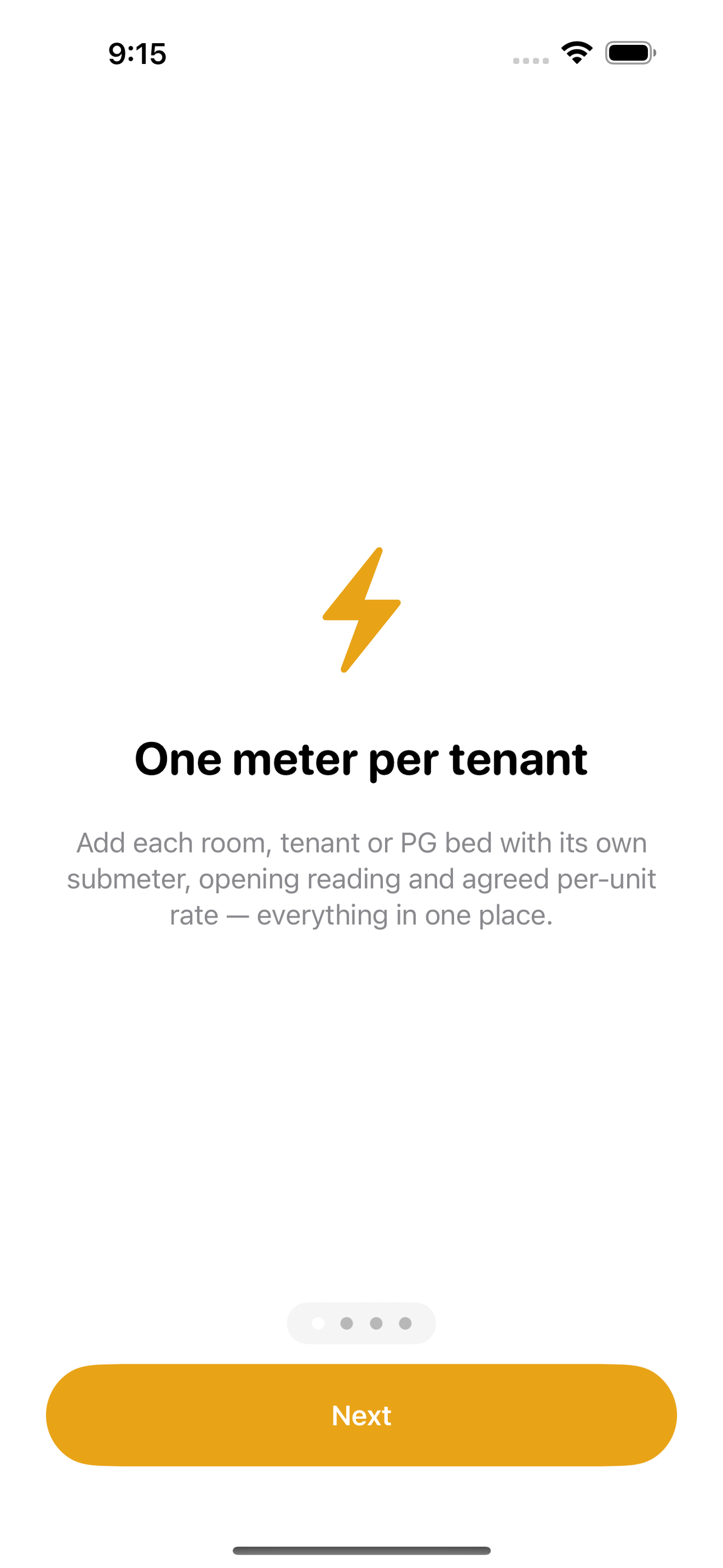
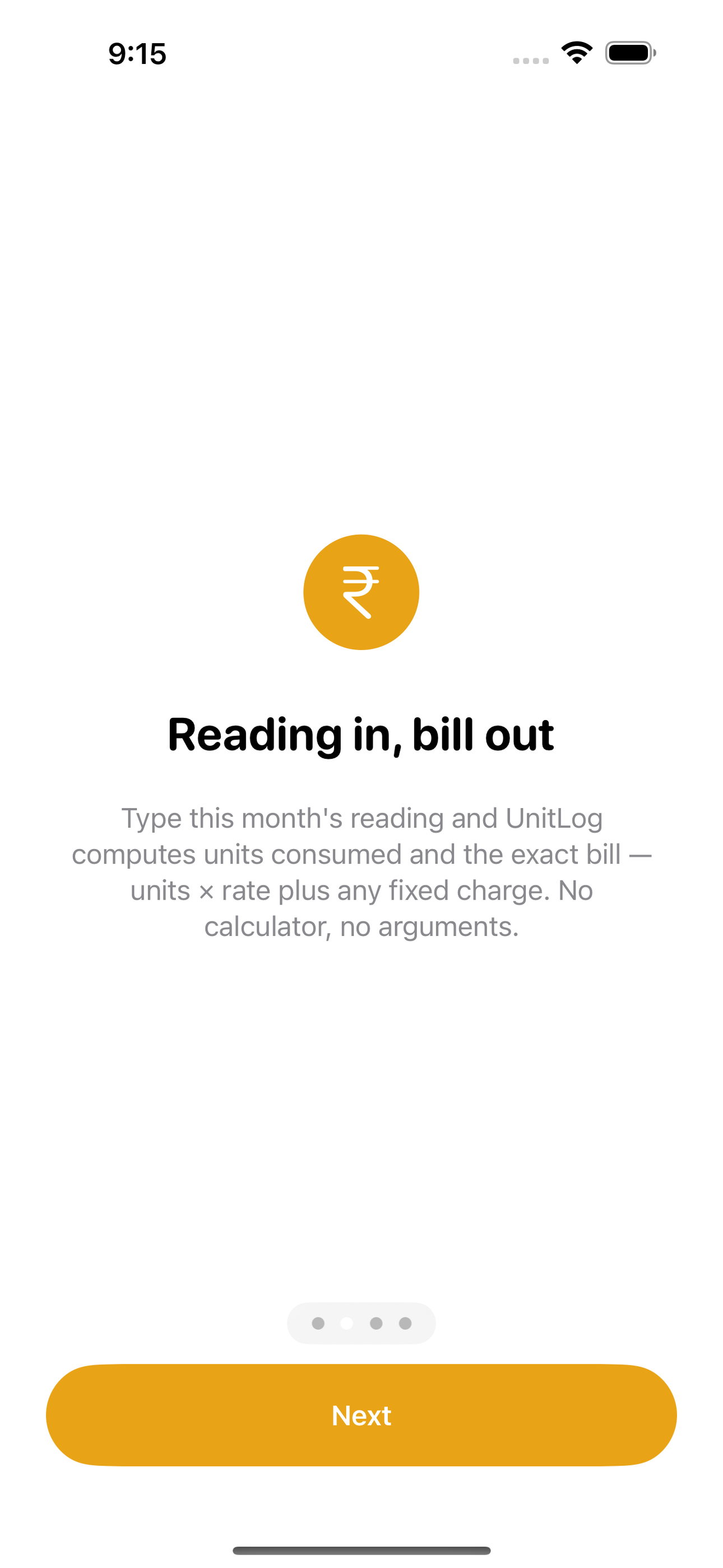
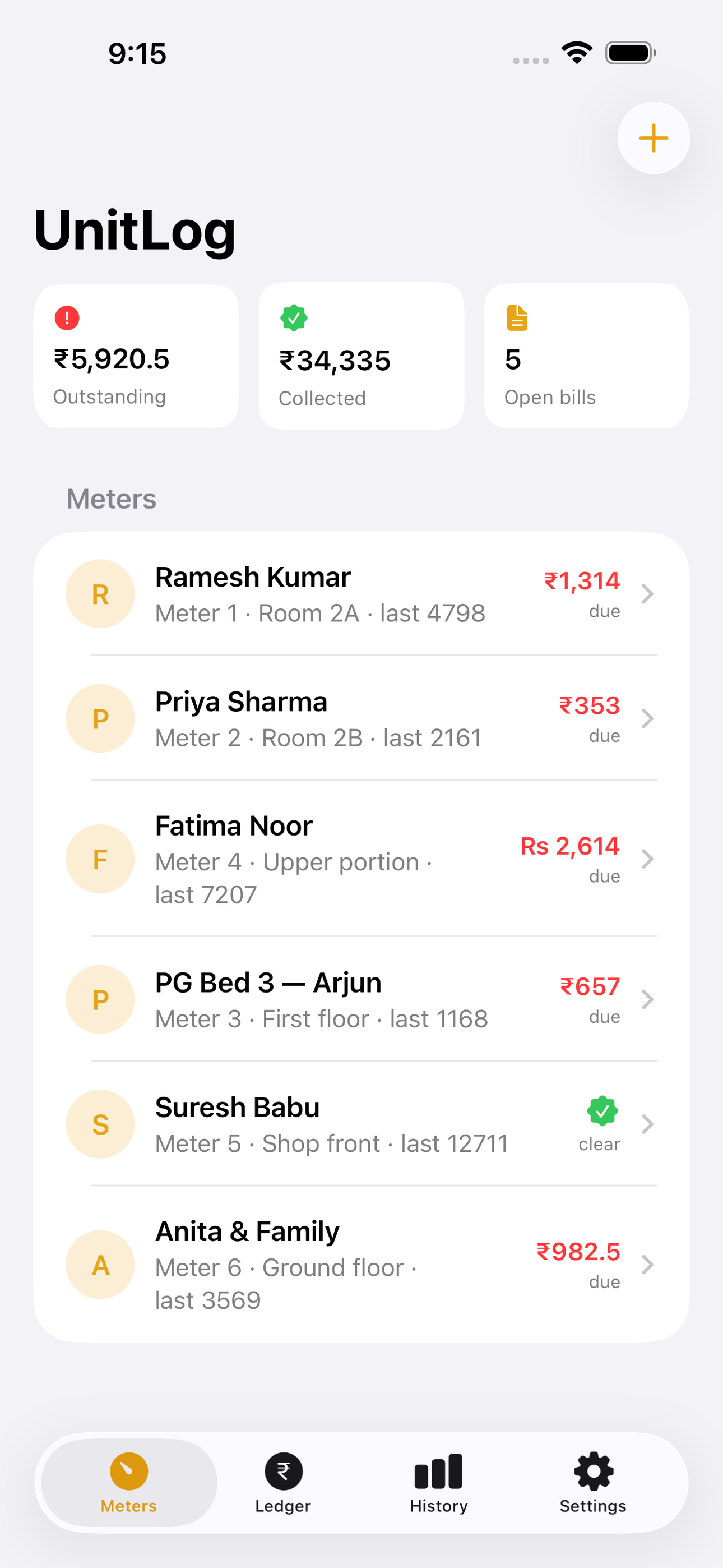
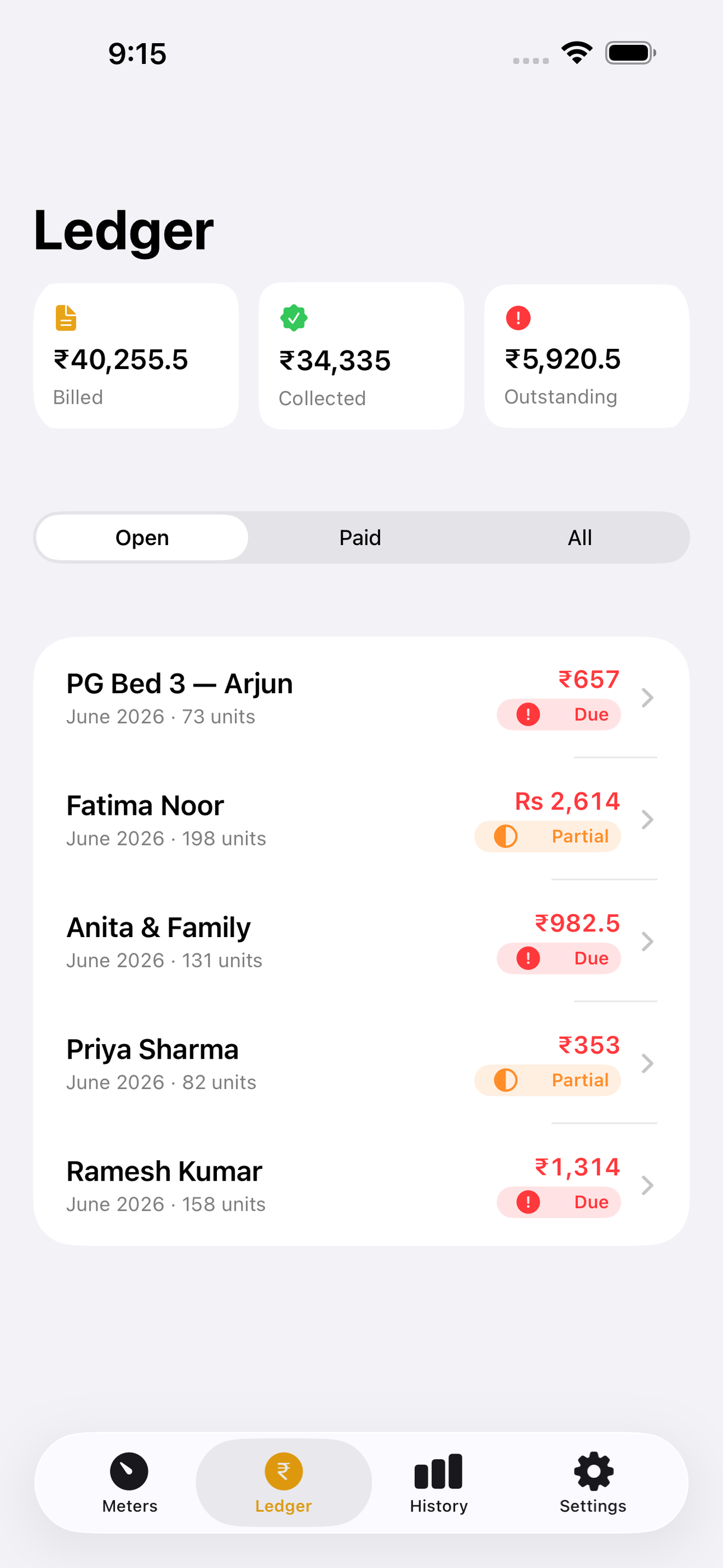
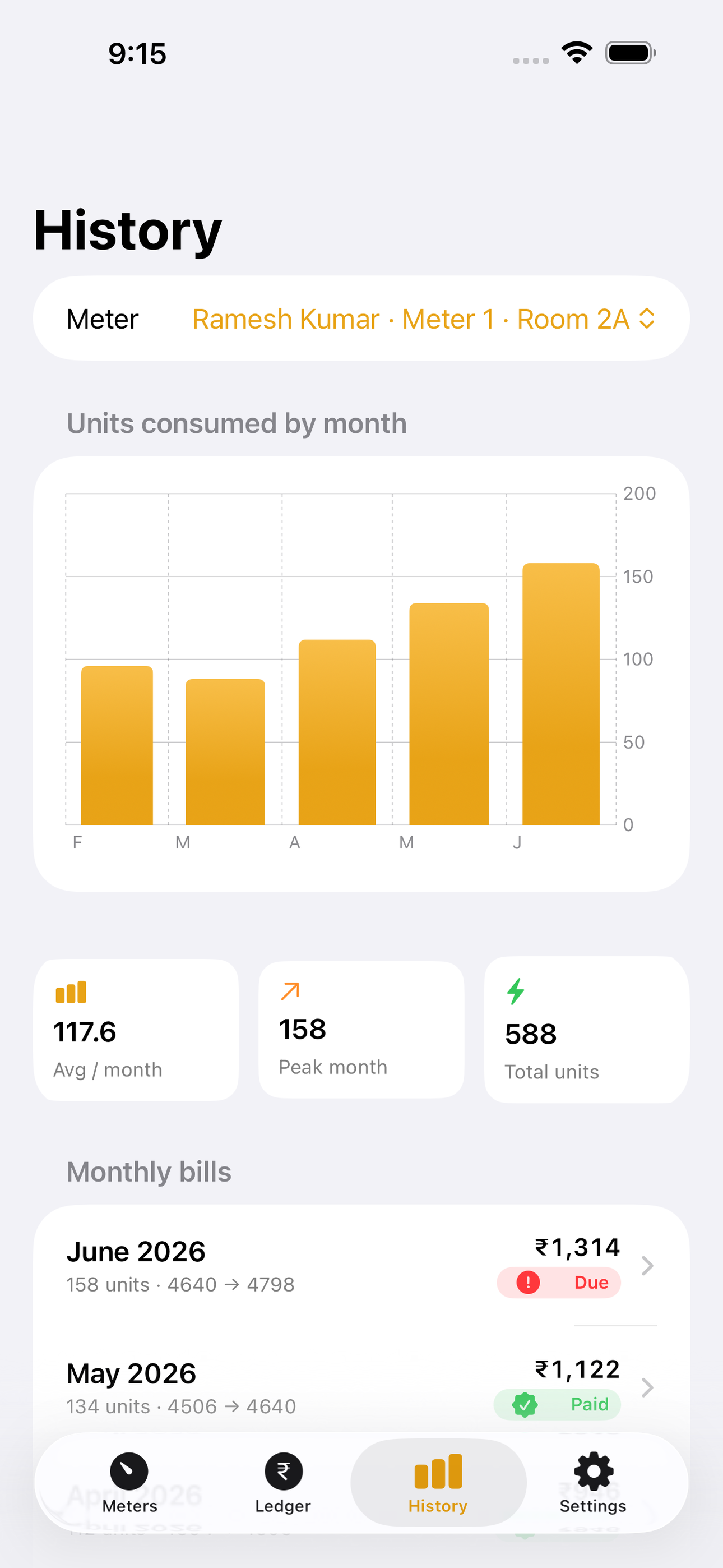
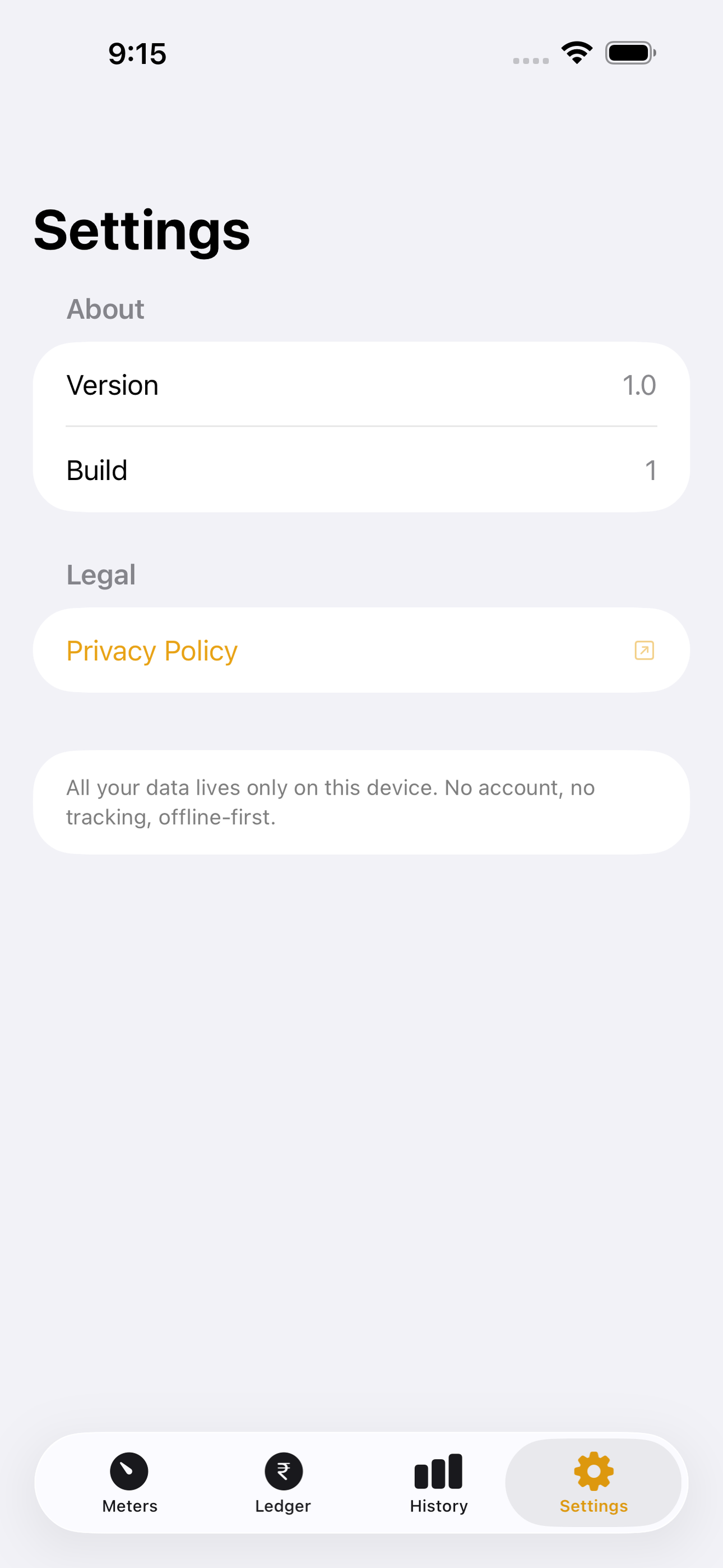
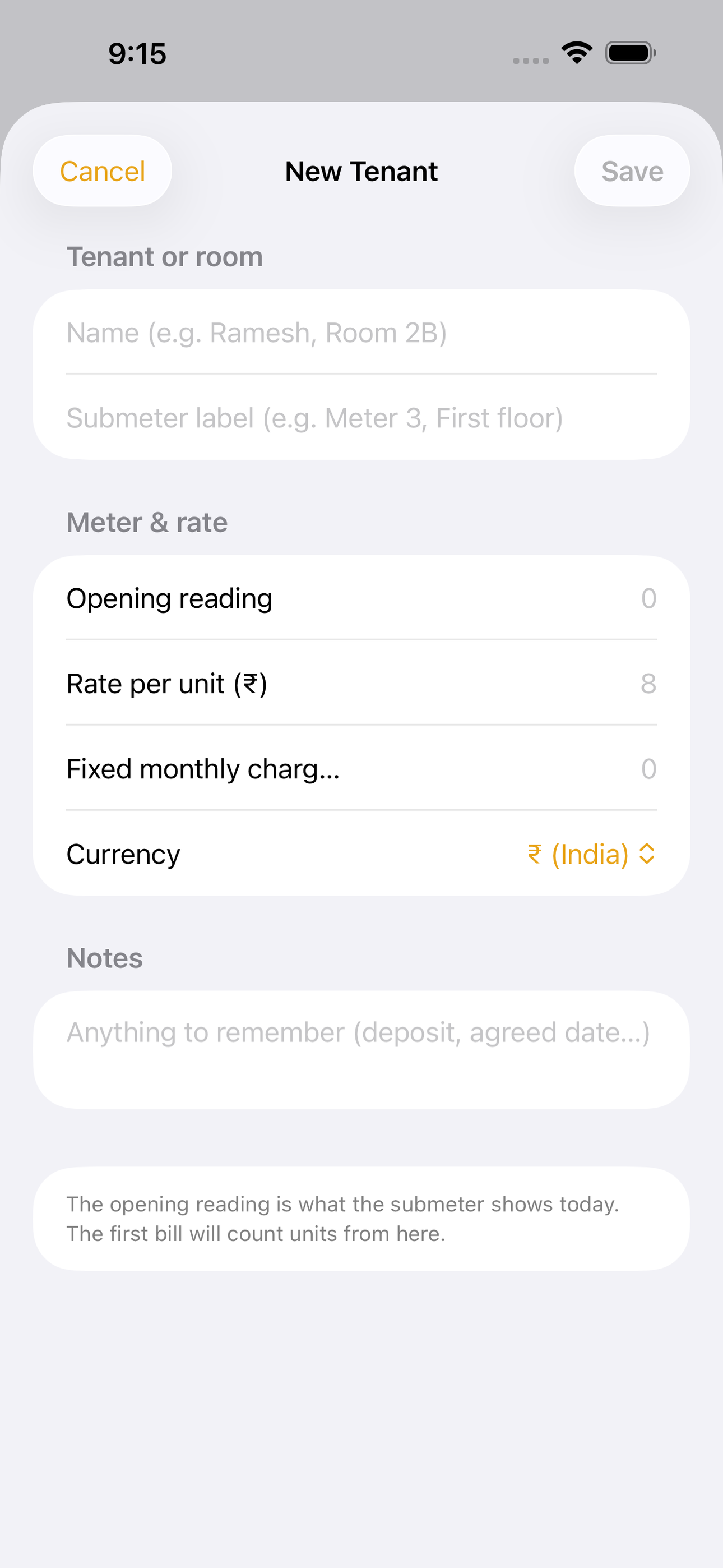
Tap any screenshot to open the full-resolution version.
What's inside
- Tenants & meters — Add each tenant or room with its submeter name, opening reading, per-unit rate, optional fixed monthly charge and currency (₹/Rs); a home grid shows every meter with its latest reading and outstanding balance.
- Reading & auto bill — Enter the current meter reading and UnitLog computes units consumed against the previous reading and generates the bill — units × rate + fixed charge — with the full arithmetic shown line by line.
- Payment ledger — Mark each bill paid, partially paid or due, record the amount and date received, and see a running balance per tenant plus a totals strip of collected vs outstanding across all meters.
- History & bill slip — A month-by-month history per meter charts units consumed over time, and any bill can be exported as a clean plain-text slip — readings, units, rate, total, status — via the share sheet to WhatsApp or SMS.
Why we built it
Submeter billing in India and Pakistan is done with wall scribbles, Excel and WhatsApp: reading the meter, computing units, applying the right per-unit rate, adding fixed charges and tracking who paid takes 30-45 minutes per tenant and is error-prone — and because neither side keeps a clean record, per-unit-rate dispu…
What makes it different
Unlike Chargebook (a US EV-charging session log for one driver's car) and Loadwise (South Africa load-shedding outage schedules), UnitLog is a multi-tenant billing ledger for submetered rooms in India/Pakistan: readings → units → rate → bill → payment status per tenant, with shareable bill slips and rupee-first curren…
Who it's for
Anyone who values a small, sharp, single-purpose tool that does one job well and stays out of the way.
In one line: Submeter bills, done right
Try it
See the Submeter bills, done right for the full feature list, the info table, and support links.
Use UnitLog, found a bug, or have a feature request? Comments are open below — anonymous is fine.
0 comments
No comments yet — be the first.
Leave a reply
Sign in with Google to join the conversation. We require a quick sign-in to keep comments spam-free.
Sign in with Google to comment