Meet FallTrail — Fall diary, patterns & report
Fall diary, patterns & report

Health And Fitness
FallTrail
Fall diary, patterns & report
Every feature, from the first launch.
No account, no login, no cloud. Everything runs on your device and works fully offline — nothing in this post is hidden behind a wall.
What FallTrail does
One in four adults over 65 falls every year, and after every fall the same question comes from the ER doctor, the physical therapist, and the Medicare wellness visit: how many falls this year, and what was happening each time? For most families the honest answer lives on a sticky note on the fridge — if it lives anywhere at all.
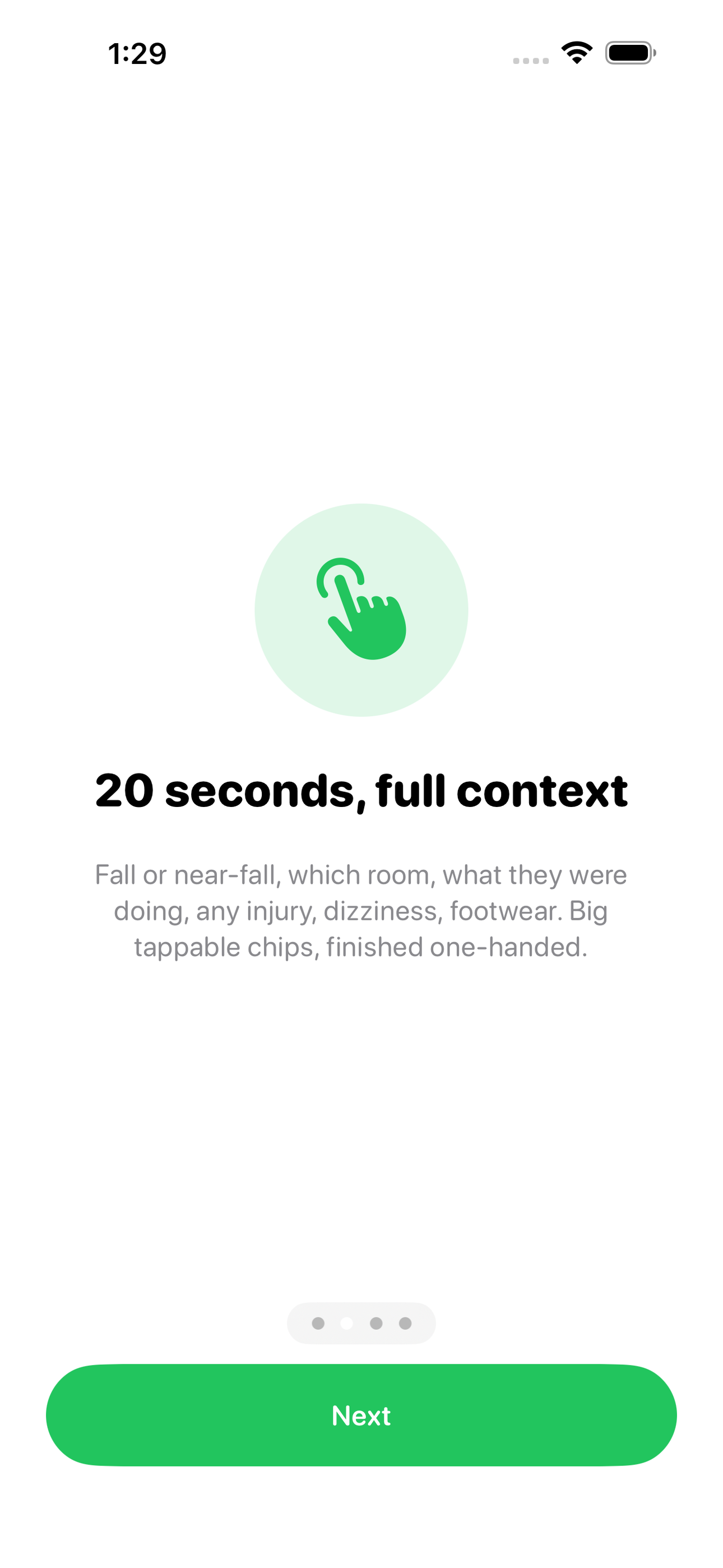
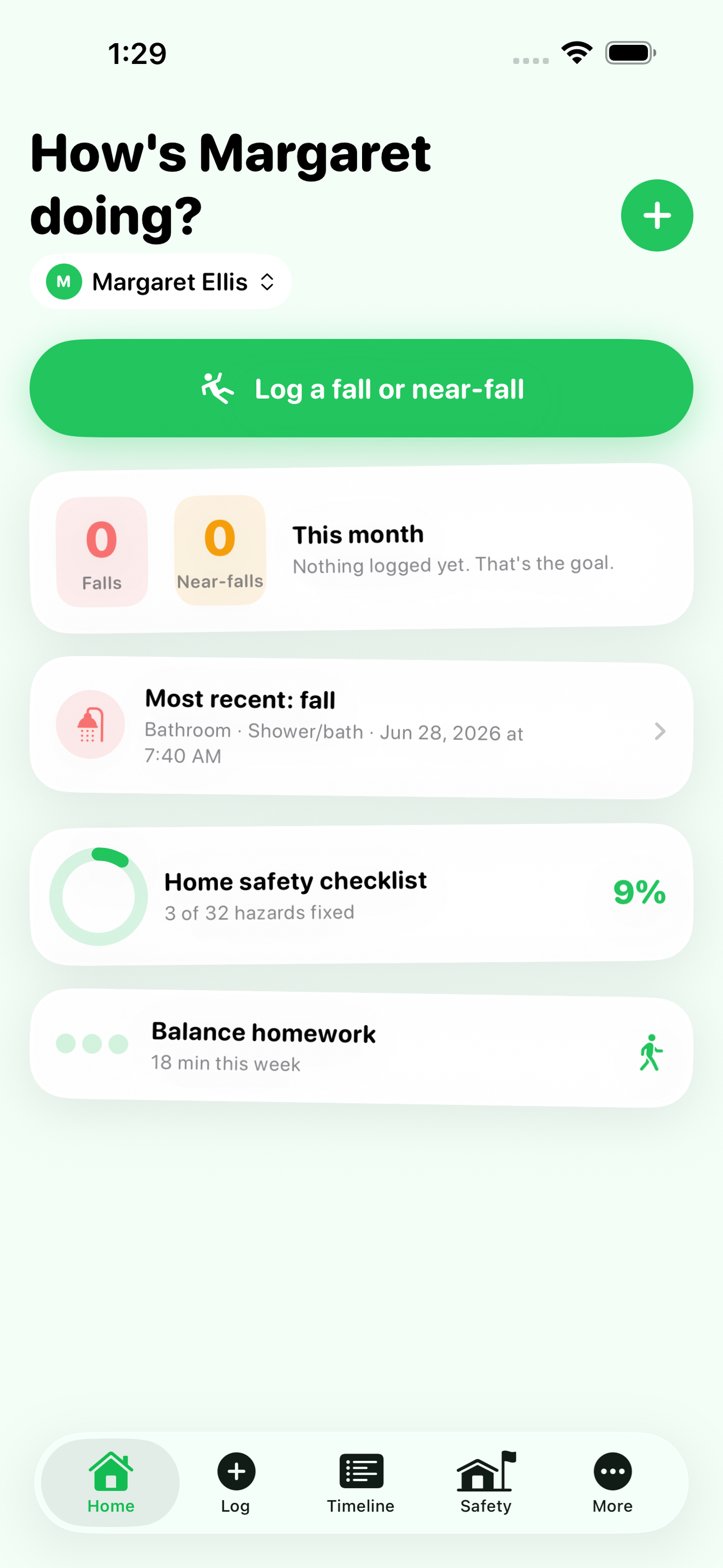
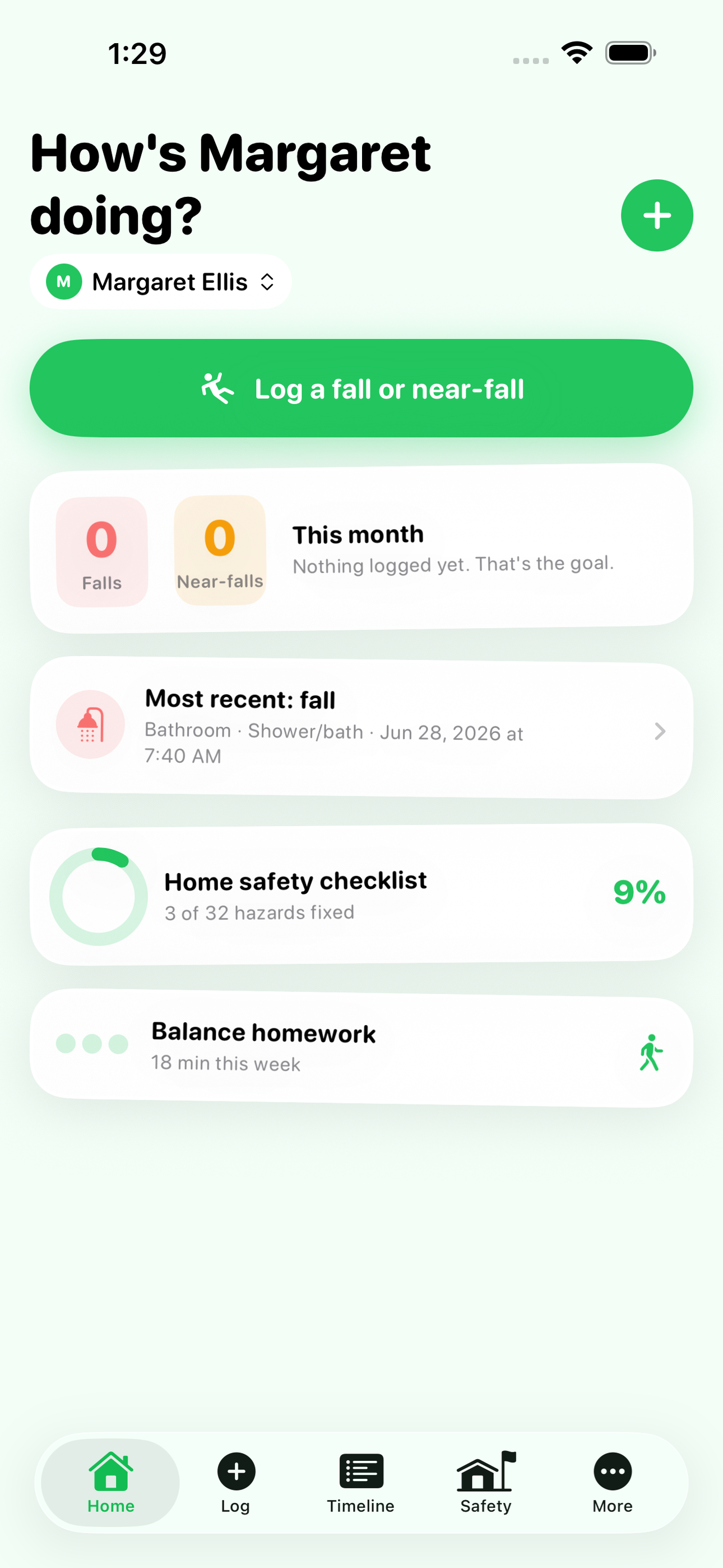
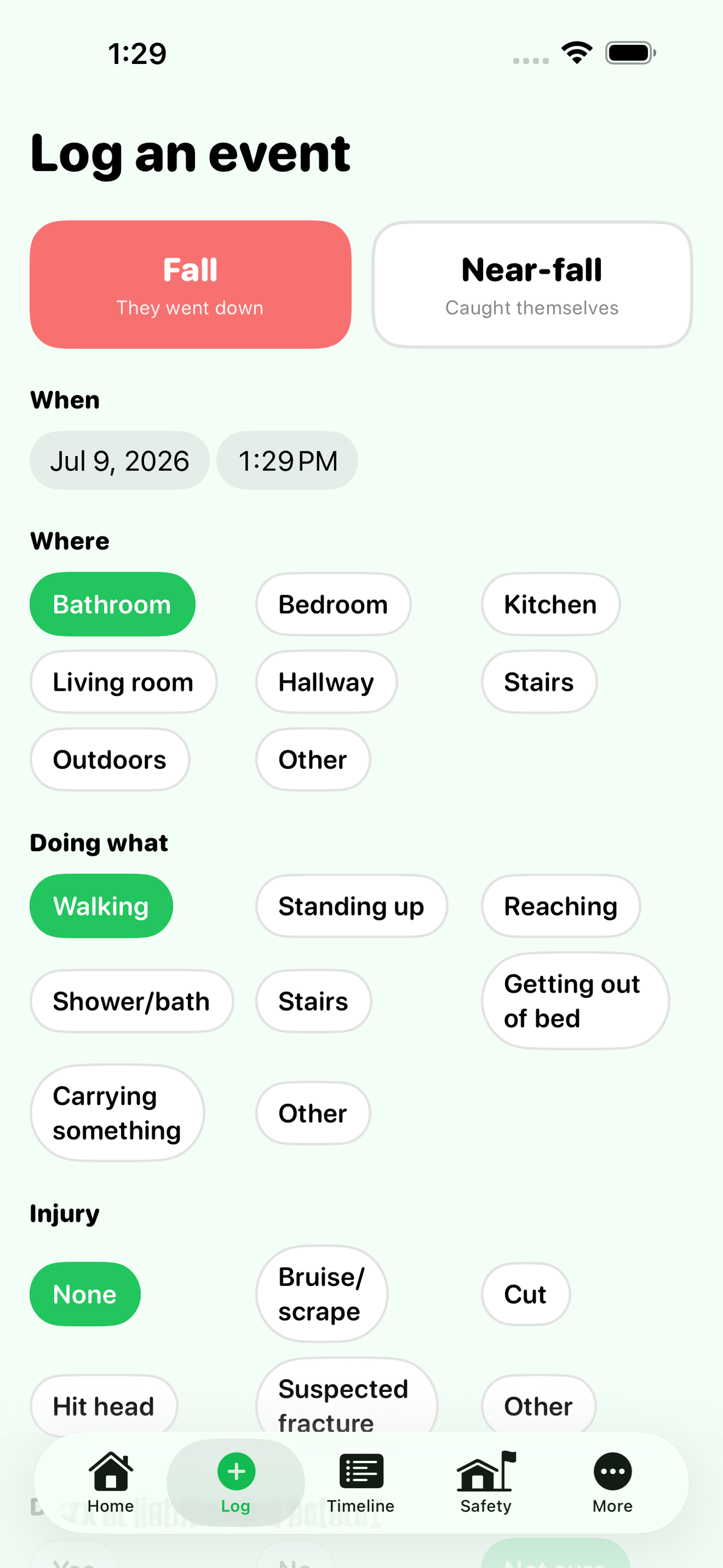
FallTrail is a 20-second fall and near-fall diary built for exactly that question. When something happens, open the app and tap through what matters: fall or near-fall, which room, what they were doing, any injury, dizziness beforehand, what was on their feet. That's it. Months later, when the physical therapist asks about circumstances, the answer is on your phone instead of in anyone's memory.
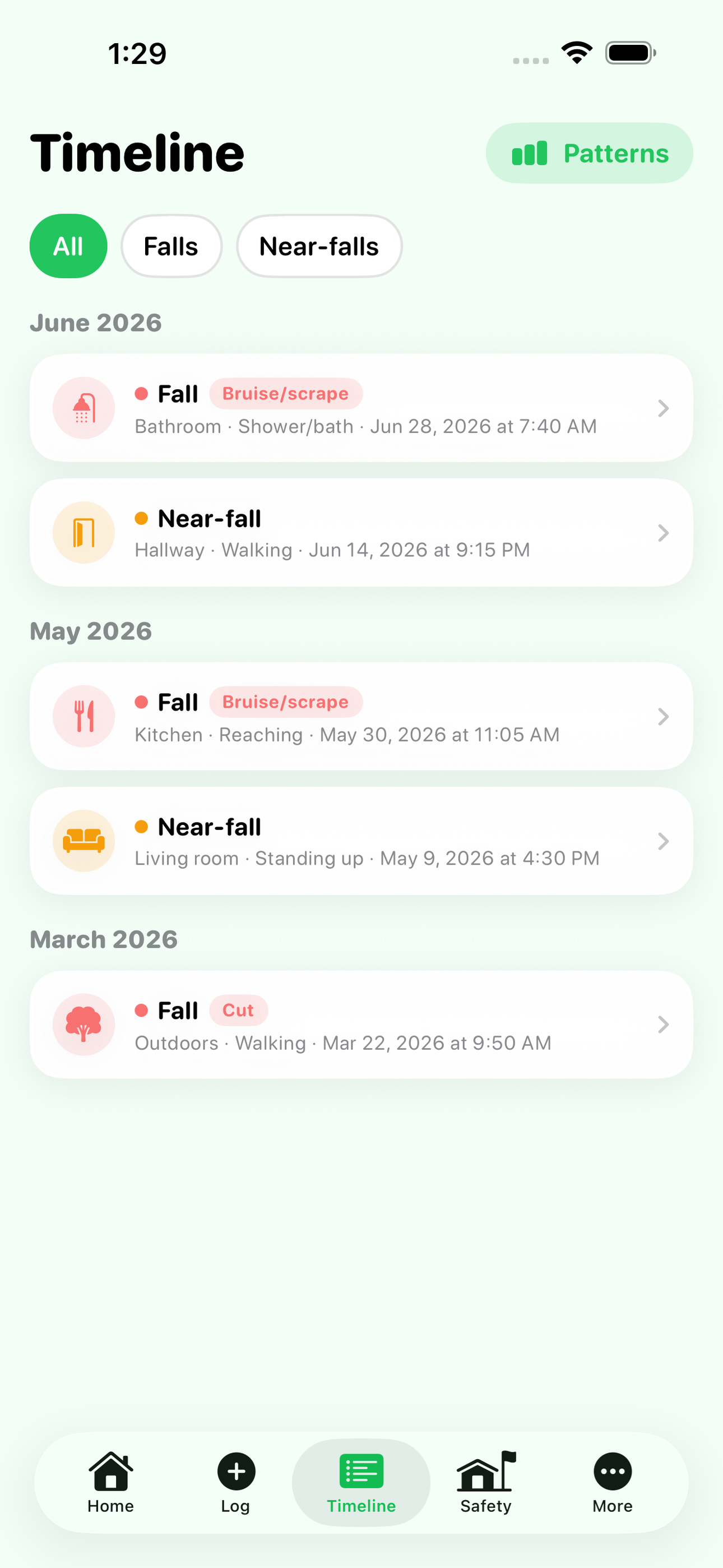
Near-falls are the part every other tool misses. A smartwatch only registers hard-impact falls while it is worn, and captures zero context. But the stumbles and grabs for the counter are the early warnings clinicians actually ask about — FallTrail treats them as first-class entries.
Log a handful of events and FallTrail shows the shape of the problem: falls clustering in the bathroom, near-falls mostly at night, a frequency trend that is easier to discuss as a chart than a feeling. Before an appointment, generate a clean, STEADI-style fall-history report — dates, circumstances, injuries, patterns — formatted to hand to a clinician, so intake starts from facts.
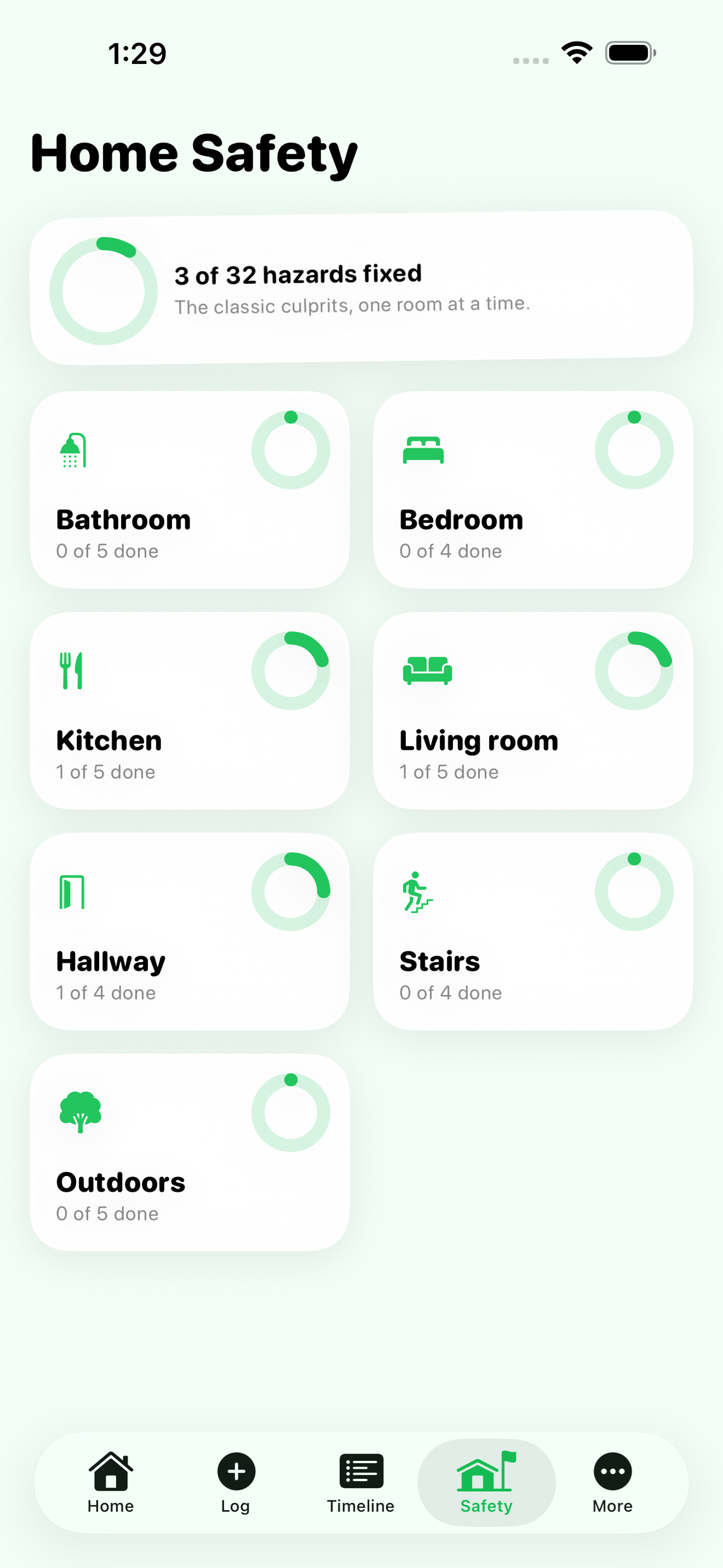
FallTrail also includes a room-by-room home-hazard checklist covering the classic culprits: loose rugs, poor lighting, missing grab bars, clutter. Work through it one room at a time and track what is fixed.
Track one person or several — both parents, a grandparent, yourself. Everything stays on the device: no account, no monitoring service, no monthly fee. FallTrail is a record book, not a medical device — it never predicts risk or offers a diagnosis. It just makes sure that when a clinician asks about fall history, somebody finally has the answer.
• 20-second logging for falls and near-falls with room, activity, injury, dizziness, and footwear • Pattern view showing time-of-day and location clusters plus frequency trends • STEADI-style fall-history report to hand to a physical therapist or doctor • Room-by-room home-hazard checklist with progress tracking • Multiple profiles for tracking more than one person • Photo notes for hazards and injuries • Balance-exercise streak tracking for prevention homework • Fully offline — no account, no subscription, no monitoring fees
A look inside
Tap any screenshot to open the full-resolution version.
What's inside
- Quick Fall Log — A 20-second guided entry: fall or near-fall, date and time, room, activity, injury severity, dizziness beforehand, footwear, optional photo and note. Designed so a stressed caregiver can finish it one-handed.
- Timeline & Patterns — A scrollable event timeline plus a pattern dashboard: falls by room, by time of day, near-fall vs fall ratio, and a monthly frequency trend chart that makes 'it's getting worse' provable.
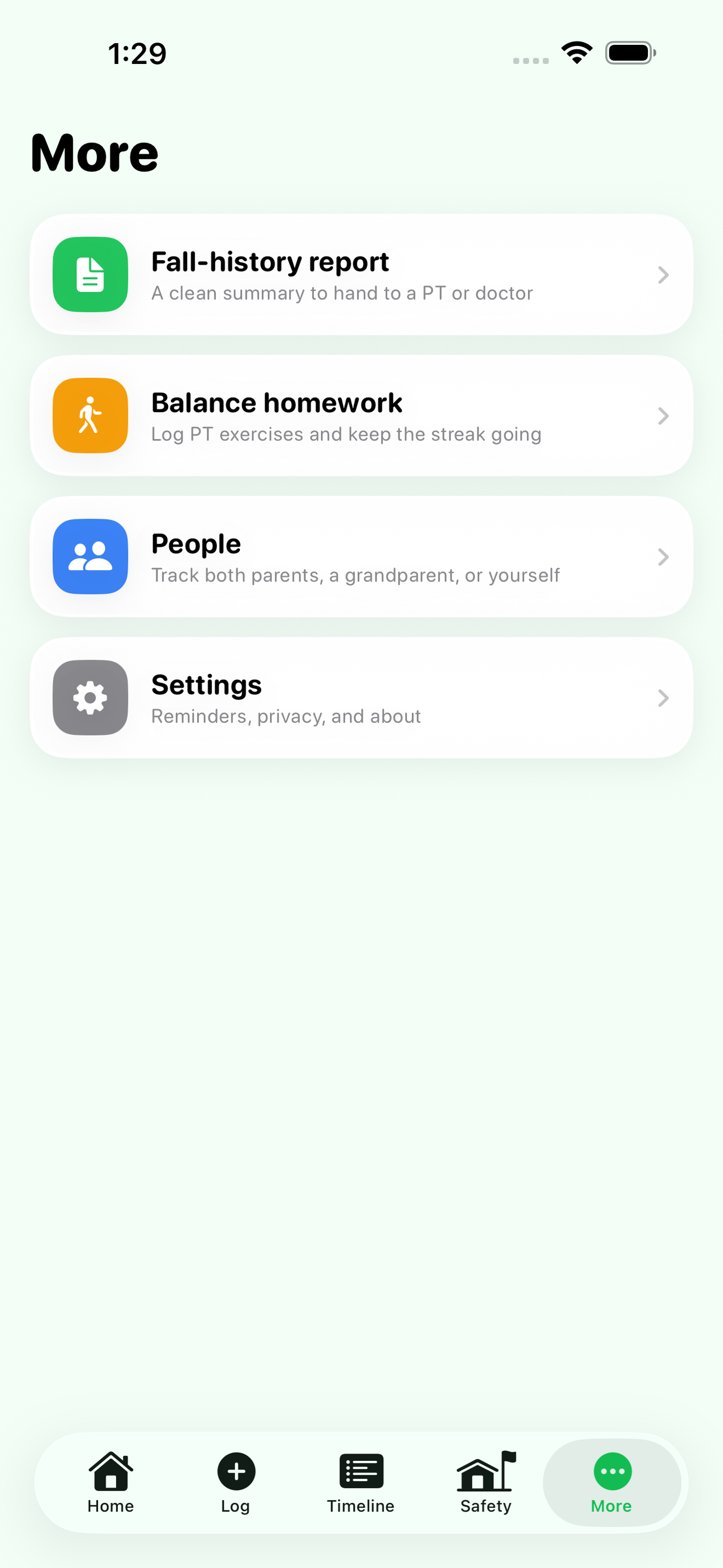
- STEADI-Style Report — Generates a clean fall-history summary — event table with circumstances, injury flags, pattern highlights, and hazard-fix status — rendered as a shareable PDF to hand to a PT or doctor at intake.
- Home Hazard Checklist — A room-by-room checklist of the classic fall hazards (loose rugs, lighting, grab bars, clutter, cords) with per-room progress rings and a resolved/pending state for every item.
- People Profiles — Track more than one person — both parents, a grandparent, yourself — each with their own diary, checklist, and report, switchable from anywhere.
- Balance Streaks — Log the balance-exercise homework PTs assign (sit-to-stands, heel-toe walks, single-leg stands) and keep a gentle streak going, with minutes-per-week totals.
Why we built it
Clinicians running CDC STEADI assessments, PTs, and ER doctors all ask for a structured fall history — when, where, what the person was doing, injuries, near-misses — and families track it on sticky notes or a printable PDF, so at intake nobody can answer 'how many falls this year and under what circumstances?'
What makes it different
Apple Watch fall detection and Apple Health's 'Number of Times Fallen' only auto-log hard-impact falls while a Watch is worn — no manual entry, no near-falls, no context, no report. FallCall Detect, Lively, and other medical-alert apps are subscription emergency-monitoring services that alert after a fall but keep no…
Who it's for
Anyone who wants honest tracking without a coach, a subscription, or a streak guilting them at 11pm.
In one line: Fall diary, patterns & report
Try it
See the Fall diary, patterns & report for the full feature list, the info table, and support links.
Use FallTrail, found a bug, or have a feature request? Comments are open below — anonymous is fine.
0 comments
No comments yet — be the first.
Leave a reply
Sign in with Google to join the conversation. We require a quick sign-in to keep comments spam-free.
Sign in with Google to comment