Meet Earkeep — Hearing aid care, on schedule
A hearing aid is a two-to-seven-thousand-dollar computer that lives in earwax.
Health And Fitness
Earkeep
Hearing aid care, on schedule
Every feature, from the first launch.
No account, no login, no cloud. Everything runs on your device and works fully offline — nothing in this post is hidden behind a wall.
What Earkeep does
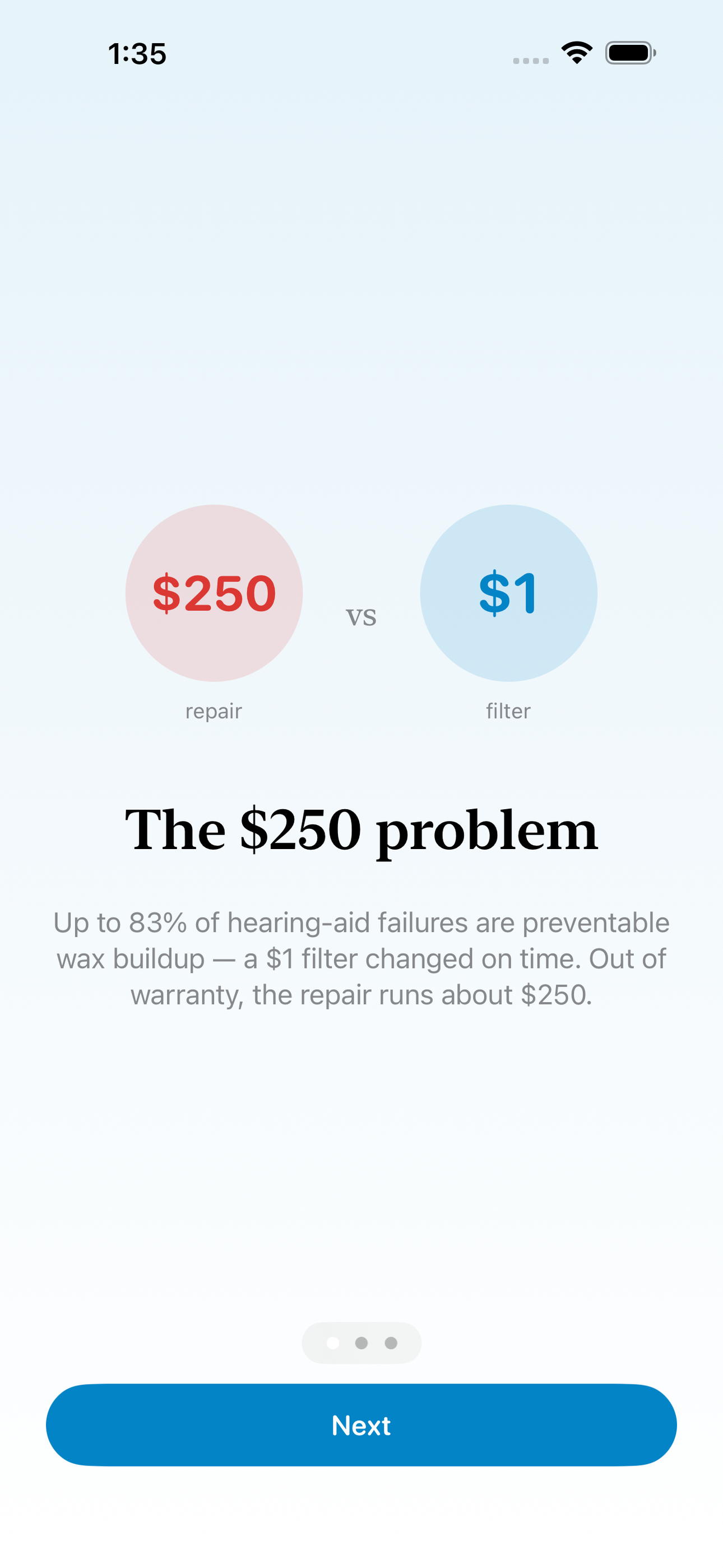
A hearing aid is a two-to-seven-thousand-dollar computer that lives in earwax. Studies attribute up to 83 percent of malfunctions to preventable wax buildup — a clogged filter that costs about a dollar to replace — yet once the warranty lapses, a manufacturer repair runs around 250 dollars. Earkeep is the maintenance companion that keeps every part changed on time, for any brand of aid, with no account and nothing ever sent to a server.
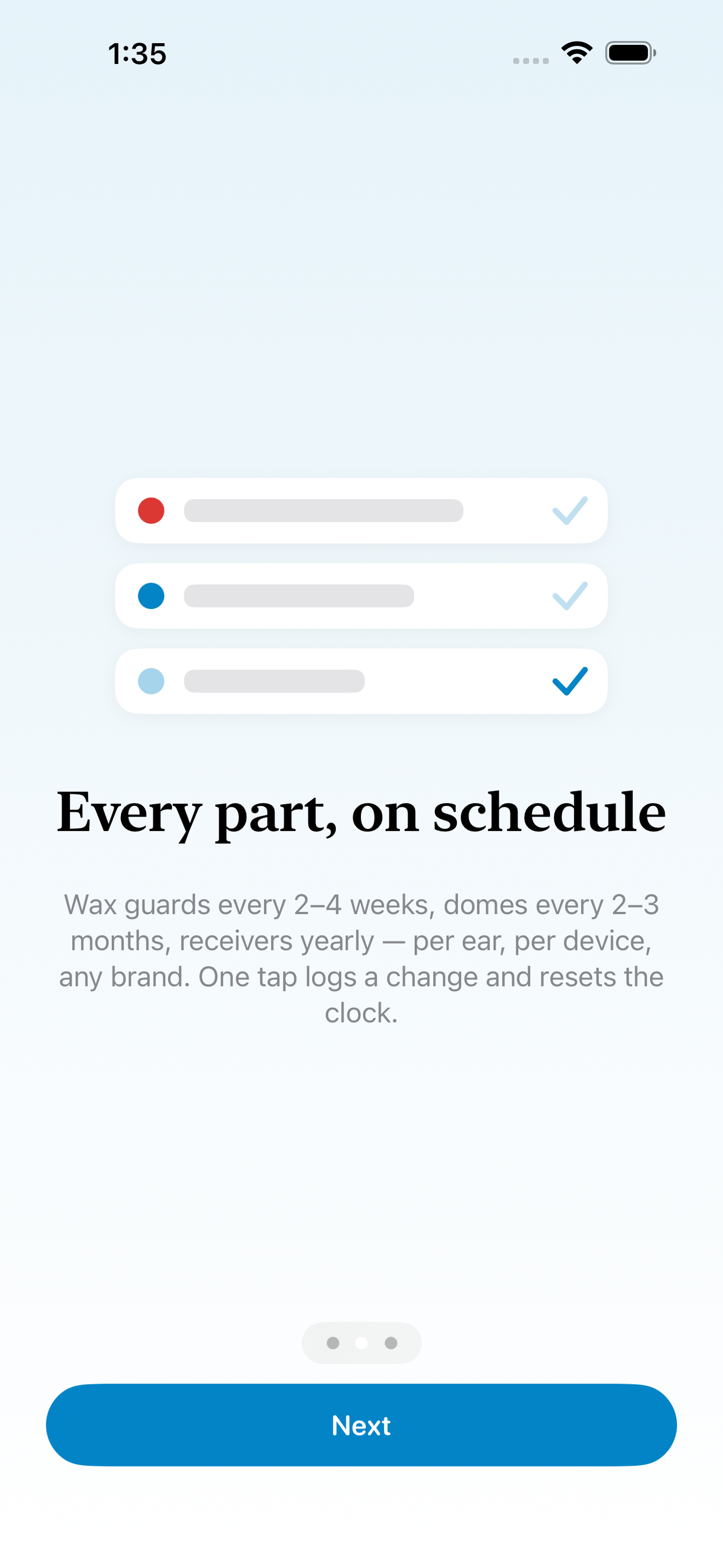
The schedule is genuinely hard to hold in your head. Wax guards need changing every 2 to 4 weeks. Domes every 2 to 3 months. Receivers, tubing, and drying routines run on their own cycles. Multiply that by two ears and nobody remembers when anything was last changed. Manufacturer apps handle streaming and volume; they do not do upkeep, and they abandon you entirely if your household mixes brands or uses over-the-counter aids.
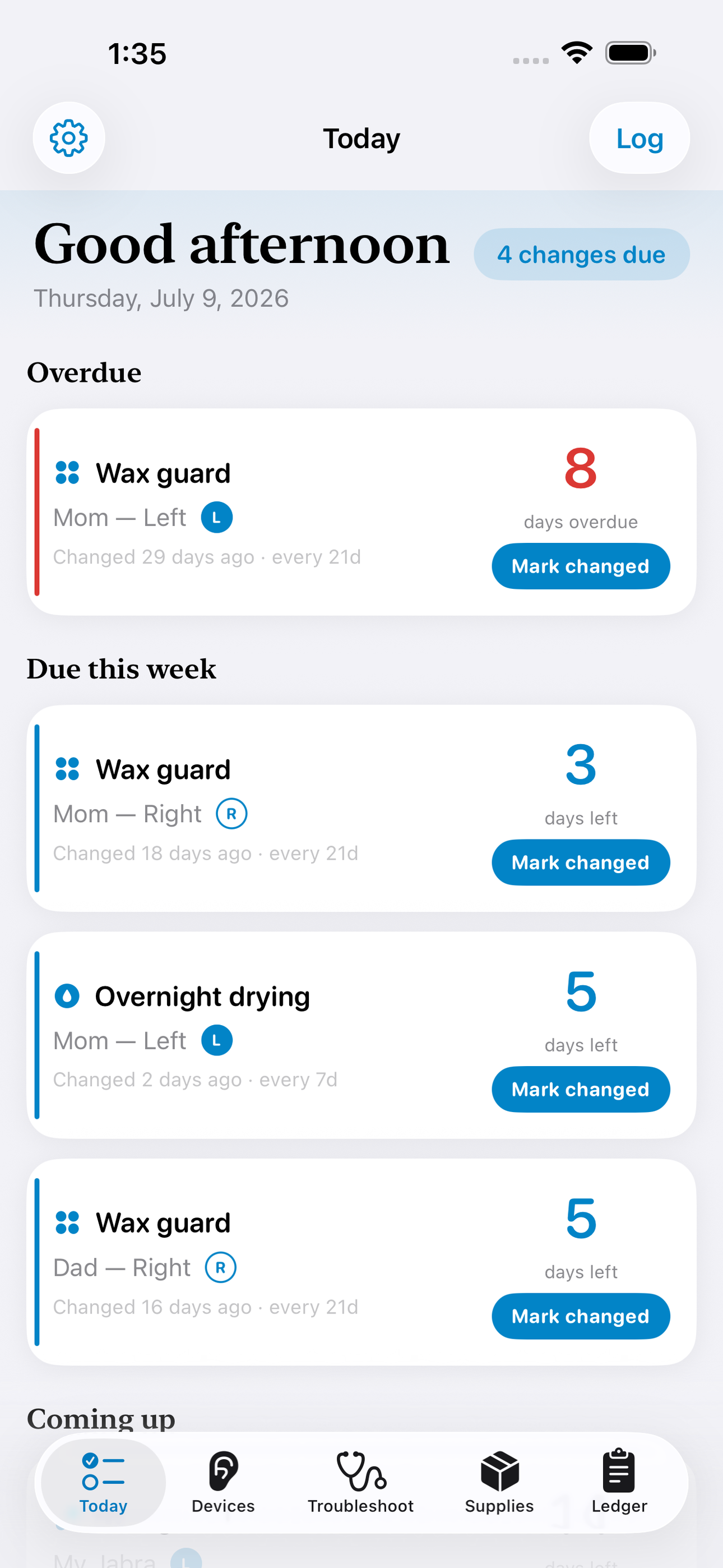
Earkeep gives every aid its own per-ear profile: brand, model, style (RIC, BTE, ITE, or OTC), serial number, and warranty end date. Each part gets a replacement interval and a last-changed date, and the schedule tab rolls everything into one clear list of what is due this week, per ear, per device. Changing a wax guard takes one tap and writes a dated history entry, so the answer to when did I last change this is always on record.
When an aid suddenly goes quiet, the built-in troubleshooter walks the clinic sequence: wax guard first, then dome, mic, battery, receiver — step by step, fully offline, before you panic or pay for a repair.
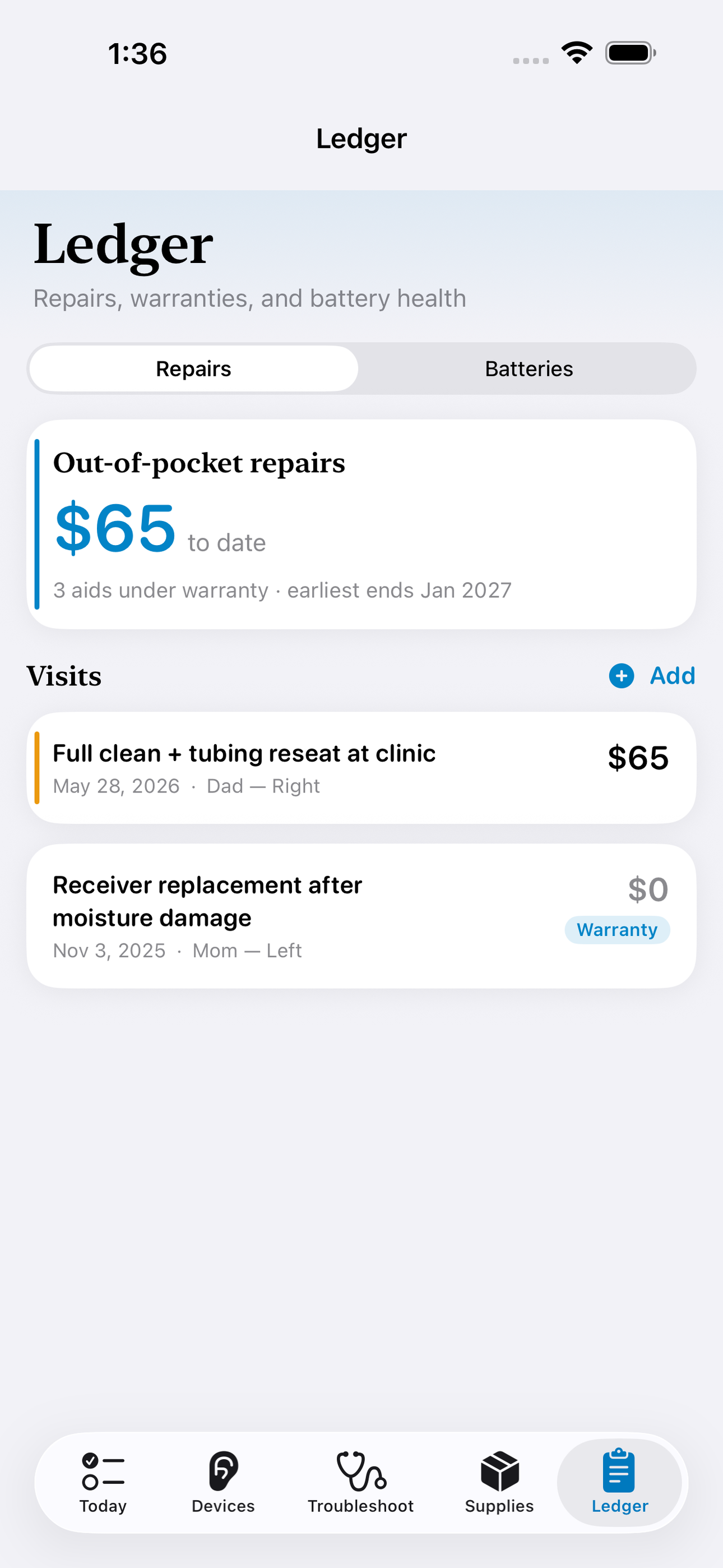
The supply bin tracks how many guards, domes, and batteries are actually left in the drawer and warns you before the box runs out. A warranty and repair ledger keeps every service visit, cost, and receipt note in one place. A battery-life log spots a receiver that is quietly degrading months before it dies.
Earkeep is built for wearers and for the adult children who quietly manage a parent's aids from across town. Set up Mom's devices once, and every changeable part stays changed.
• Per-ear device profiles for any brand, prescription or OTC • Replacement schedules for wax guards, domes, receivers, tubing, and drying • One-tap change logging with full dated history per part • Offline dead-aid troubleshooter that follows the clinic sequence • Supply bin with low-stock warnings before you run out • Warranty and repair ledger with costs and dates • Battery-life log that flags early receiver decline • 100 percent offline, no account, no data leaves the device
A look inside
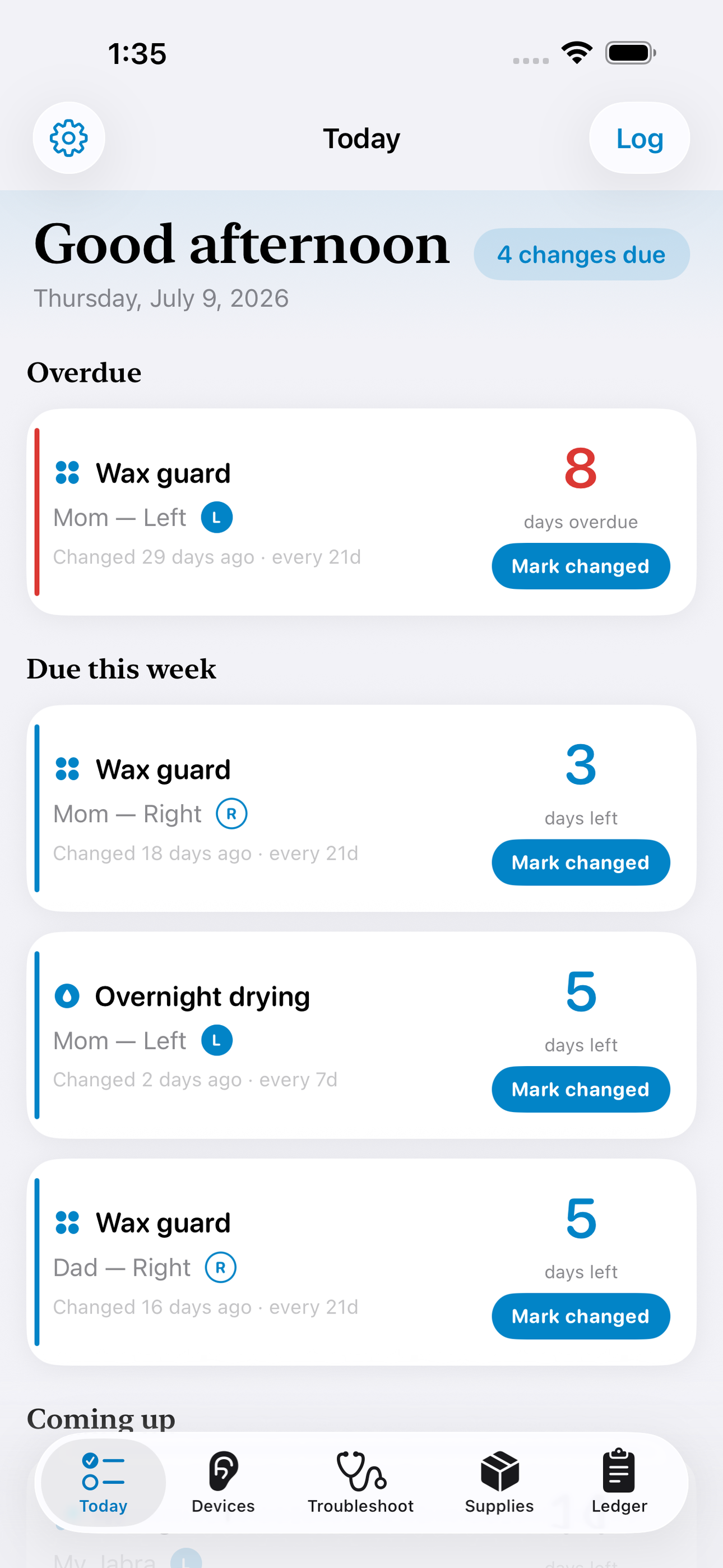
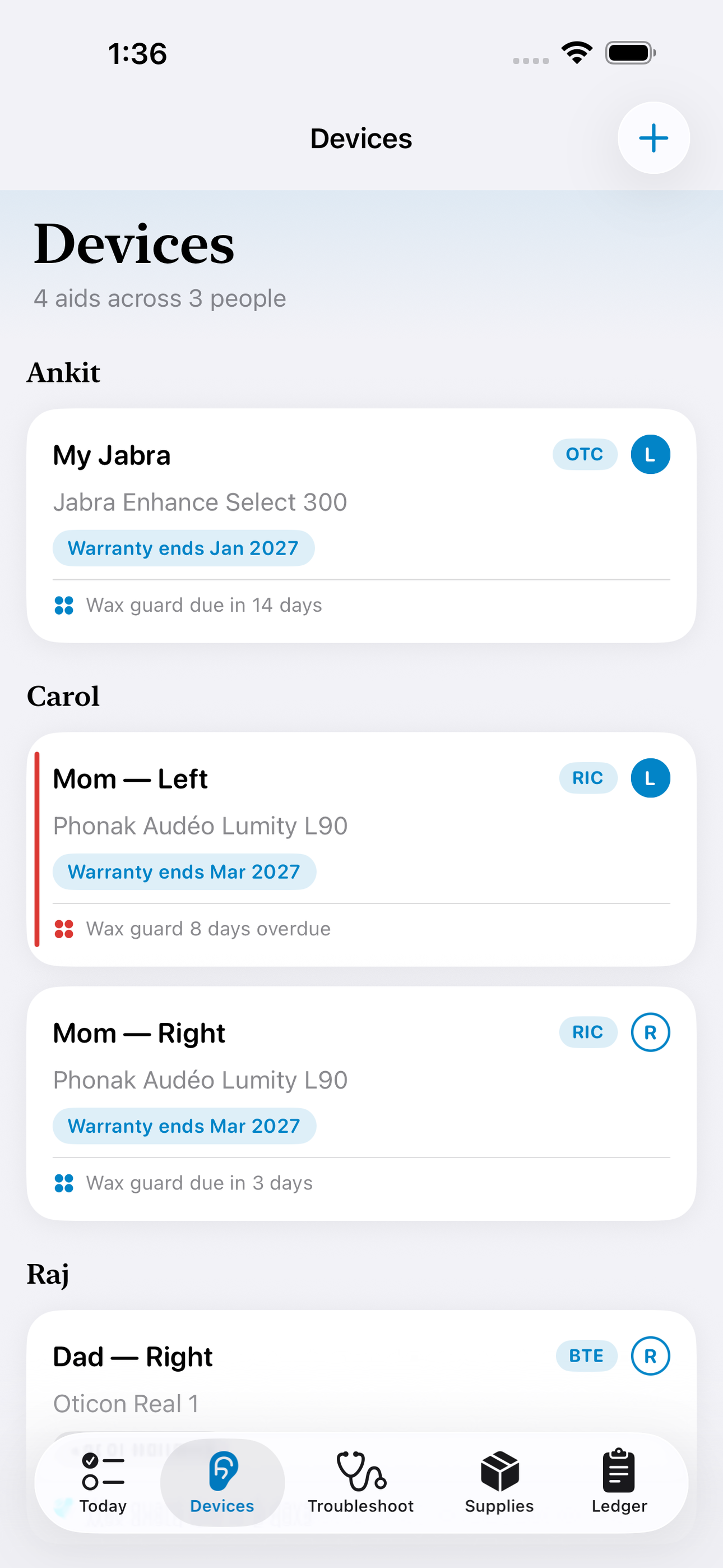
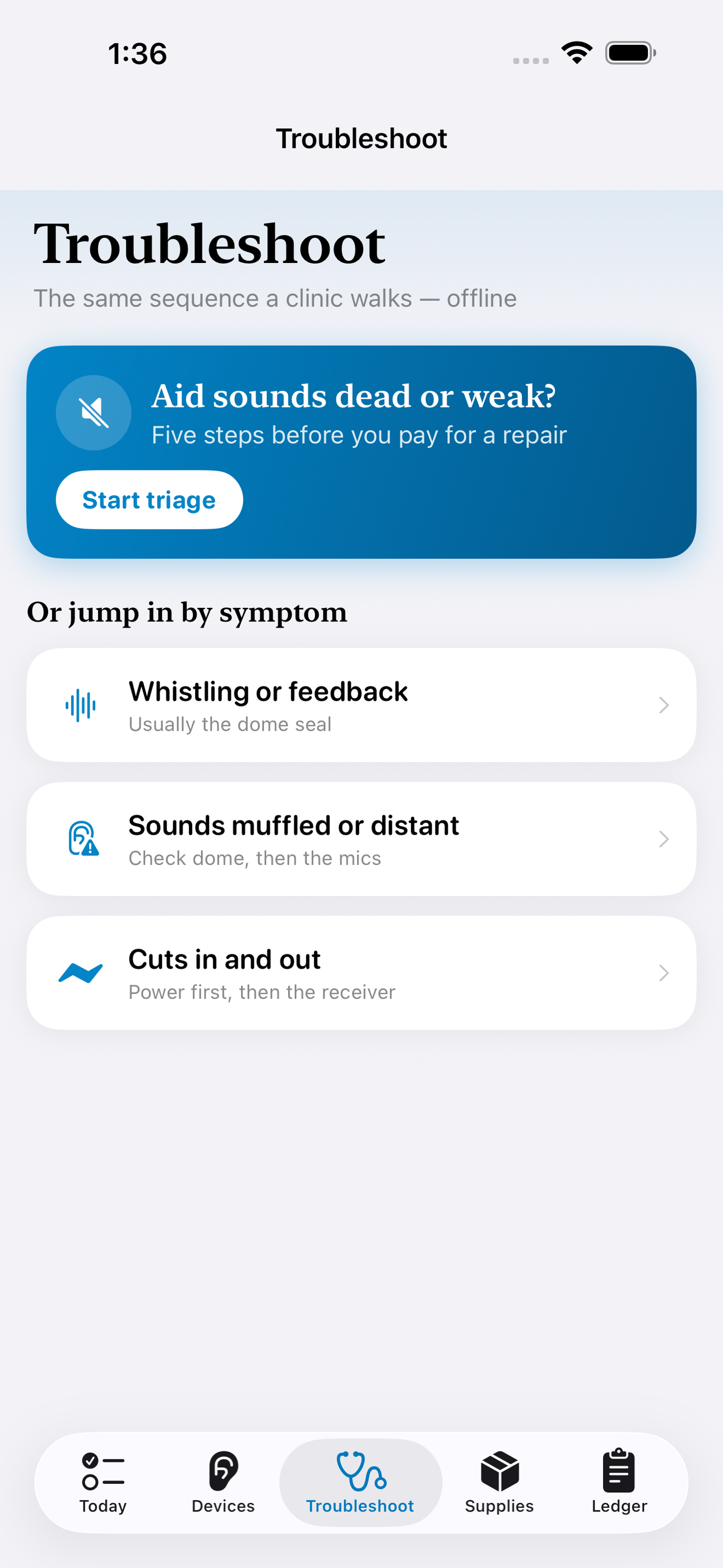
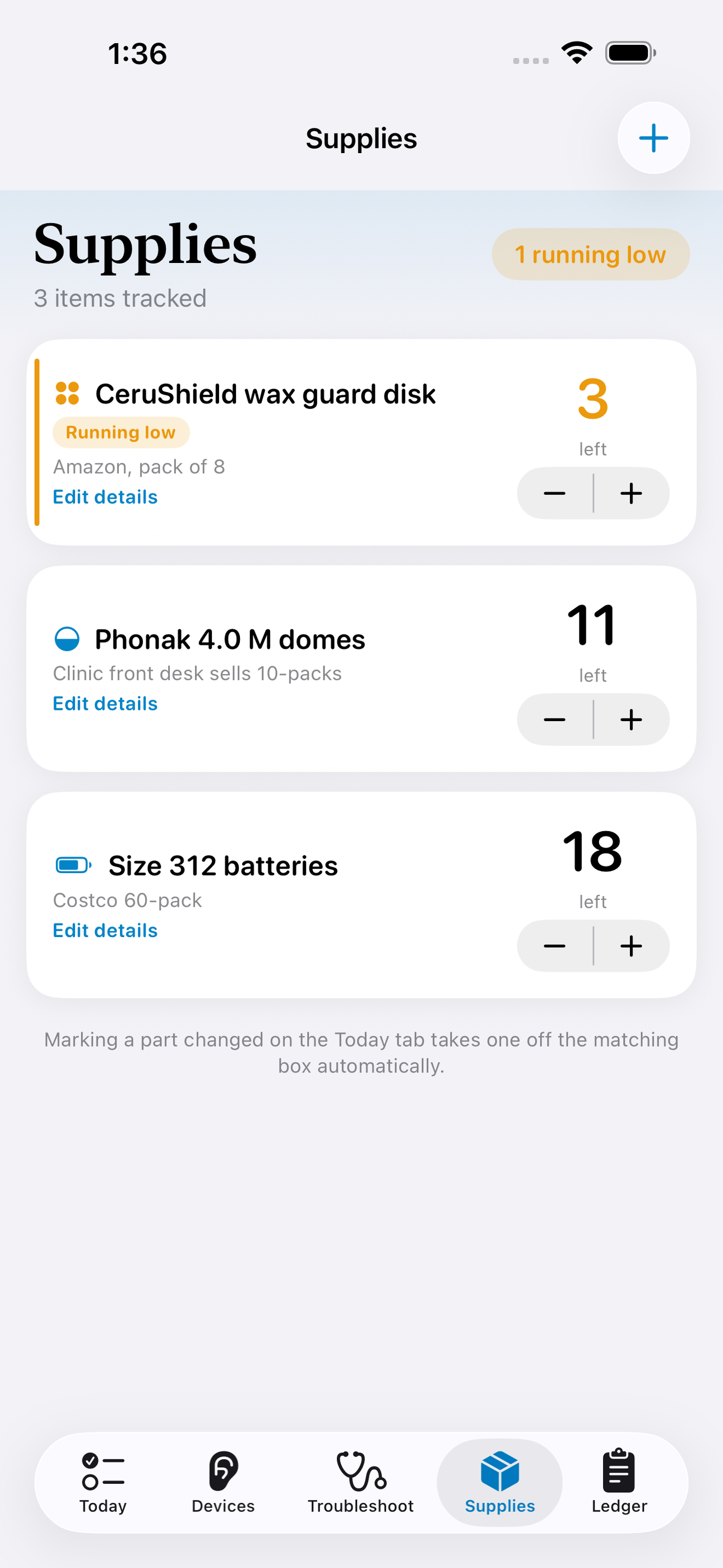
Tap any screenshot to open the full-resolution version.
What's inside
- Per-Ear Device Profiles — Each aid gets its own profile — brand, model, style (RIC/BTE/ITE/OTC), ear, serial number, purchase and warranty dates — so mixed-brand and OTC households are first-class citizens.
- Maintenance Schedule — Every changeable part (wax guard, dome, receiver, tubing, drying, batteries) carries its own interval and last-changed date; the schedule rolls all devices into one due-this-week list, and marking a change takes one tap and writes a dated history entry.
- Dead-Aid Troubleshooter — A fully offline decision tree that walks the same triage sequence a clinic uses — wax guard first, then dome, mic, battery, receiver — with photos-free plain-language steps, ending in either a fixed aid or a clear note for the audiologist.
- Supply Bin — Tracks how many wax guards, domes, and batteries are physically left, decrements automatically when a change is logged, and warns before the drawer runs dry.
- Warranty & Repair Ledger — Every repair visit, cost, and outcome logged per device next to its warranty end date — the paper trail that settles is this still covered and was this repair worth it.
- Battery Life Log — Quick entries of how long a charge or battery lasted, charted per device, so a receiver that is quietly degrading gets caught months before it dies outright.
Why we built it
Hearing aids die constantly from preventable neglect: up to 83% of malfunctions are earwax buildup a wax-guard change would have prevented, but guards need changing every 2-4 weeks, domes every 2-3 months, and receivers yearly — per ear, per device. Nobody remembers, aids go dead, and out-of-warranty repairs run ~$250…
What makes it different
myPhonak, Oticon Companion, and Boots Hearingcare do ship basic cleaning reminders — but they are brand-locked, generic, and useless for OTC or mixed-brand households. Earkeep's wedge is what none of them have: per-part per-ear schedules with last-changed history, a supply-bin inventory with low-stock warnings, an off…
Who it's for
Anyone who wants honest tracking without a coach, a subscription, or a streak guilting them at 11pm.
In one line: Hearing aid care, on schedule
Try it
See the Hearing aid care, on schedule for the full feature list, the info table, and support links.
Use Earkeep, found a bug, or have a feature request? Comments are open below — anonymous is fine.
0 comments
No comments yet — be the first.
Leave a reply
Sign in with Google to join the conversation. We require a quick sign-in to keep comments spam-free.
Sign in with Google to comment