Meet WrenchLog — Wrench at home. Log it right
WrenchLog is a maintenance logbook built for people who do their own work.

Utilities
WrenchLog
Wrench at home. Log it right.
Every feature, from the first launch.
No account, no login, no cloud. Everything runs on your device and works fully offline — nothing in this post is hidden behind a wall.
What WrenchLog does
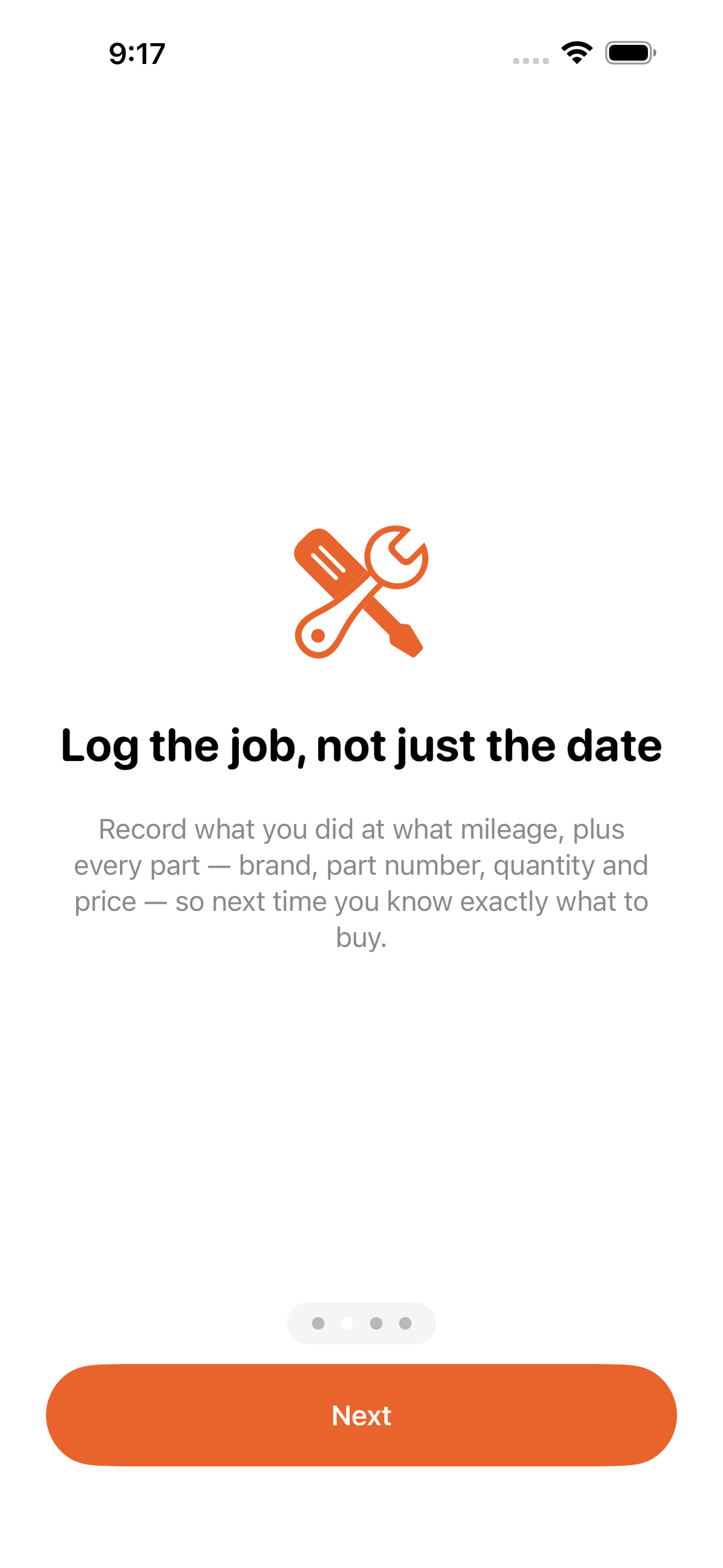
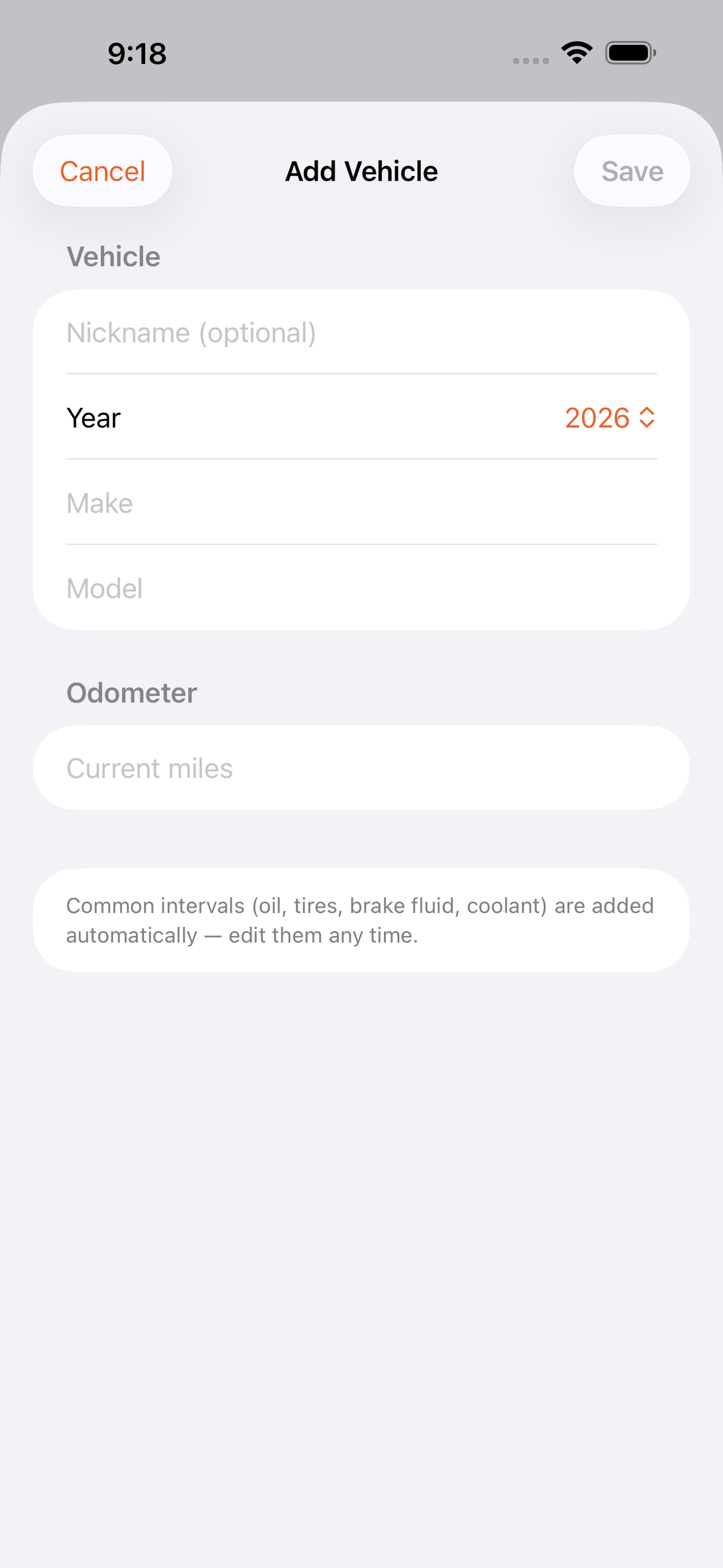
WrenchLog is a maintenance logbook built for people who do their own work. Add every vehicle in your driveway — the daily, the truck, the project car — and give each one a real service history: what you did, at what mileage, with which parts. Brand, part number, quantity, price, even the torque spec you always have to look up. Next oil change, you open the last job and your whole shopping list is right there.
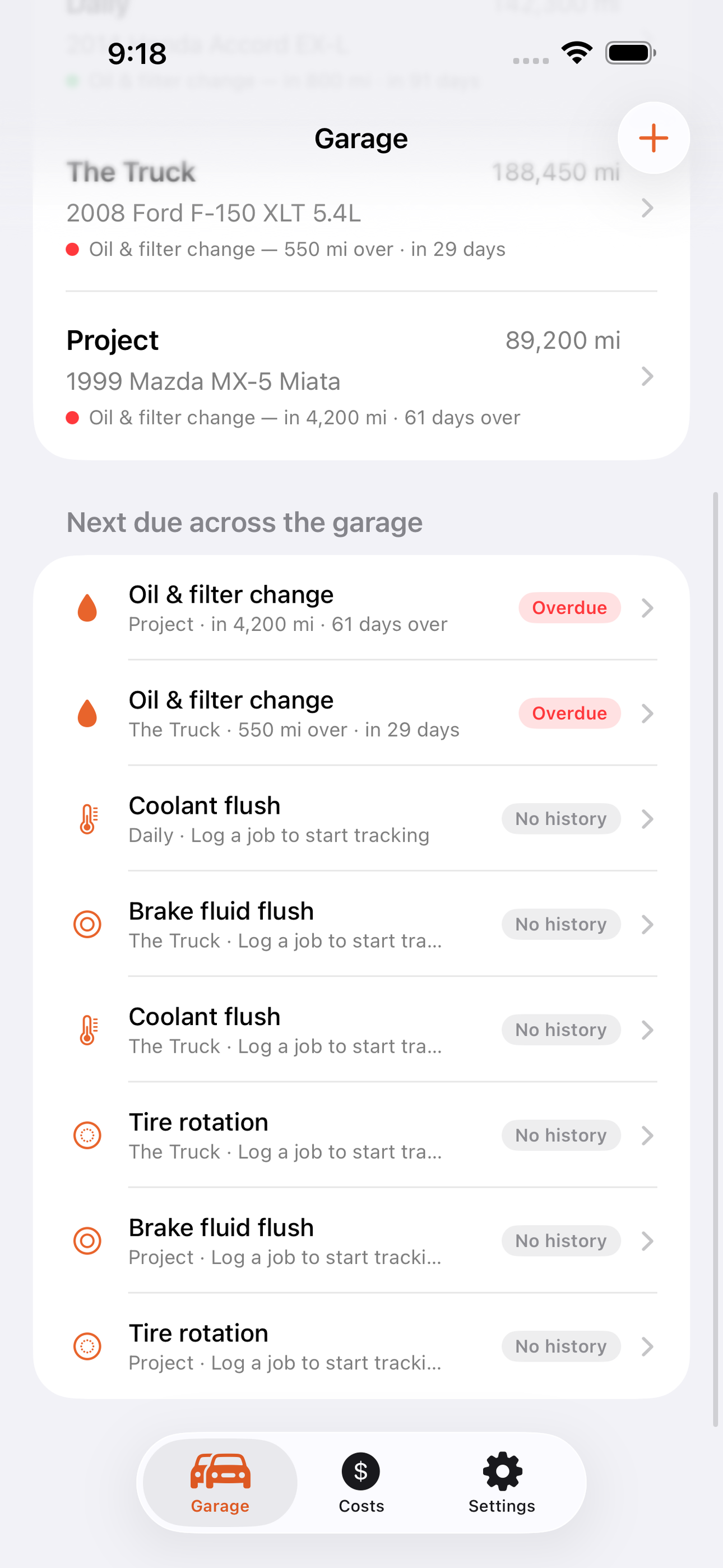
The intervals engine is the part a glovebox notebook can't do. Define each service — oil, brake fluid, tire rotation, coolant, plugs, diff fluid, whatever your platform needs — with a miles interval, a months interval, or both. WrenchLog counts forward from your last logged job and your current odometer, so the home screen always shows exactly what's coming due next across the whole garage, and a reminder fires before you're overdue instead of after.
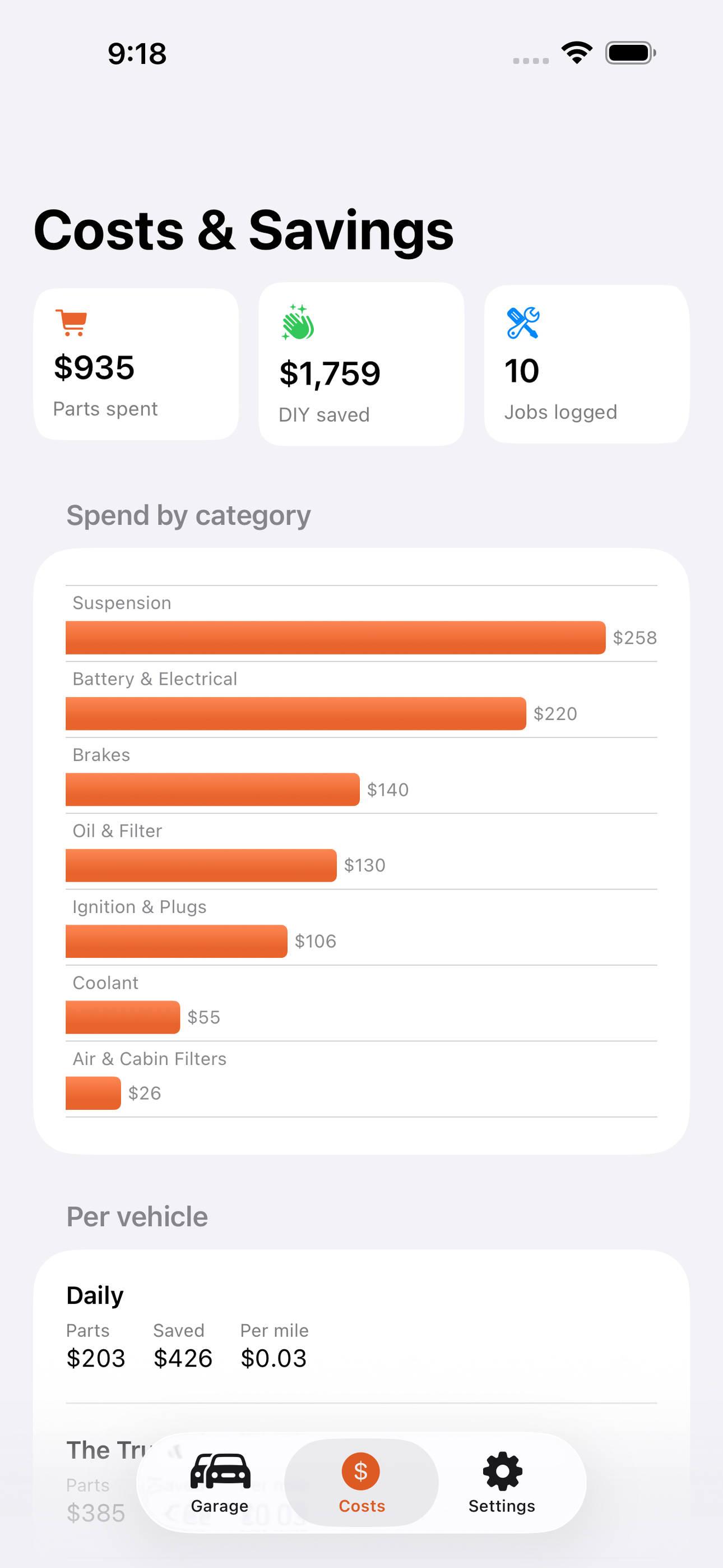
It also keeps the money honest. Every job rolls up into per-vehicle cost totals and cost per mile, and if you note what a shop quoted, WrenchLog tallies what wrenching at home has actually saved you. When you sell a car, export-ready history of documented owner maintenance is worth real dollars.
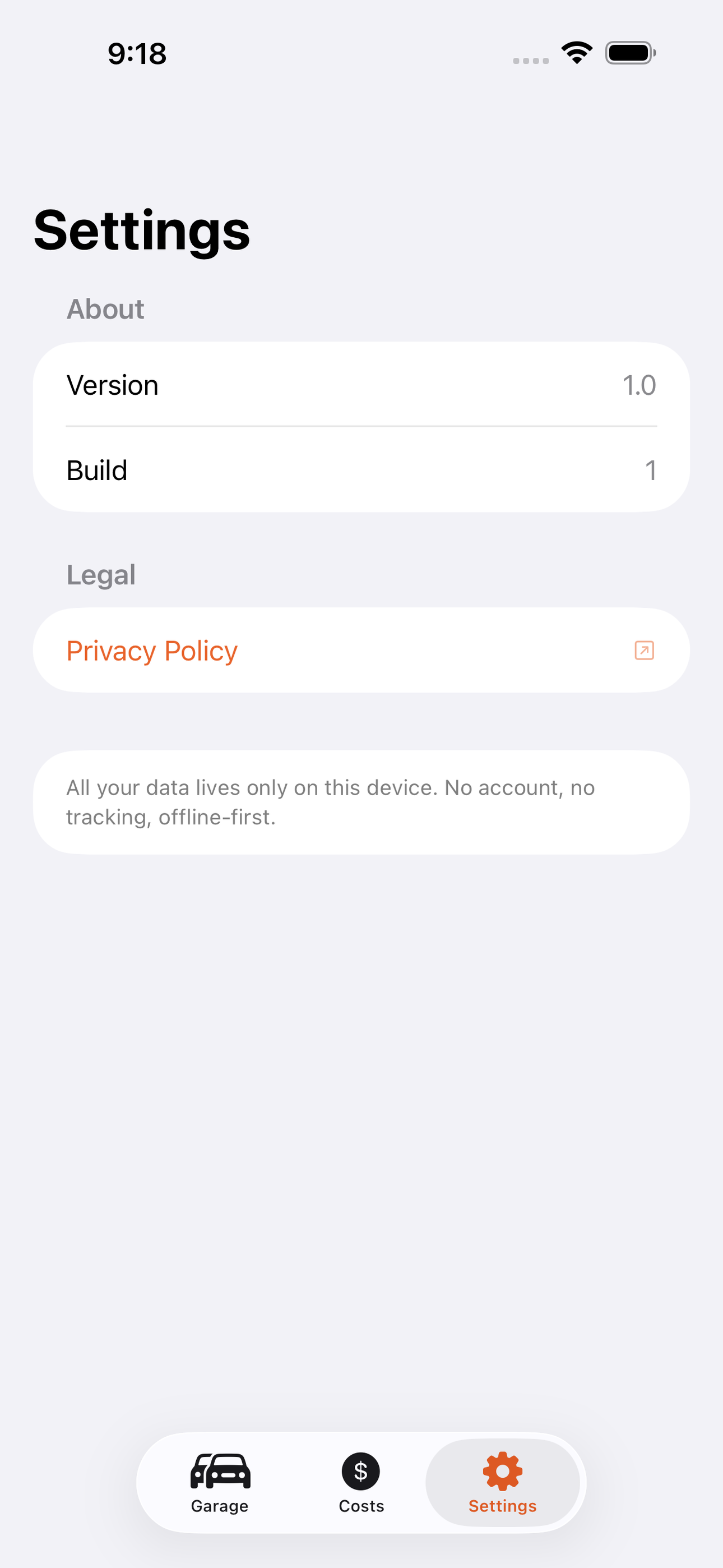
No account, no sync, no subscription, no ads. WrenchLog is 100% offline — everything is stored locally on your device with SwiftData and never leaves your phone.
• Per-vehicle service history with odometer at every job • Parts lines: brand, part number, quantity, price • Intervals by miles or months — whichever comes first • Next-due board and reminders across all vehicles • Cost totals, cost per mile and DIY-savings tally • Fully offline, no account, free
If your service records live in a spreadsheet, a notes app and a greasy notebook in the glovebox, download WrenchLog and give them a garage of their own.
A look inside
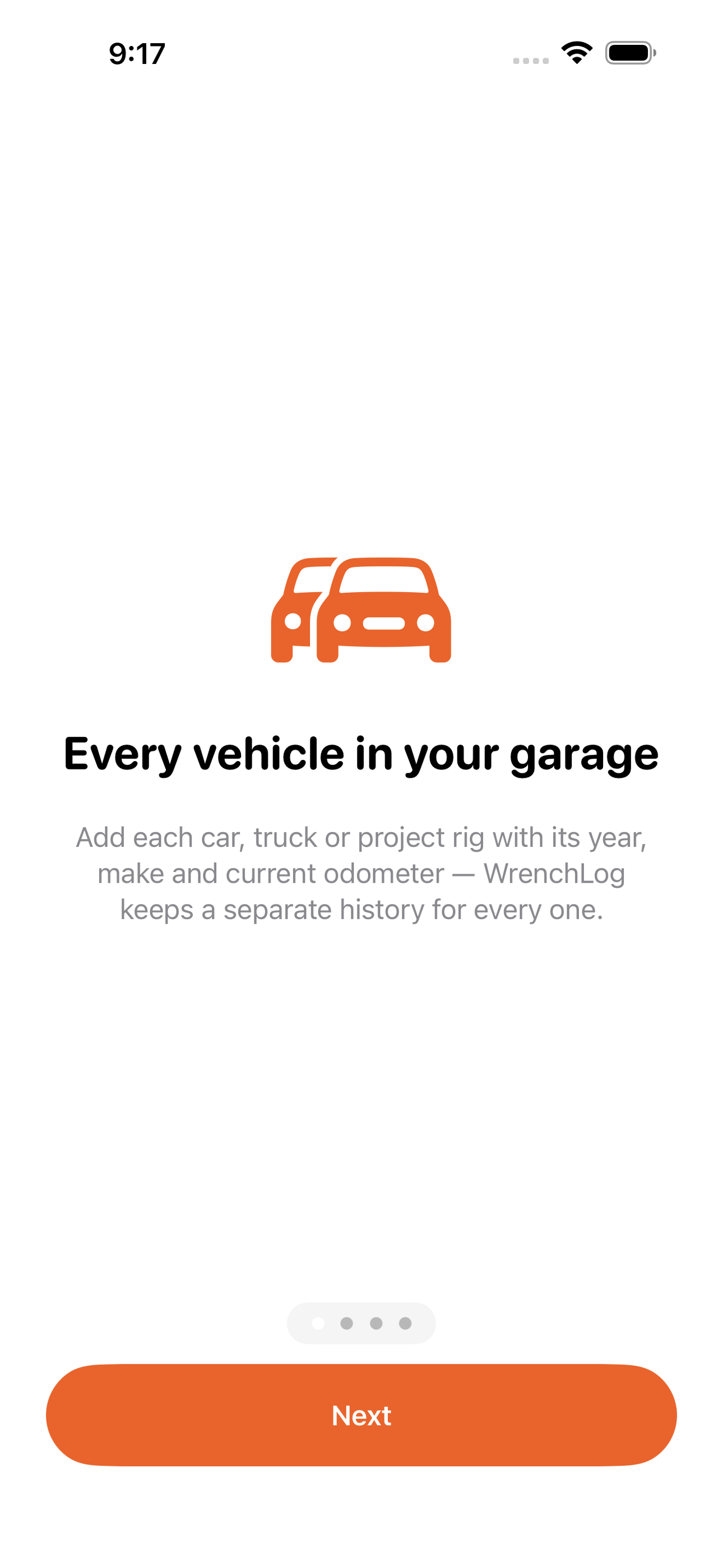
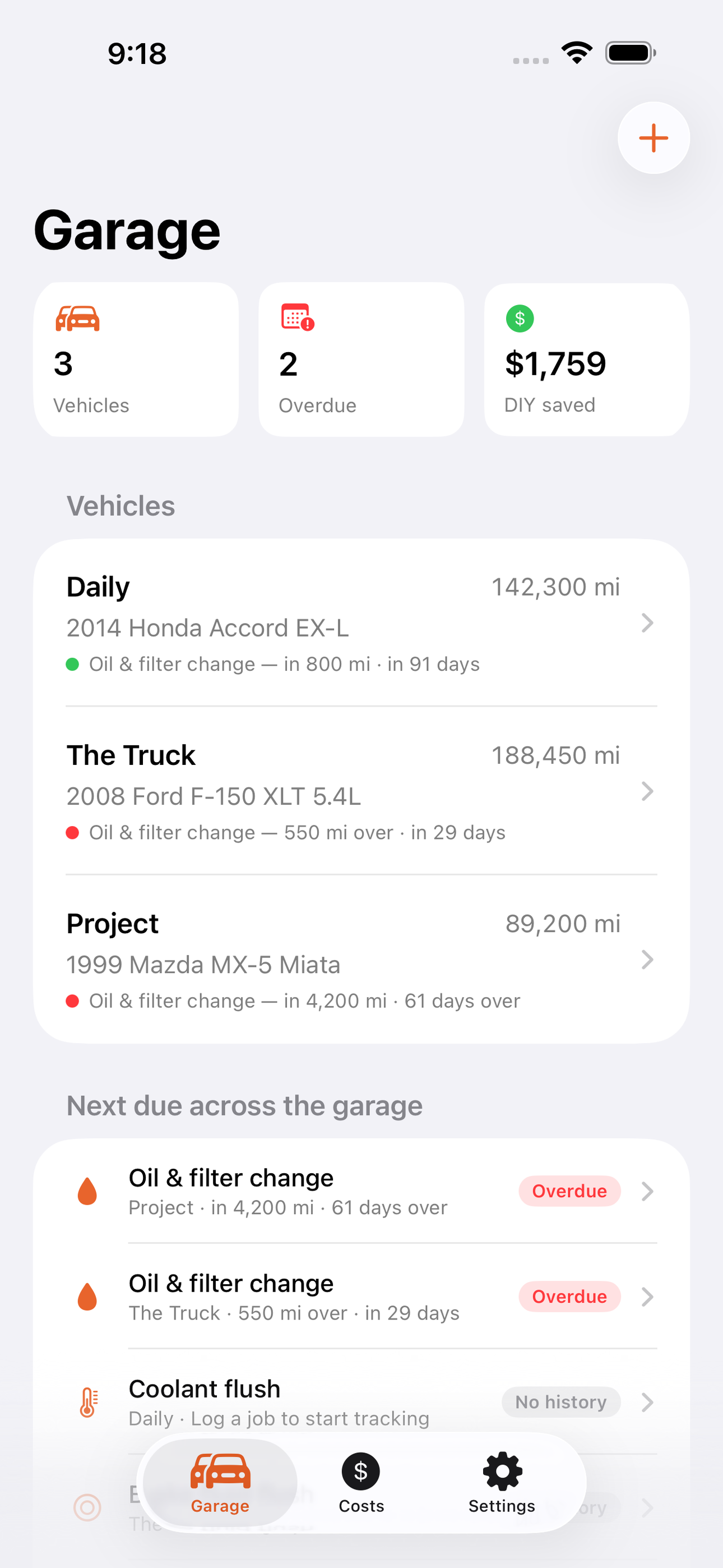
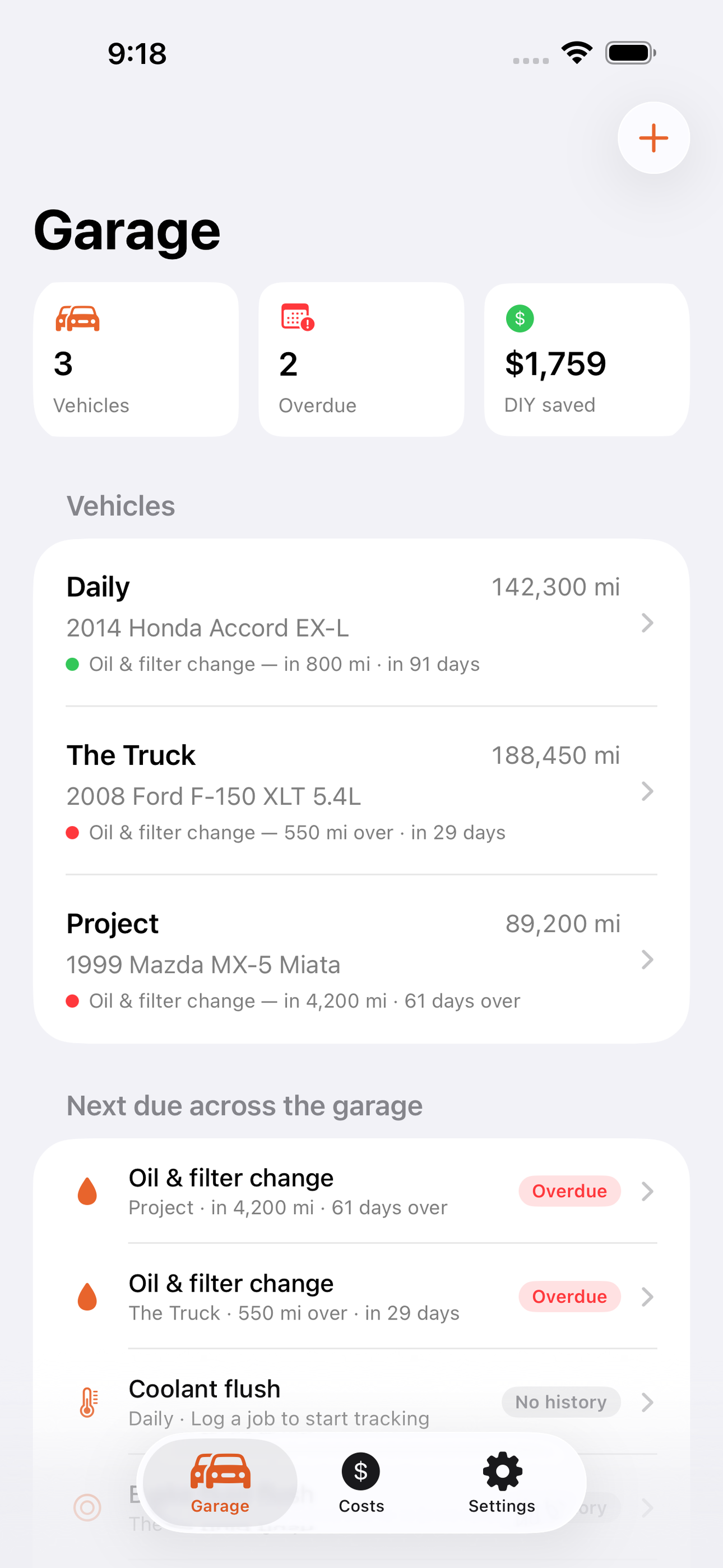
Tap any screenshot to open the full-resolution version.
What's inside
- Garage & next-due board — Home screen lists every vehicle as a card with nickname, odometer and its soonest-due service; a unified next-due list across the whole garage sorts by urgency (overdue, due soon, OK).
- Interval engine — Per-vehicle service intervals (oil, brakes, tires, coolant, custom) defined by miles, months or both; next-due is computed from the last matching job plus the current odometer, and local notifications fire as a service approaches due.
- Job log with parts — Log each job with date, odometer, notes (torque specs, gotchas) and itemized parts lines — brand, part number, quantity, price — so the full history reads like a shop invoice you wrote yourself.
- Costs & savings — Per-vehicle and garage-wide rollups: total spent on parts, cost per mile, spend by category, and a DIY-savings tally comparing logged parts cost against optional shop-quote amounts.
Why we built it
People who wrench at home have no good record system: shop-oriented apps like CARFAX Car Care auto-import wrong records they can't edit and nag with inaccurate reminders, fuel apps treat maintenance as an afterthought with broken notifications, and spreadsheets capture part numbers but can't compute what's due next fr…
What makes it different
Unlike Fuelbook (fuel economy and fill-up costs only — no service records), WrenchLog never touches MPG: it is a service-history and intervals tool. Unlike Garagebook (a passive binder for a car's documents and records), WrenchLog is an active wrenching workflow — a dual miles/months interval engine that computes next…
Who it's for
Anyone who values a small, sharp, single-purpose tool that does one job well and stays out of the way.
In one line: Wrench at home. Log it right.
Try it
See the Wrench at home. Log it right for the full feature list, the info table, and support links.
Use WrenchLog, found a bug, or have a feature request? Comments are open below — anonymous is fine.
0 comments
No comments yet — be the first.
Leave a reply
Sign in with Google to join the conversation. We require a quick sign-in to keep comments spam-free.
Sign in with Google to comment