Meet Duskwatch — Dementia behavior pattern log
When someone you love has dementia, the hardest part is rarely the memory loss.

Health And Fitness
Duskwatch
Dementia behavior pattern log
Every feature, from the first launch.
No account, no login, no cloud. Everything runs on your device and works fully offline — nothing in this post is hidden behind a wall.
What Duskwatch does
When someone you love has dementia, the hardest part is rarely the memory loss. It is the 5 p.m. agitation you cannot explain, the aggression that appears out of nowhere, the wandering at 2 a.m. Every neurologist and every caregiving guide gives the same advice: keep a log of episodes and their triggers so you can find the pattern. But the tooling for that advice is a paper notebook or a spreadsheet, and nobody writes neat spreadsheet rows in the middle of a meltdown.
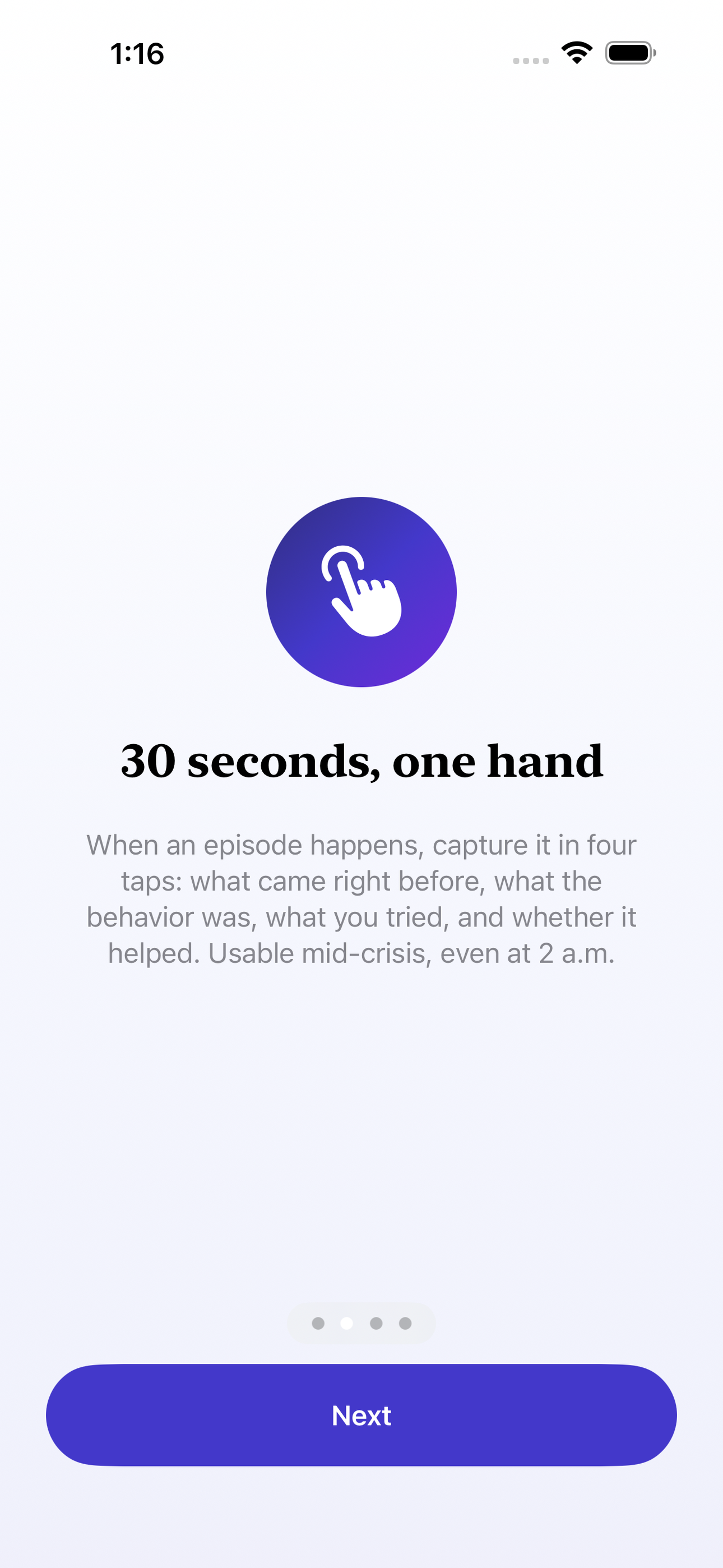
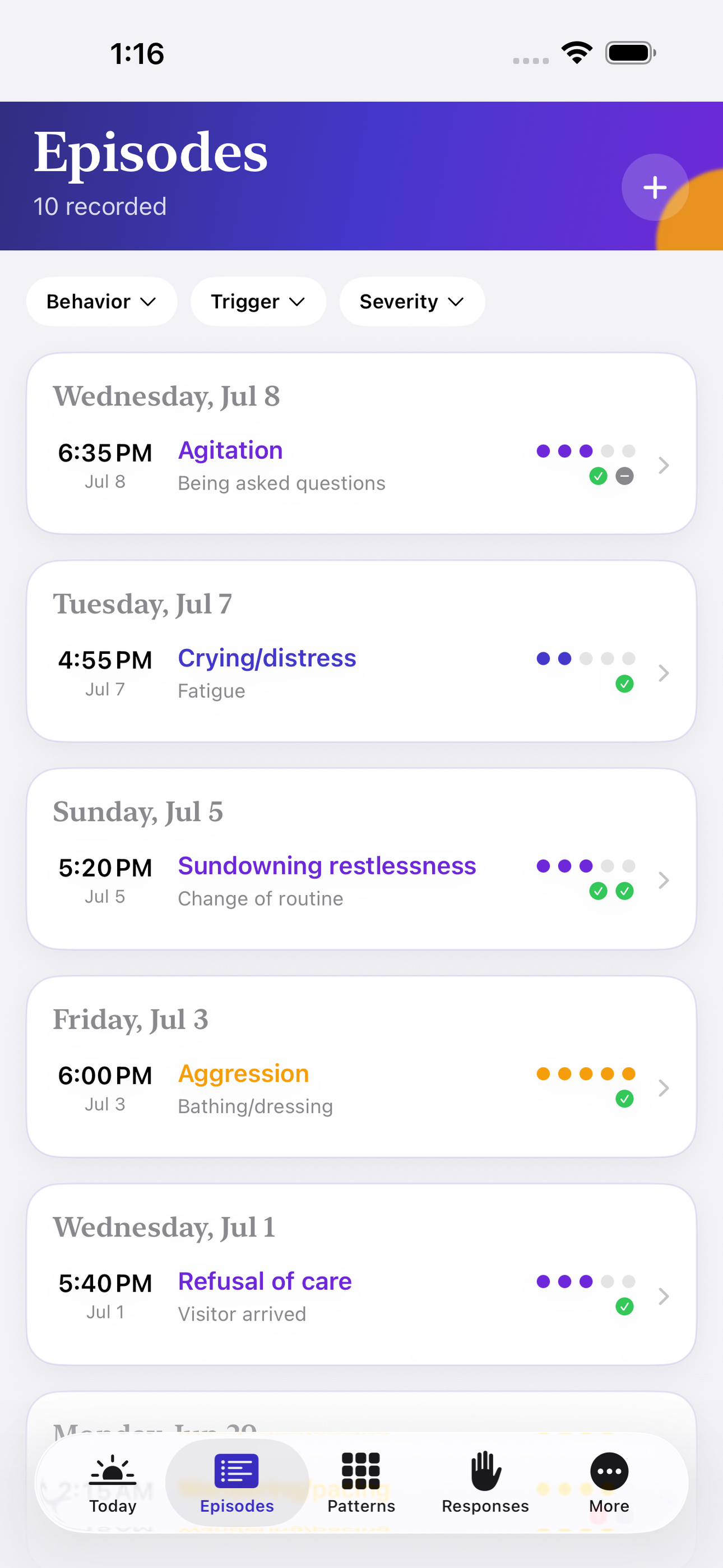
Duskwatch is a behavior journal built for that exact moment. One hand, thirty seconds: what happened right before, what the behavior was, what you tried, and whether it helped. That trigger-behavior-response structure is the same one clinicians use, captured as taps instead of paragraphs, so logging actually happens even on the worst days.
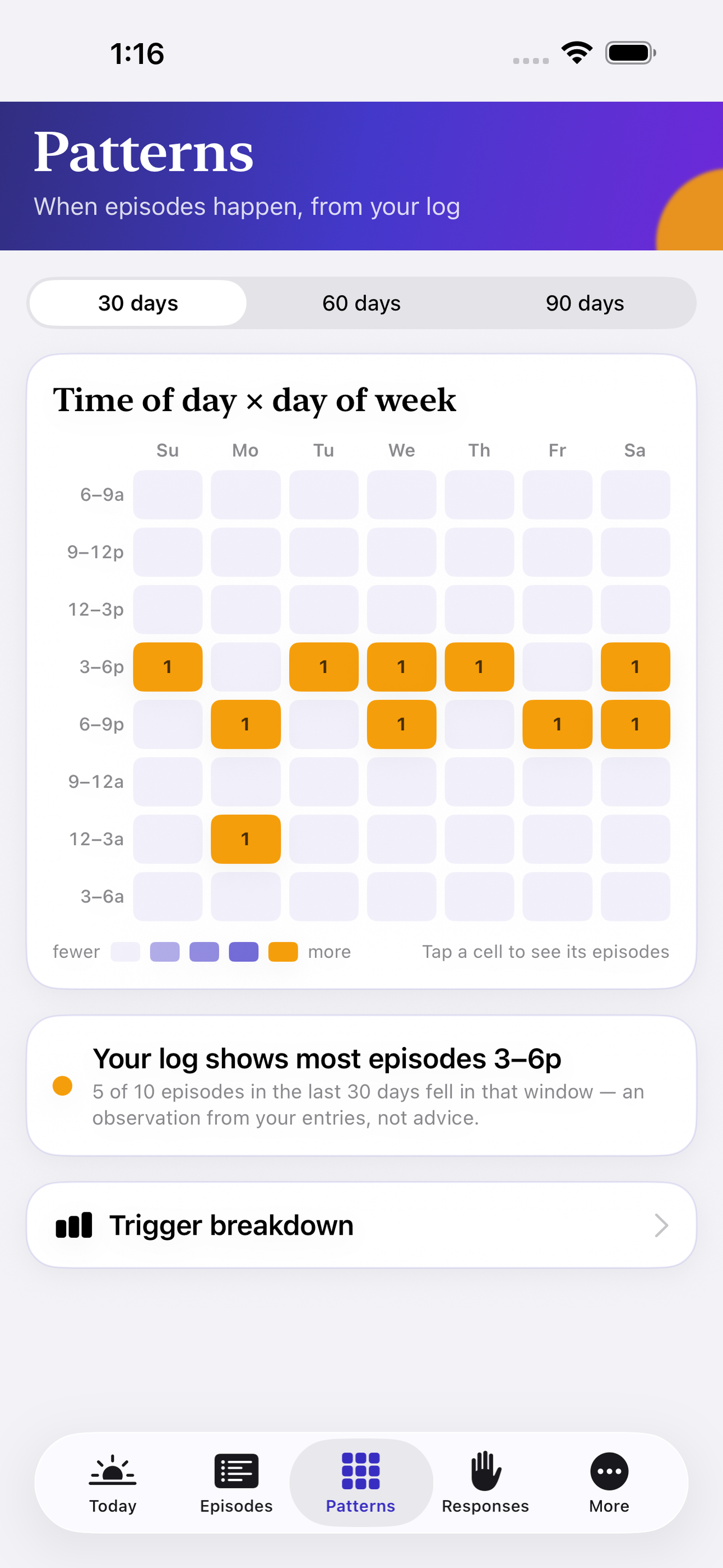
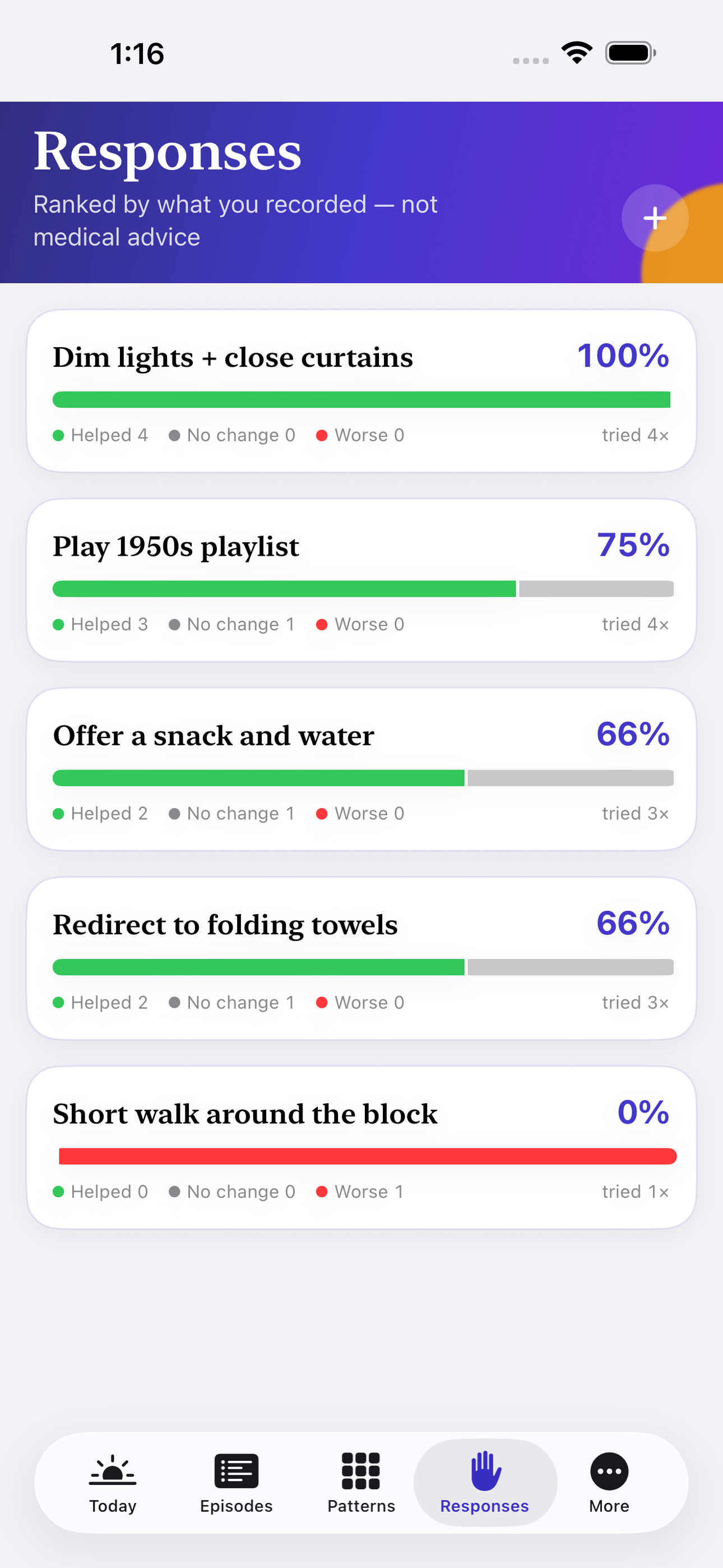
Once episodes accumulate, Duskwatch turns them into pictures. A time-of-day heatmap shows you at a glance that the agitation clusters between 4:30 and 7:00 in the evening. A trigger breakdown shows how often noise, hunger, visitors, or transitions preceded an episode. And your own calming responses are ranked by how often you recorded that they helped, so at the next episode you can check what worked last time instead of guessing from memory. Duskwatch never suggests treatments or gives medical advice; it simply organizes what you observed, in your own words.
When a medication starts, stops, or changes dose, add it to the timeline and see episode frequency before and after the change, so the conversation with the doctor starts from a real baseline instead of a guess. Then, before the next appointment, generate a clean visit report: episode counts, timing patterns, triggers, and your notes, formatted as a PDF you can hand across the desk.
This data is deeply private, which is why Duskwatch is completely offline. No account, no cloud, no server. Your family's hardest moments stay on your device, and sharing happens only when you choose to export a file.
Built for the daughters, sons, and spouses doing the hardest unpaid job in America.
• 30-second one-hand episode capture: trigger, behavior, response, outcome • Time-of-day and day-of-week heatmap of episodes • Trigger breakdown across noise, hunger, visitors, transitions, and more • Your own calming responses ranked by recorded outcomes • Medication-change timeline overlaid on episode frequency • PDF visit report for neurologist and geriatrician appointments • Fully offline, no account, no subscription
A look inside
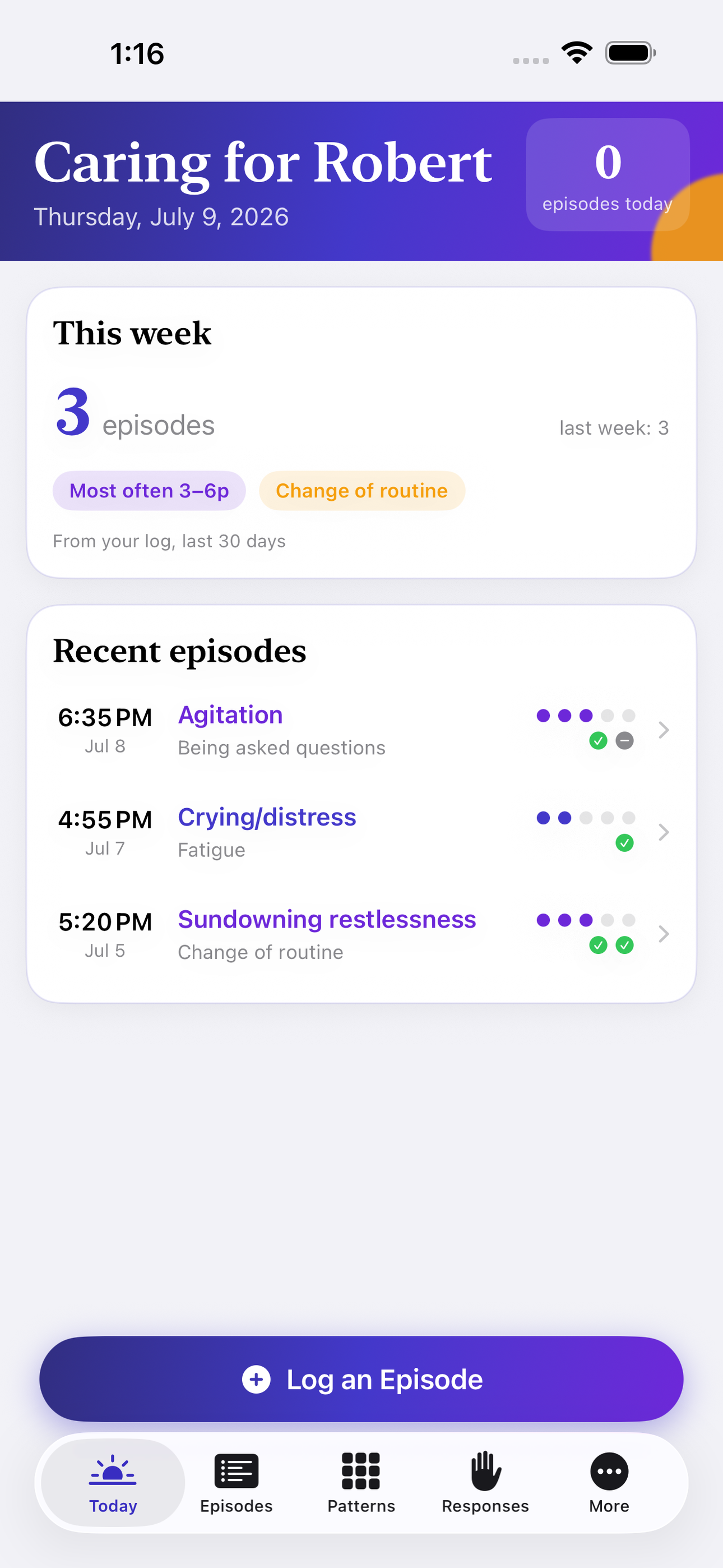
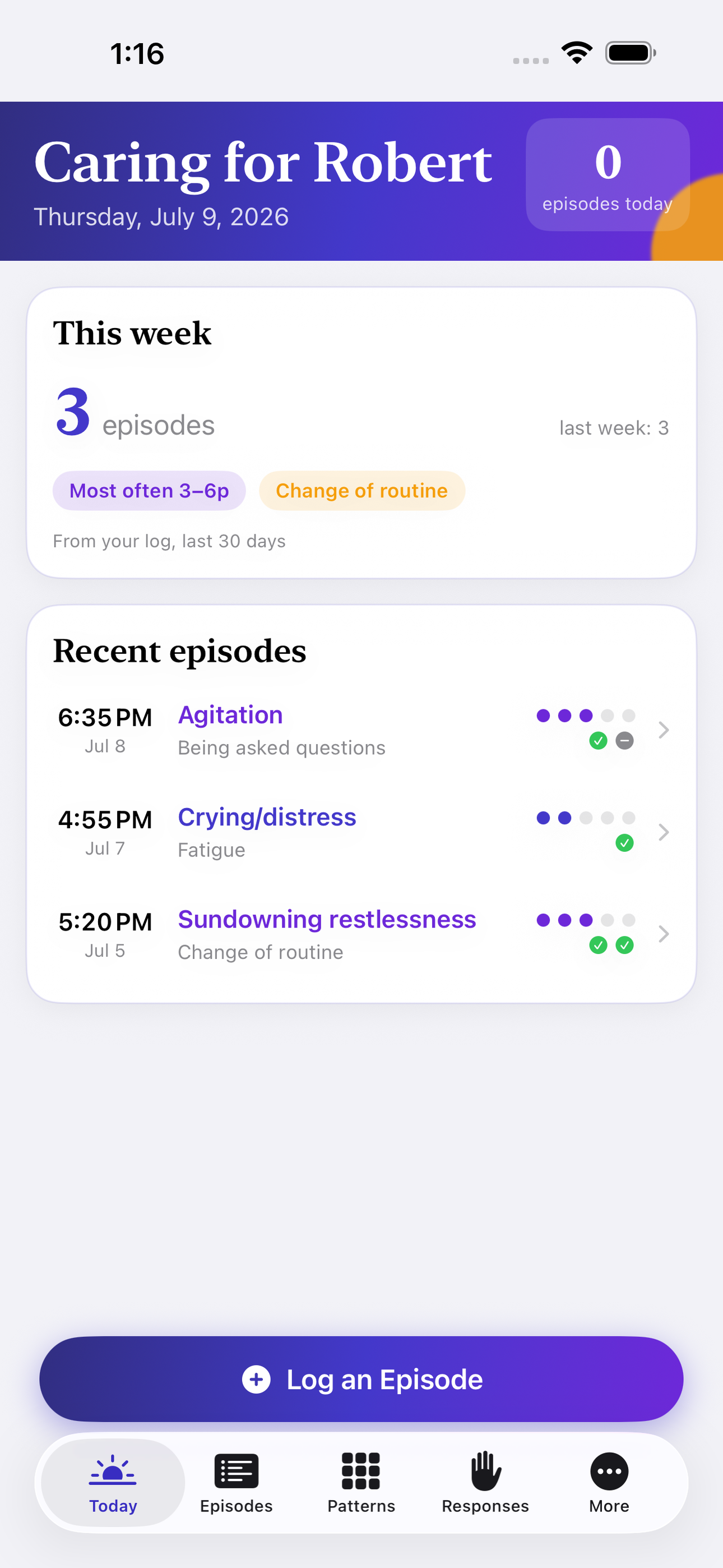
Tap any screenshot to open the full-resolution version.
What's inside
- Episode Capture — A one-hand, tap-only flow that records an episode in about 30 seconds: what happened right before (trigger), what the behavior was, severity, what the caregiver tried, and whether it helped. Designed to be usable mid-crisis at 2 a.m.
- Pattern Heatmap — Turns accumulated episodes into a time-of-day by day-of-week heatmap plus a trigger breakdown, making sundowning windows and recurring antecedents visible at a glance.
- Response Tracker — Maintains the caregiver's own library of calming responses (music, dimming lights, snack, walk, redirection) and ranks them by how often the caregiver recorded that they helped, so the next episode starts from evidence instead of memory.
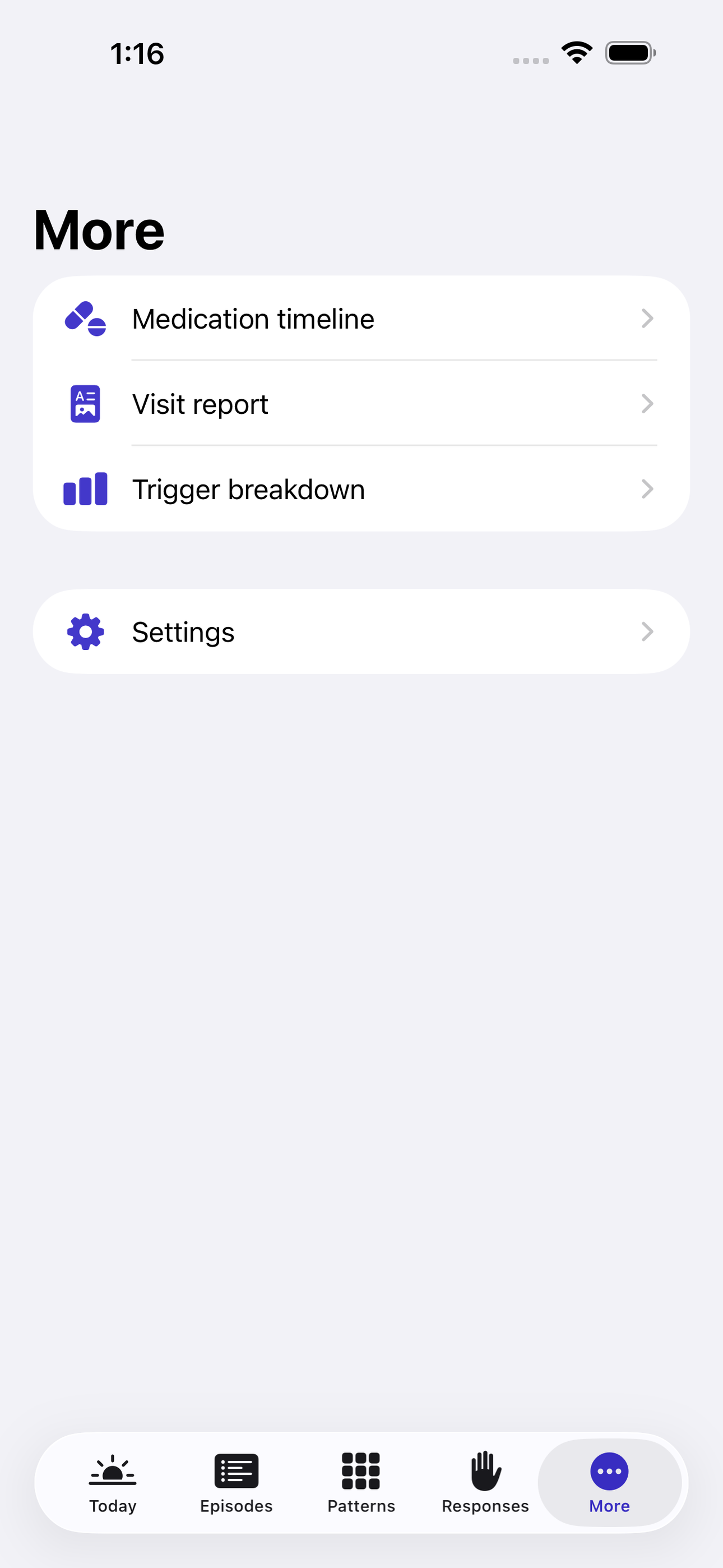
- Medication Timeline — Logs medication starts, stops, and dose changes on a timeline overlaid with weekly episode frequency, giving the family a real before/after baseline to discuss with the prescriber.
- Visit Report — Generates a clean PDF for the next neurologist or geriatrician appointment: episode counts, timing patterns, trigger frequencies, response outcomes, and medication changes over a selectable date range, shareable via the system share sheet.
Why we built it
Nearly 12 million Americans provide unpaid dementia care, and behavioral episodes (sundowning, agitation, aggression, wandering) are the top driver of nursing-home placement. Clinicians instruct caregivers to log episodes and triggers to find patterns, but the only tools are notebooks and spreadsheets, so time-of-day…
What makes it different
Existing dementia apps are advice libraries or coordination networks, not capture tools: CogniCare is a content library with generic symptom tracking and no trigger-behavior-response structure or time-of-day analytics; ianacare and Caring Village coordinate rides and meals with cloud accounts but have zero behavior ep…
Who it's for
Anyone who wants honest tracking without a coach, a subscription, or a streak guilting them at 11pm.
In one line: Dementia behavior pattern log
Try it
See the Dementia behavior pattern log for the full feature list, the info table, and support links.
Use Duskwatch, found a bug, or have a feature request? Comments are open below — anonymous is fine.
0 comments
No comments yet — be the first.
Leave a reply
Sign in with Google to join the conversation. We require a quick sign-in to keep comments spam-free.
Sign in with Google to comment