Meet Peshi — Your case diary, every tareekh
A court case in India is measured in years and remembered in dates.

Productivity
Peshi
Your case diary, every tareekh
Every feature, from the first launch.
No account, no login, no cloud. Everything runs on your device and works fully offline — nothing in this post is hidden behind a wall.
What Peshi does
A court case in India is measured in years and remembered in dates. A property partition, a cheque bounce, a tenant matter, a family dispute — the average case crawls through dozens of hearings, and after the tenth tareekh nobody in the family can say what actually happened on the fifth. The official eCourts app shows a status line at best; it keeps no notes, its reminders are unreliable, and its own reviews report saved cases vanishing after updates. Every other legal app on the store is built for advocates managing a hundred clients. Nothing serves the person actually paying for the case.
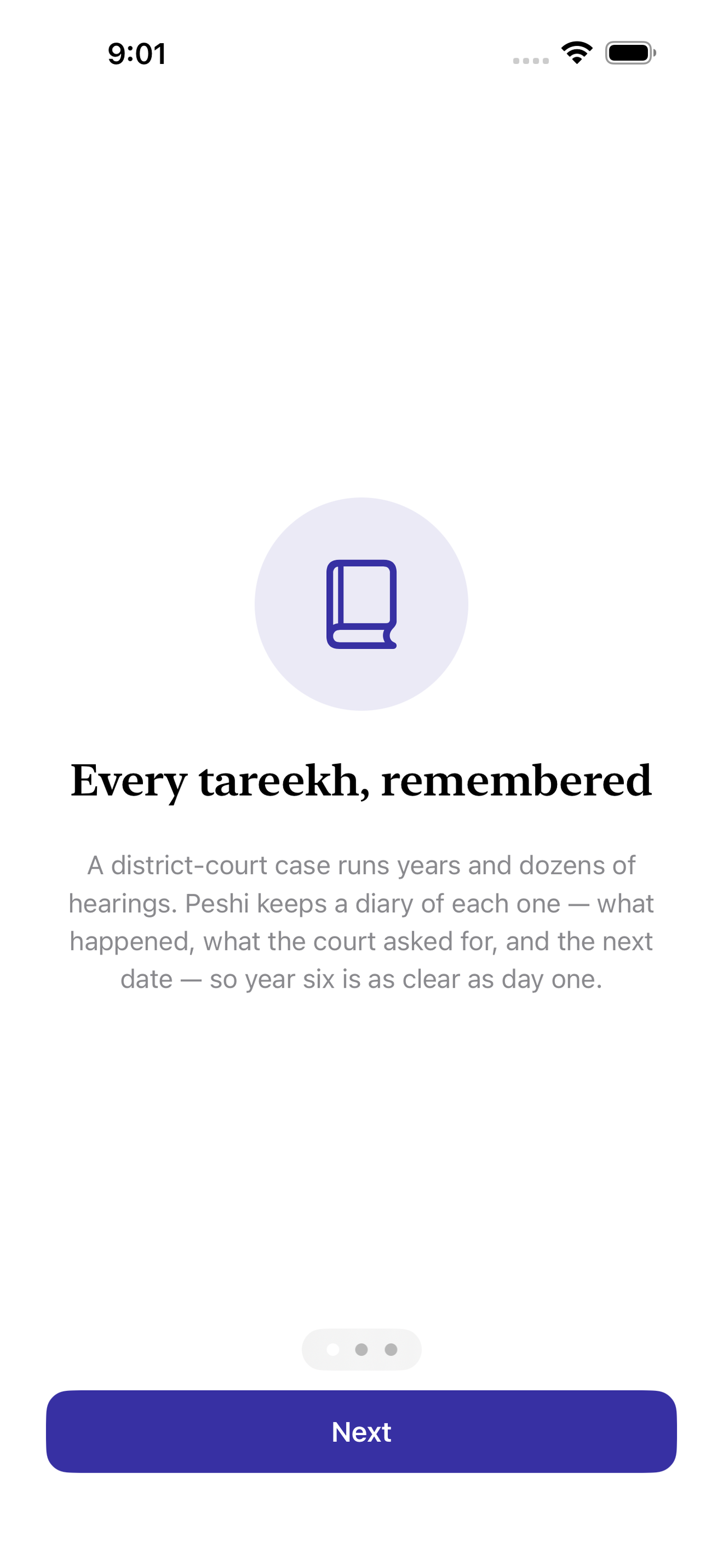
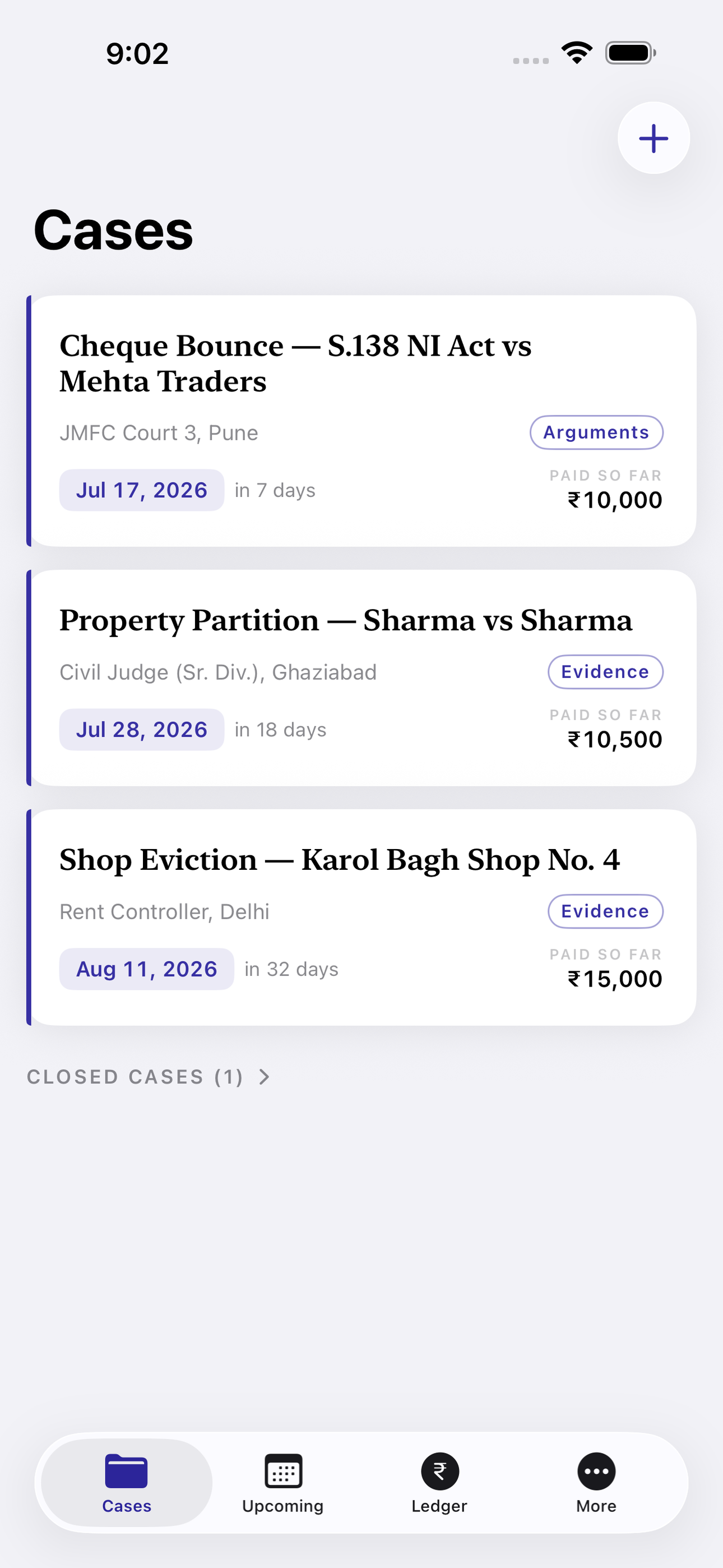
Peshi is the litigant's case diary. For every case you add, it keeps a clean timeline of every hearing: the date, what happened in court, what the judge asked for, and the next date your lawyer gave you. Thirty seconds of typing on the courthouse steps becomes a record you can read back three years later — or hand to a new lawyer without losing a decade of history.
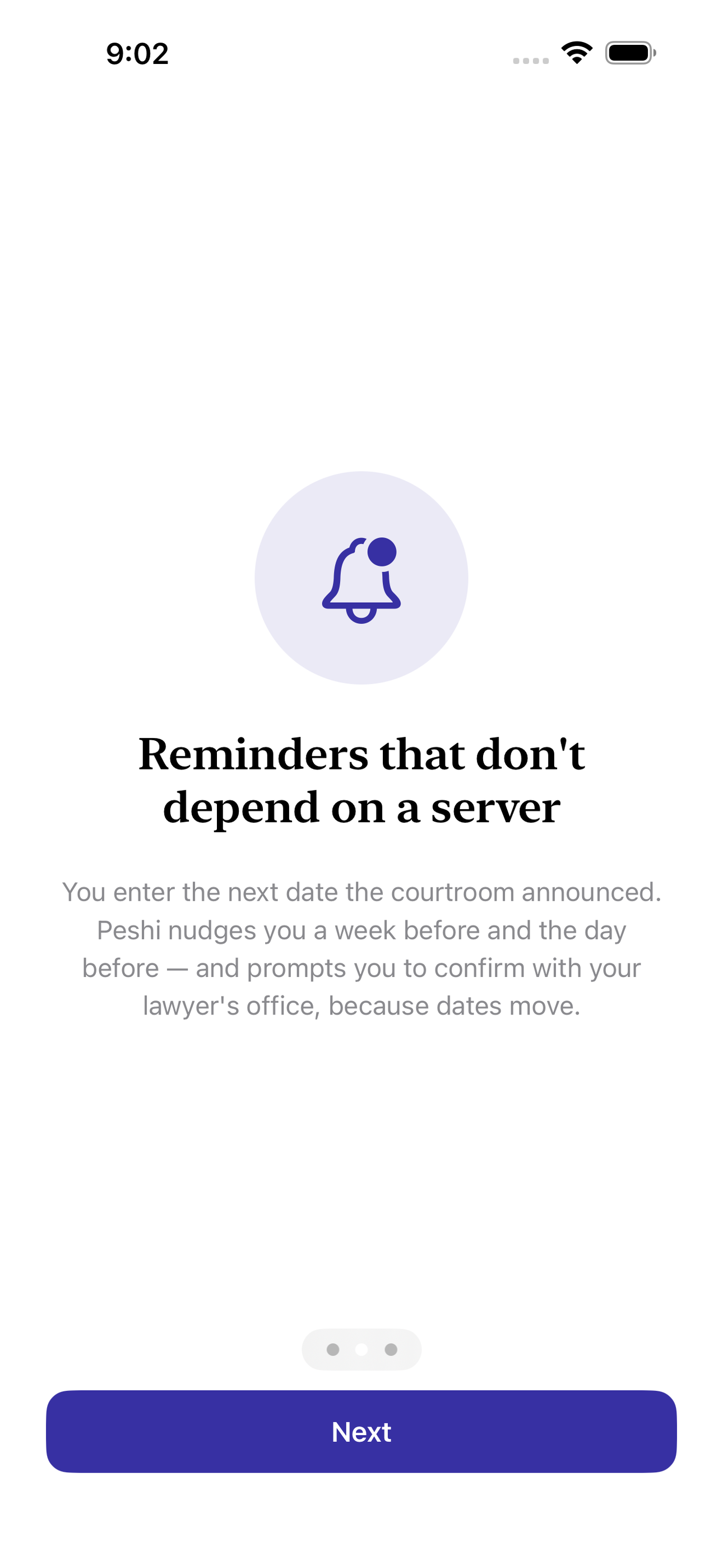
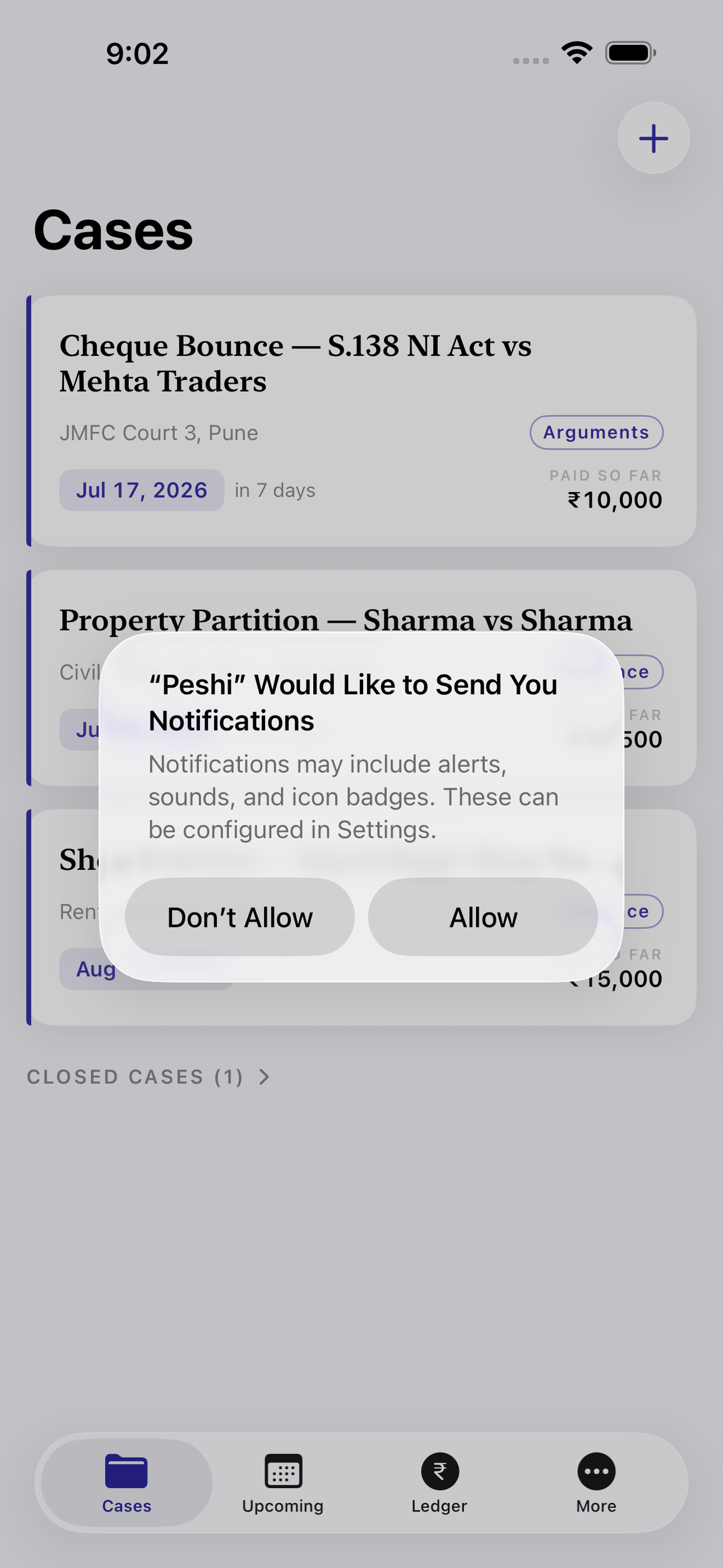
Because the next date is announced in the courtroom and written in your own diary, Peshi's reminders work entirely offline and never depend on a government server. You get a nudge a week before and again the day before, plus a prompt to confirm the date with your lawyer's office — because dates move, and finding out late is how hearings get missed.
Then there is the money. District-court lawyers are paid the way everything is paid: in installments, often in cash, across years. Peshi keeps a running ledger of every rupee per case — date, amount, purpose, mode — so the question of what you have already given your lawyer always has an answer.
A document checklist tracks what the court asked for and what you have collected, with photos of orders, receipts, and notices kept safely alongside the case. Everything lives on your phone: no account, no login, no server. Your record survives app updates and phone changes through local export, and a full case history can be shared as a PDF when it is time for an appeal or a new advocate.
• Per-case hearing timeline: what happened and what comes next, every tareekh • Offline hearing reminders with confirm-with-lawyer prompts • Rupee-by-rupee lawyer fee ledger for each case • Document checklist for everything the court asked for • Photo vault for orders, receipts, and notices • Full case history as a shareable PDF • No account, no server — your record stays on your phone
A look inside
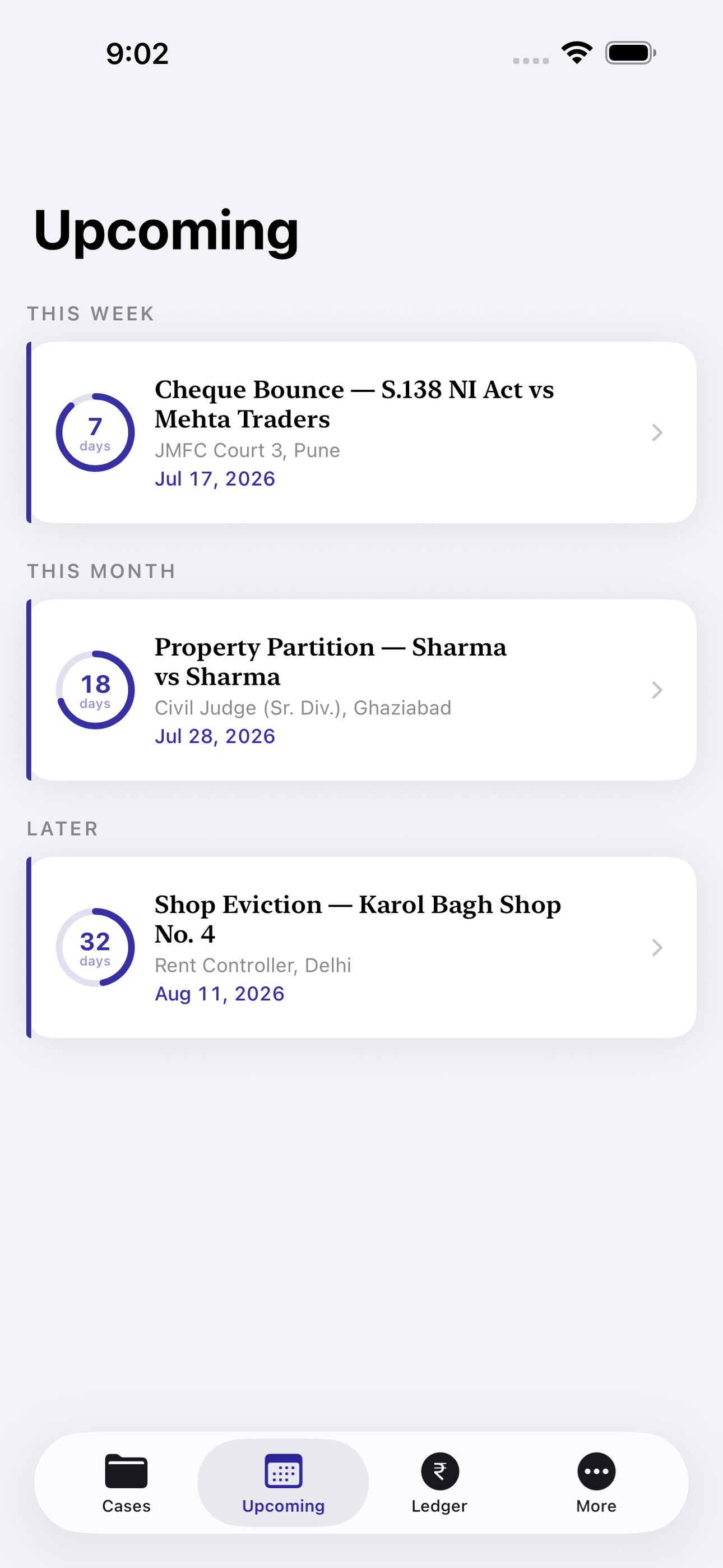
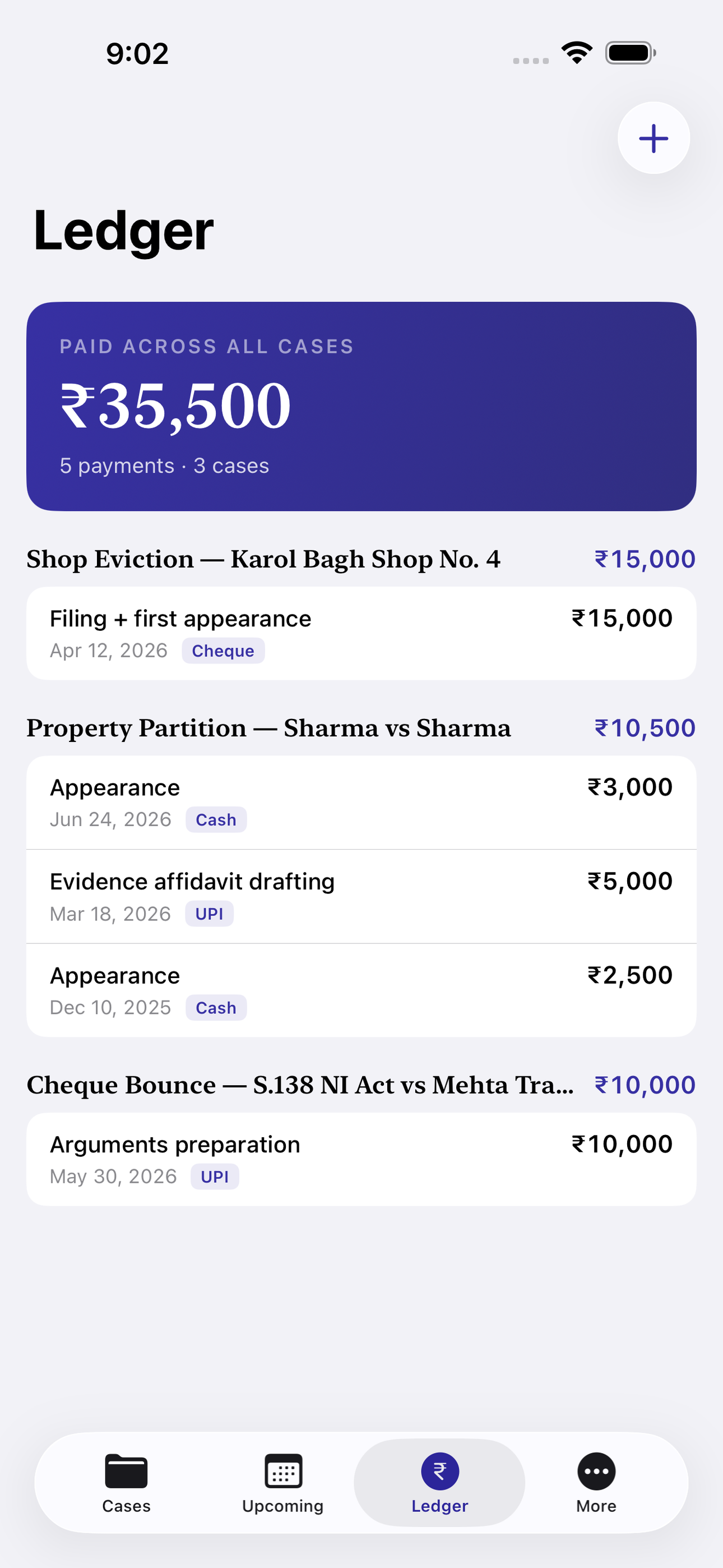
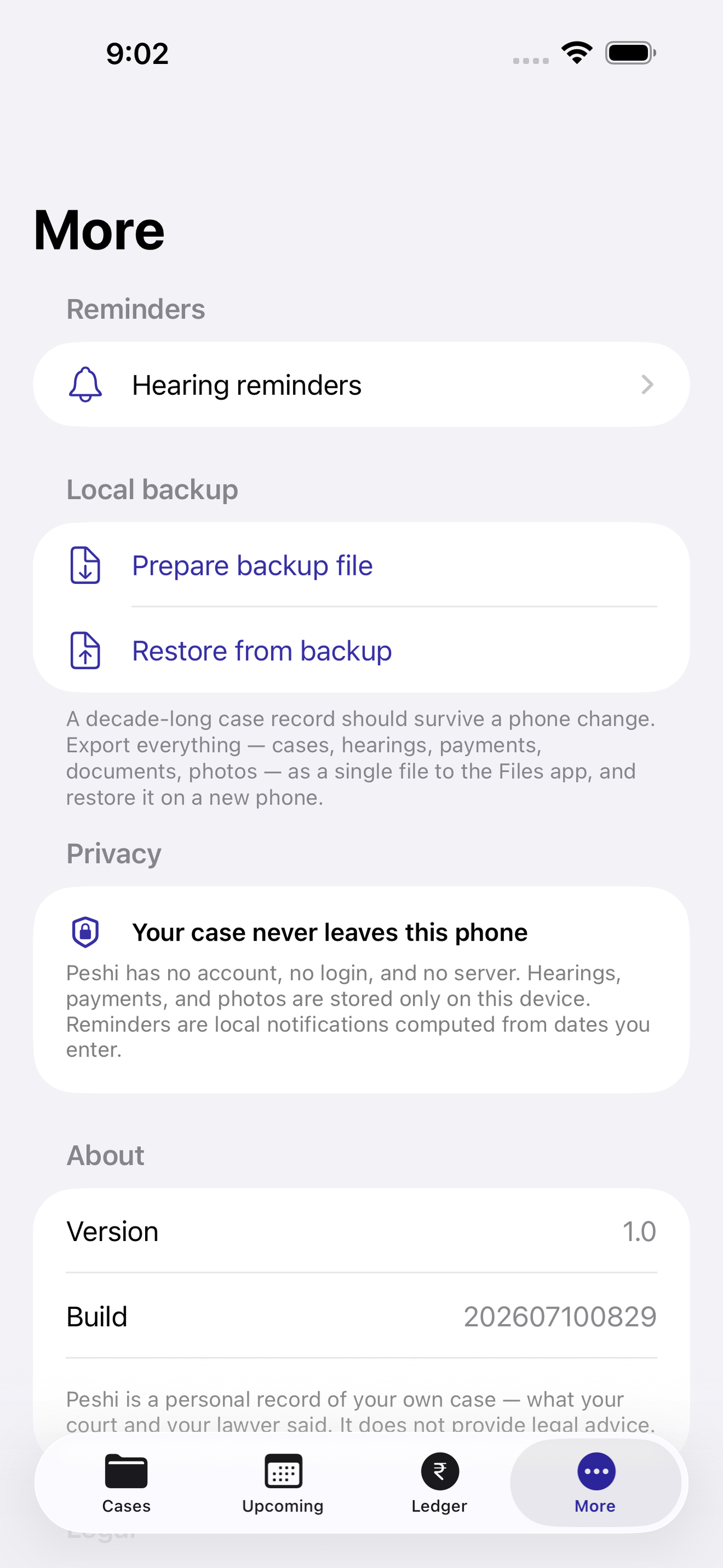
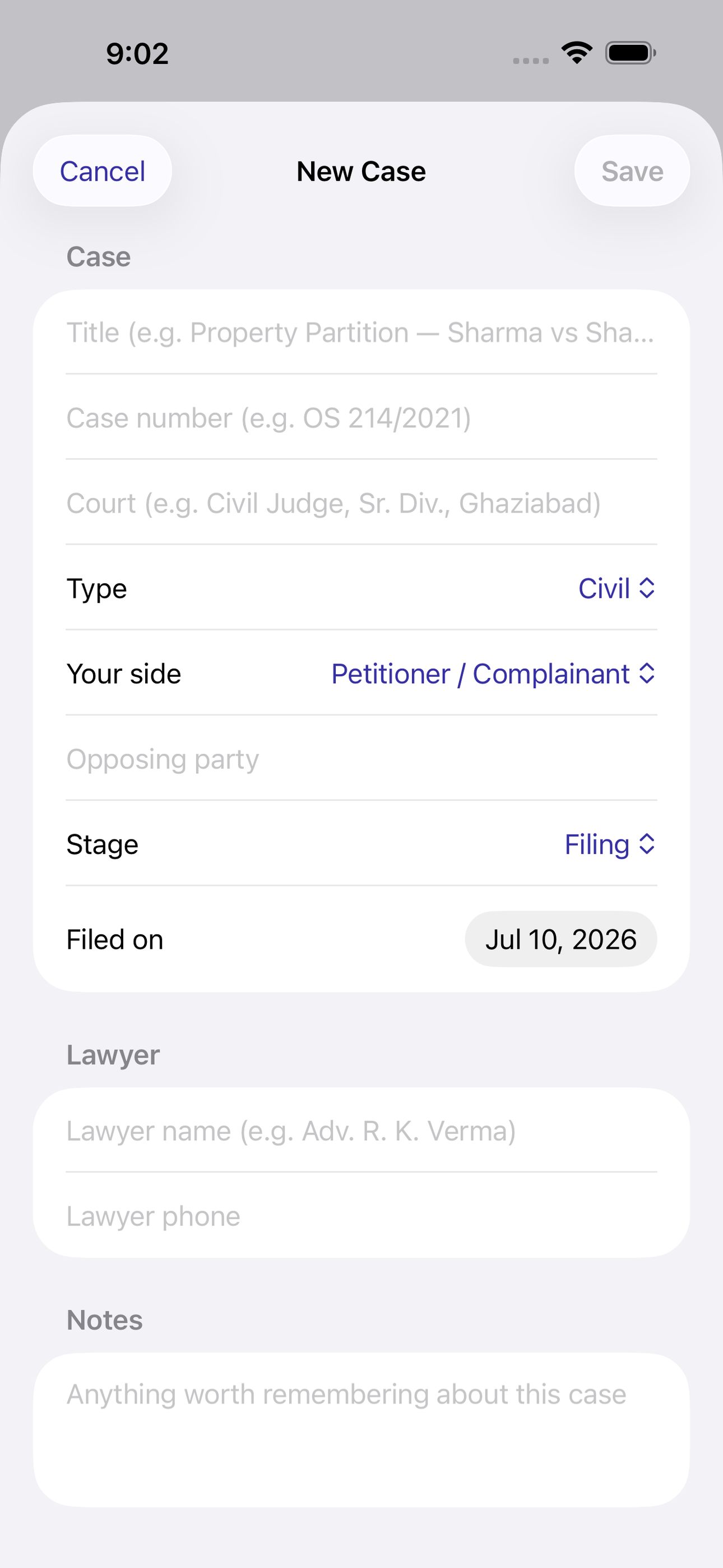
Tap any screenshot to open the full-resolution version.
What's inside
- Hearing Timeline Diary — Each case is a reverse-chronological timeline of every tareekh: what happened in court, what the judge asked for, whether you attended, and the next date given. A thirty-second entry on the courthouse steps becomes the permanent record of a ten-year case.
- Offline Hearing Reminders — Local notifications a week before and the day before each next date, plus a confirm-with-lawyer prompt three days out — because dates move and the courtroom announcement, not a server, is the source of truth.
- Lawyer Fee Ledger — A per-case running ledger of every payment to the lawyer — date, amount in rupees, purpose, and mode (cash, UPI, cheque) — with a lifetime total per case and across cases.
- Documents & Evidence — A checklist of everything the court or lawyer asked for, marked collected or pending, with photos of orders, receipts, and notices attached to the case rather than lost in the camera roll.
- Case History Export — One tap turns the whole case — parties, stage, every hearing entry, fee ledger, document list — into a clean chronological PDF for an appeal, a senior advocate's opinion, or switching lawyers.
Why we built it
India has 5.6 crore pending cases averaging 6+ years in district courts. Litigants live through dozens of hearing dates with no personal record of what happened on each tareekh, no dependable reminders, and no ledger of what they have paid their lawyer — the official eCourts app (2.5/5) offers status lookup only and l…
What makes it different
The official eCourts Services app is status lookup only: its docs claim hearing-date push notifications, but its 2.5/5 reviews report them broken, saved cases lost after updates, and morning server errors — Peshi sidesteps all of it because the next date is entered by the user from the courtroom, reminders are local n…
Who it's for
People who have tried every productivity app and bounced off the noise. If you want something calm, fast, and private, this is for you.
In one line: Your case diary, every tareekh
Try it
See the Your case diary, every tareekh for the full feature list, the info table, and support links.
Use Peshi, found a bug, or have a feature request? Comments are open below — anonymous is fine.
0 comments
No comments yet — be the first.
Leave a reply
Sign in with Google to join the conversation. We require a quick sign-in to keep comments spam-free.
Sign in with Google to comment